
When multiple repair requests land at once, the right response is to triage by safety risk first, arrange temporary mitigation where needed, book qualified trades in priority order, and log every step with a timestamp. That sequence protects your tenants, satisfies your legal duties, and gives you a defensible paper trail if anything is disputed later.
- Emergency (act within hours): gas leaks, total loss of heating in winter, flooding, structural danger, total electrical failure. Call a Gas Safe registered engineer for gas faults and an NICEIC-certified electrician for electrical failures. Authorise temporary measures immediately: isolate the gas supply, turn off the stopcock, switch off the consumer unit.
- Urgent (within 24–48 hours): partial heating loss, leaking pipes causing damage, broken locks or windows, pest ingress. Schedule a qualified trade and notify the tenant in writing.
- Routine (within 7–14 days): worn fixtures, minor drips, cosmetic damage, non-urgent appliance faults. Log, schedule, and batch with other visits to the same area.
The legal baseline for all of this sits in Section 11 of the Landlord and Tenant Act 1985, which sets out your repairing covenant regardless of what your tenancy agreement says.
Key takeaways
Managing multiple trade repairs as a landlord requires a consistent triage system, disciplined intake records, and a small panel of vetted trades working to agreed rates across your portfolio.
| Point | Details |
|---|---|
| Triage by safety tier | Assign every repair as emergency, urgent, or routine within one hour of receipt, and act on the correct timescale for each. |
| Section 11 is the legal floor | Your repairing covenant covers structure, exterior, and key installations; liability normally starts from the moment you are notified. |
| Records win disputes | Log every report with a timestamp, photograph, and contractor booking reference; contemporaneous records are decisive in legal disputes. |
| Consolidate your trades panel | A small panel of vetted contractors with agreed day rates delivers lower costs, priority scheduling, and consistency across properties. |
| 777pcm manages the full workflow | From CP12 and EICR scheduling to emergency repairs, 777pcm provides in-house engineers and a compliance portal for portfolio landlords. |
Table of Contents
- What must you actually repair? Section 11, lease terms and tenant responsibilities
- How do you prioritise repairs across a portfolio?
- How do you build a repeatable repairs workflow for multiple properties?
- How do you hire and vet tradespeople at portfolio scale?
- What certificates and records must you keep for every property?
- How should you budget for repairs and handle insurance claims?
- How do you prepare for emergencies across multiple properties?
- The part most landlords get wrong about managing repairs at scale
- 777pcm handles this workflow for landlords managing multiple properties
- Sources
What must you actually repair? Section 11, lease terms and tenant responsibilities
Section 11 of the Landlord and Tenant Act 1985 implies a repairing covenant that covers the structure and exterior of the property, plus installations for water supply, gas, electricity, sanitation, and space heating. That is the statutory floor. Your tenancy agreement can add to it through express terms, but it cannot lawfully remove it: any clause attempting to contract out of Section 11 is void under section 12 of the same Act.
The notice point matters enormously in a portfolio context. As LLCR's analysis of Section 11 confirms, your liability for internal disrepair does not normally begin until you have been notified. That makes the date and method of every tenant report a legal document, not just an admin note.
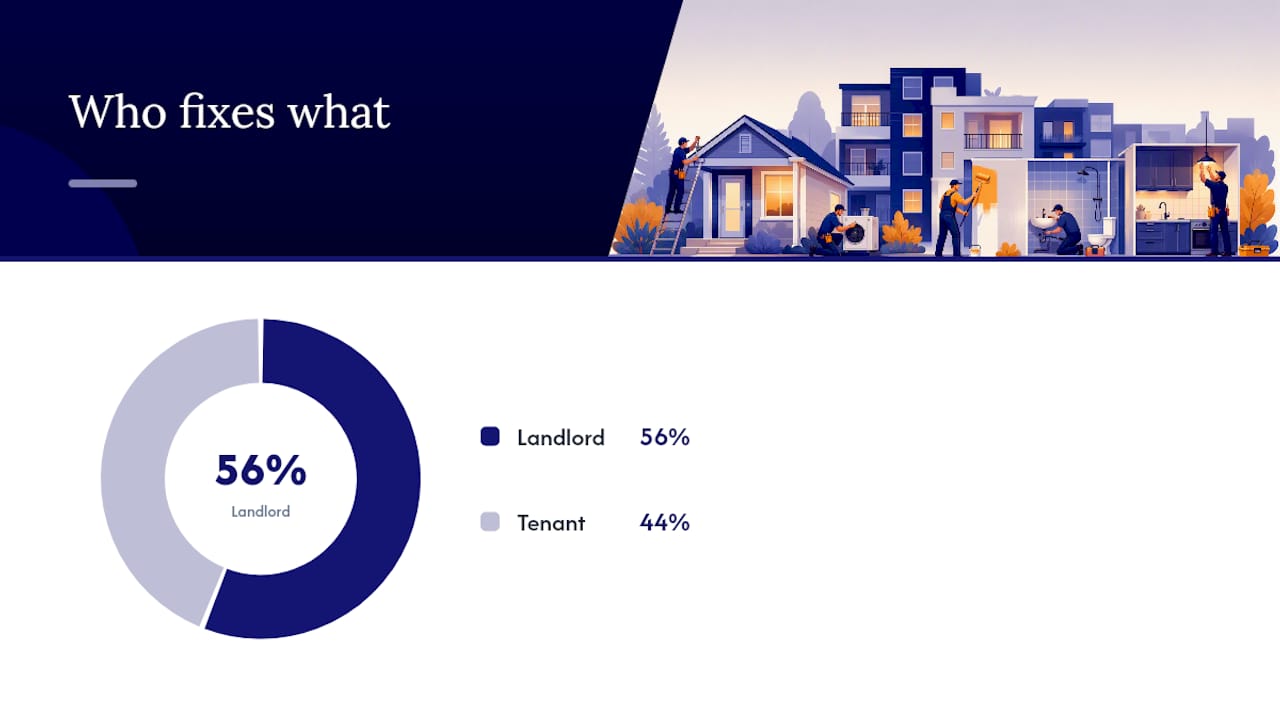
Landlord vs tenant: who fixes what?
| Repair type | Landlord | Tenant |
|---|---|---|
| Boiler and central heating | Yes | No |
| Roof, gutters, external walls | Yes | No |
| Window frames and external doors | Yes | No |
| Electrical wiring and consumer unit | Yes | No |
| Sanitary fittings (bath, WC, basin) | Yes | No |
| Internal decoration (fair wear and tear) | No | Yes |
| Tenant's own appliances (kettle, fridge) | No | Yes |
| Curtains, carpets (unless fitted by landlord) | No | Yes |
| Minor cosmetic damage caused by tenant | No | Yes |
Practical record-keeping that proves response times. Every report should be logged with the property address, tenancy reference, date and time received, the exact fault described, and the action taken within 24 hours. Shelter's guidance is explicit: contemporaneous repair logs are decisive in disputes. A WhatsApp message with no follow-up is not a repair log; a timestamped entry in a shared system with a contractor booking reference attached is.
For a deeper primer on your statutory duties, the landlord repair obligations guide covers notice requirements and tenant rights in detail.
How do you prioritise repairs across a portfolio?
A consistent triage system is what separates landlords who manage multiple trade repairs well from those who lurch from crisis to crisis. Three tiers cover almost every scenario.
- Emergency. Immediate risk to life or property: gas escape, total loss of heating between October and April, flooding, structural collapse risk, complete electrical failure. Act within hours. Isolate the hazard, call a Gas Safe engineer or NICEIC electrician, and document every step with timestamps.
- Urgent. Significant inconvenience or escalating damage: partial heating loss, leaking pipe causing water damage, broken external lock, faulty smoke alarm. Target resolution within 24–48 hours. Notify the tenant in writing and confirm the contractor booking.
- Routine. Non-hazardous faults with no immediate risk: dripping tap, stiff door handle, worn sealant, minor plaster crack. Schedule within 7–14 days and batch with other visits to the same property or postcode cluster.
These timeframes are practical targets, not legal absolutes. Gov uses the phrase "reasonable time," which courts interpret in light of the severity of the fault. A broken boiler in January is not the same as a broken boiler in July.
For emergencies, the sequence is: safety first, temporary mitigation, then trade booking. Turning off the stopcock before a plumber arrives is not optional; it is the difference between a £200 repair and a £2,000 flood claim. For heating failures specifically, the fix heating failure guide sets out the diagnostic steps and contractor checklist in full.

Pro Tip: Keep a laminated "utility isolation" card at each property showing the location of the gas meter, stopcock, and consumer unit. Share it with tenants at check-in. When an emergency call comes in, you can walk them through isolation over the phone in under two minutes, limiting damage before the trade arrives.
How do you build a repeatable repairs workflow for multiple properties?
The goal is to turn every incoming repair report into a ticket that moves through a defined process, rather than a text message that sits in someone's inbox. Landlord Vision's portfolio management framework recommends organising operations into structured pillars with regular review cadences; maintenance is one of those pillars, and it needs its own intake-to-closure process.
Minimum intake fields for every repair ticket:
- Property address and unique property ID
- Tenancy reference and tenant contact details
- Exact fault description (tenant's own words, not paraphrased)
- Photos attached (mandatory for anything structural or water-related)
- Tenant availability windows for access
- Safety flag: yes/no (is anyone at immediate risk?)
- Date and time logged
The eight-step process:
- Triage — assign emergency/urgent/routine within one hour of receipt.
- Allocate — assign to the relevant trade from your approved panel.
- Estimate — confirm scope and cost before booking (fixed price or day rate).
- Schedule — book the visit and send the tenant written notice of access.
- Complete — trade attends, carries out work, and signs off the job sheet.
- Verify — landlord or agent confirms completion and quality.
- Invoice — trade submits invoice; match against the agreed estimate.
- File — store the job sheet, invoice, and any certificate against the property record.
Batching is where portfolio landlords recover real time. If you have three properties within two miles of each other, a single contractor visit covering all three costs far less per property than three separate call-outs. AnnualVault's block strategy guidance recommends aligning renewal dates and using early renewal windows to cluster inspections, which creates the same leverage for day-rate pricing with trades. The same logic applies to reactive repairs: when a plumber is already on site at one property, a second minor job nearby can often be added to the same visit.
AnnualVault also notes that spreadsheet-only systems tend to break down once a portfolio reaches a small number of properties. At that point, a dedicated property maintenance workflow or compliance portal becomes a practical necessity rather than a luxury.
For a detailed guide to designing intake-to-closure workflows, the property maintenance workflow guide covers queue management and single-system tracking for multiple properties.
How do you hire and vet tradespeople at portfolio scale?
Credentials first, price second. A cheap contractor without the right certifications can invalidate your insurance, expose you to enforcement action, and put tenants at risk. Before booking any trade, verify:
- Gas Safe registration for all gas work (boilers, gas appliances, flues). Check the register at gassafe.org.uk using the engineer's licence number.
- NICEIC or NAPIT registration for electrical installation and testing work. Both schemes require periodic competency assessment.
- Public liability insurance of at least £1 million, ideally £2 million for larger jobs. Ask for the certificate, not just a verbal confirmation.
- DBS check where the trade will have unsupervised access to occupied properties, particularly where vulnerable tenants are present.
- CSCS card for any structural or building work on site.
For a full breakdown of when licensed trades are legally required, the licensed trades in rental renovation guide covers the regulatory requirements by trade type.
Vendor scorecard: what to assess before adding a trade to your panel.
- Response time to enquiries (target: same day for urgent, next day for routine)
- Fixed-hour rates or day rates, clearly agreed in writing before first booking
- Warranty terms on labour and parts (12 months is a reasonable minimum)
- Portfolio experience: have they worked across multiple occupied properties before?
- References from other landlords or letting agents, not just homeowners
Pro Tip: When negotiating with a new contractor, offer a trial period of three jobs at their standard rate, with a review at the end. If the quality and communication are good, move to a day-rate agreement for the following quarter. Contractors value the certainty of repeat work; you get a lower rate and priority scheduling.
Consolidating to a small panel of two or three trusted trades per discipline delivers more than cost savings. AnnualVault's compliance guidance confirms that supplier consolidation typically unlocks bulk discounts, priority scheduling, and consistency of repairs across clustered properties. A contractor who knows your portfolio, your properties, and your tenants is worth considerably more than the cheapest quote on a job-by-job basis.
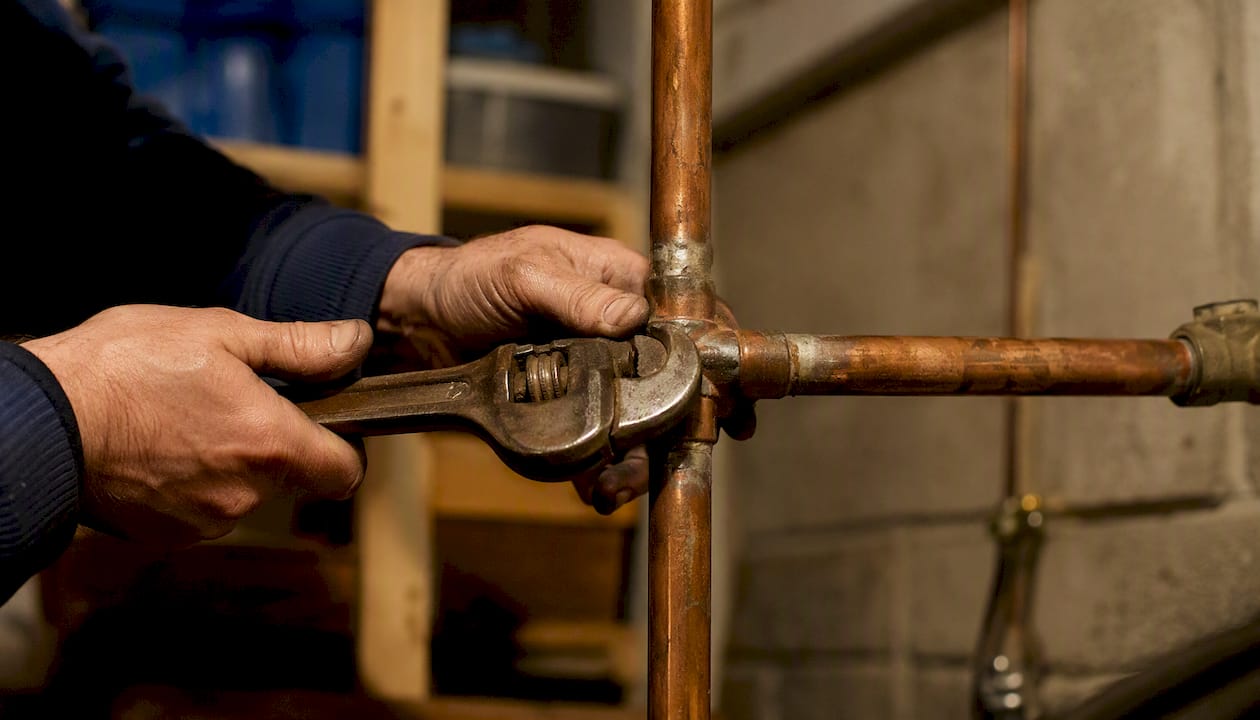
Red flags when vetting a new trade: no verifiable registration number, reluctance to provide a written quote, requests for large cash payments upfront, no evidence of previous landlord or commercial work, and vague answers about insurance. Walk away from any of these.
What certificates and records must you keep for every property?
Compliance record-keeping is not a back-office task; it is a legal obligation and a financial safeguard. Missing a certificate renewal can invalidate a possession notice, trigger a local authority improvement notice, and in the case of gas safety, expose you to criminal liability.
| Certificate | Frequency | Who issues it | Notes |
|---|---|---|---|
| CP12 Gas Safety Record | At least once per year | Gas Safe registered engineer | Must be given to tenant within 28 days of check |
| EICR (Electrical Installation Condition Report) | Regularly as required by changes in tenancy or regulations | NICEIC/NAPIT registered electrician | Remedial work must be completed within 28 days |
| EPC (Energy Performance Certificate) | Issued as necessary for new tenancies or transactions | Accredited assessor | Minimum E rating required for new tenancies |
| Smoke alarm check | At start of each tenancy | Landlord or agent | Must be tested on day one of tenancy |
| CO alarm check | At start of each tenancy | Landlord or agent | Required in rooms with solid fuel appliances; recommended for gas |
| Legionella risk assessment | Periodically (no fixed interval) | Competent person | Recommended every 2 years for residential lets |
Gov.uk's minimum energy efficiency guidance and the Deregulation Act 2015 guidance both reinforce that multiple overlapping compliance obligations exist simultaneously and require calendarised tracking.
Recommended record fields for each repair and certificate:
- Unique property ID and tenancy reference
- Report date (for repairs) or issue date (for certificates)
- Action taken and contractor name
- Certificate file name and storage location
- Expiry date and next renewal due
- Tenant copy issued: yes/no with date
Landlord Vision recommends using tiered reminders at 60, 30, and 7 days before expiry, combined with a quarterly review cadence, to avoid compliance gaps across a portfolio. A single source of truth, whether a dedicated compliance portal or a structured cloud folder, is far more reliable than separate spreadsheets per property. The landlord compliance checklist covers every certificate type and renewal interval for England.
How should you budget for repairs and handle insurance claims?
Budgeting for repairs across a portfolio requires separating reactive maintenance from planned capital expenditure. A common rule of thumb for UK residential landlords is to set aside 1% of the property's value annually for maintenance and repairs, though older properties and those with gas central heating tend to run higher. Reactive repairs are unpredictable by nature; a contingency reserve per property, held separately from rental income, prevents a single large repair from disrupting cash flow across the portfolio.
Budgeting principles for portfolio landlords:
- Maintain a per-property contingency reserve for reactive repairs, reviewed annually.
- Separate reactive budgets from planned capex (kitchen replacement, roof works, rewires).
- Track actual spend per property quarterly; properties consistently above budget may need a planned upgrade rather than repeated reactive fixes.
- Supplier consolidation reduces per-job costs. AnnualVault's scaling guidance identifies the block strategy as a practical way to reduce per-property administration and cost through clustered inspections and negotiated day rates.
When to claim on insurance. Landlord insurance typically covers structural damage, escape of water, malicious damage by tenants, and loss of rent following an insured event. It does not cover general wear and tear, gradual deterioration, or repairs that are your statutory duty under Section 11. Claiming for a leaking roof that has been deteriorating for years is unlikely to succeed and will affect your renewal premium.
Checklist for a clean insurance claim:
- Photographs taken immediately, before any temporary repairs
- Dated job sheets from the attending trade
- Invoices matched to the job sheets
- Written tenant report or your own inspection note as the first evidence of the event
- Any temporary mitigation documented (e.g., buckets placed, water isolated)
Non-compliance carries its own financial risk. A landlord who cannot produce a valid CP12 when serving a Section 21 notice may find the notice invalid, extending the tenancy and delaying possession. The cost of a missed annual gas safety check is not just the fine; it is the lost rental income during a delayed possession process.
Cost recovery from tenants is limited. Service charges can be passed on where the lease expressly provides for them, but routine repair costs under Section 11 cannot be charged back to the tenant. Where a tenant has caused the damage, you may recover costs through the deposit scheme or a court claim, but the repair must still be carried out promptly regardless.
How do you prepare for emergencies across multiple properties?
An emergency plan is not a document you write once and file. It is a live resource that tenants can act on at 11pm on a Sunday, and that you can execute from a motorway service station if needed.
Tenant-facing emergency instructions (share at check-in and post in the property):
- If you smell gas: do not use switches, open windows and doors, leave the property, call the National Gas Emergency Service on 0800 111 999.
- If there is a flood or burst pipe: turn off the stopcock (location noted on your welcome card), turn off the boiler, call the landlord emergency number.
- If there is an electrical fault: switch off the consumer unit if safe to do so, do not use the affected circuit, call the landlord emergency number.
- For all emergencies: call [emergency number], then send a text or email with the property address and a brief description of the fault.
- For non-emergency repairs: use the online repair reporting form or email [address] with photos.
Landlord emergency checklist:
- 24/7 contact numbers for your Gas Safe engineer, electrician, and plumber
- Out-of-hours contractor rota with confirmed response times
- Temporary mitigation kit at each property (stopcock key, consumer unit label, emergency contact card)
- Access key or key safe code held securely and updated at each tenancy change
- Escalation contact for your insurer's emergency line
Escalation protocol for repeated failures. If the same fault recurs at a property within 12 months, treat it as a systemic issue rather than a one-off repair. Document each occurrence with dates, contractor reports, and costs. This record serves two purposes: it supports a planned capital expenditure case (replacing a boiler rather than patching it repeatedly), and it demonstrates due diligence if a tenant raises a formal complaint or the local authority issues a Housing Health and Safety Rating System (HHSRS) notice.
For the full operational playbook on scheduling repairs with tenants in situ, including communication templates and access protocols, the coordinate repairs with tenants guide covers the process in detail.
The part most landlords get wrong about managing repairs at scale
The conventional advice on managing multiple trade repairs focuses almost entirely on tools: get a portal, use a spreadsheet, download an app. That advice is not wrong, but it misses the more important point. The system only works if the intake process is disciplined. A portal full of vague, undated, unphoto'd repair reports is no better than a pile of sticky notes.
The single highest-leverage change most portfolio landlords can make is not the software they use; it is the quality of information they capture at the moment a repair is reported. A repair ticket that includes the exact fault, a photograph, the tenant's availability, and a safety flag takes 90 seconds to complete. It saves hours of back-and-forth with contractors, eliminates the "I didn't know about it" defence in disputes, and gives you the data to spot patterns: which properties are generating the most reactive repairs, which contractors are slowest to respond, and where a planned upgrade would be cheaper than continued reactive maintenance.
The second thing most landlords underestimate is the compounding cost of fragmented procurement. Booking a different contractor for every job feels flexible, but it means renegotiating rates constantly, training new people on your properties, and losing the priority scheduling that comes with being a regular client. Consolidating to a small panel of trusted trades, even informally, changes the dynamic. Contractors who know they will receive steady work from you will answer the phone on a Saturday morning. That is worth more than saving £20 on a call-out fee.
Finally, the legal risk of poor record-keeping is consistently underestimated. Shelter's guidance is clear that contemporaneous repair logs are decisive in disputes. A landlord who can produce a timestamped repair log, a contractor booking confirmation, and a completion certificate will almost always prevail. One who cannot, even if the repair was carried out promptly, is in a much weaker position.
777pcm handles this workflow for landlords managing multiple properties
Managing a portfolio of repairs across multiple properties is exactly the problem 777pcm is built to solve. Rather than coordinating separate Gas Safe engineers, electricians, and plumbers across different booking systems, 777pcm provides a single point of contact for the entire workflow: intake, triage, scheduling, certification, and record storage, all handled by in-house engineers with no third-party subcontractors.

For landlords managing multiple properties, the practical benefits are direct. Gas safety CP12 certificates, EICRs, and EPCs are scheduled and tracked through a dedicated compliance portal, with renewal reminders built in. Remedial works following inspections are handled by the same team, so there is no gap between "certificate issued" and "fault rectified." Emergency response is available for urgent plumbing, heating, and electrical faults, with Gas Safe registered engineers and NICEIC-certified electricians on the team.
Portfolio landlords can book a CP12 or request a compliance portal demo to see how the system maps to the workflow described in this article. For immediate repairs or to discuss a portfolio maintenance contract, contact 777pcm directly for a quote.
Sources
- Landlord and Tenant Act 1985, section 11
- Gov
- Repairs under section 11 — Shelter professional resources
- Section 11 Landlord Repair Responsibilities — LLCR
- Property Portfolio Management: Staying in Control as You Scale — Landlord Vision
- BTL Portfolio Growth: Staying Compliant as You Scale — AnnualVault