
A CP12 certificate, formally known as a Landlord Gas Safety Record, is the legally required document confirming that all gas appliances in a rental property have been inspected and declared safe by a Gas Safe registered engineer. UK landlords must hold a valid CP12 gas safety certificate for every rental property with gas installations. The obligation sits under the Gas Safety (Installation and Use) Regulations 1998, and it carries real criminal liability. Understanding what a CP12 certificate means, and what it demands of you as a landlord, is the foundation of lawful property management.
What is a CP12 certificate and why does it matter legally?
A CP12 certificate is the annual gas safety record that proves your rental property's gas appliances, pipework, and flues have passed a formal safety inspection. The document takes its name from the form number historically used by Gas Safe registered engineers to record their findings. Its formal title, Landlord Gas Safety Record, is the term used in official communications with local authorities and courts. Using the formal name in correspondence with tenants and agents avoids ambiguity and strengthens your compliance record.
The Gas Safety (Installation and Use) Regulations 1998 make this inspection a strict legal duty. Breaching it is a criminal offence, not a civil matter. That distinction matters because gas safety duties are criminal offences, making the CP12 certificate the most important compliance proof a landlord can hold. No other document substitutes for it.
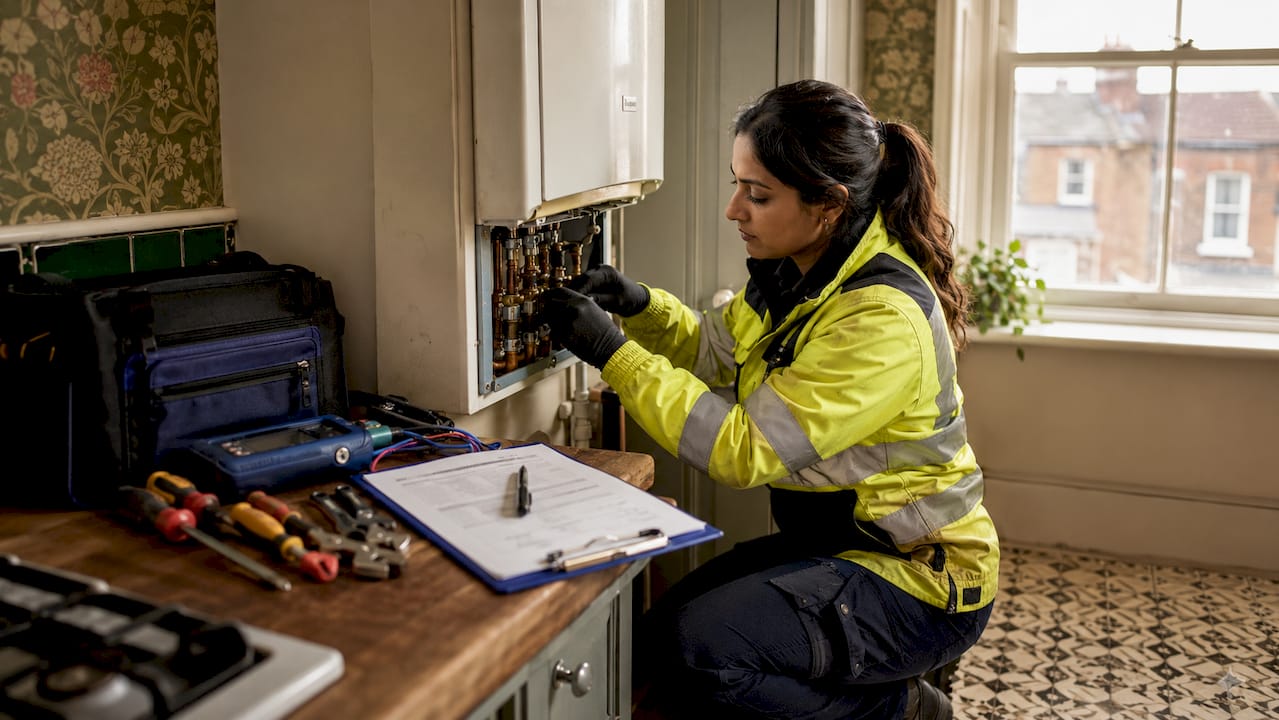
Every rental property with at least one gas appliance requires a valid CP12. This includes gas boilers, gas cookers, gas fires, and any gas pipework serving those appliances. Properties without gas installations are exempt, but the moment a gas supply exists, the obligation begins.
Legal requirements and compliance obligations landlords must know
The CP12 renewal process follows a strict 12-month cycle. No grace period exists after expiry. Letting a property with an expired certificate is a strict liability breach, meaning intent is irrelevant. Fines are unlimited, and the reputational damage to a landlord or letting agent can be severe.
Beyond the inspection itself, the law sets clear rules on tenant communication and record keeping:
- Existing tenants must receive a copy of the new CP12 within 28 days of the inspection.
- New tenants must receive their copy before they move in, not after.
- Records must be retained for a minimum of two years.
- Proof of delivery to tenants is legally required. Sending the certificate without confirmation of receipt can still leave you exposed.
Failing to meet these obligations has a direct impact on possession proceedings. Landlords who cannot prove valid CP12 provision to tenants are blocked from serving a Section 21 notice. That single consequence makes record keeping as important as the inspection itself.
Pro Tip: Keep a signed acknowledgement or a read receipt from every tenant each time you issue a CP12 copy. A simple email confirmation is not enough on its own. A signed form or a digital acknowledgement through a compliance portal creates the paper trail that protects you.
The types of landlord safety certificates required in the UK extend beyond gas safety, but the CP12 carries the most immediate criminal risk. Treat it accordingly.
What happens during a CP12 gas safety inspection?
A CP12 inspection is carried out exclusively by a Gas Safe registered engineer. Hiring an unregistered engineer invalidates the certificate entirely and still leaves the landlord in breach of the Regulations. Always verify the engineer's Gas Safe registration number before booking.
The inspection typically covers the following:
- All gas appliances in the property, including boilers, gas fires, and cookers.
- Gas pipework throughout the property, checked for integrity and leaks.
- Flues and chimneys serving gas appliances, inspected for blockages and safe discharge.
- Ventilation in rooms containing gas appliances, confirmed as adequate.
- Operational checks on each appliance, confirming safe ignition and shutdown.
- Leak tests on the supply and at appliance connections.
Inspections last 30–60 minutes depending on the number of appliances. A property with a single combi boiler takes less time than one with a boiler, two gas fires, and a gas hob.
| Inspection element | What the engineer checks |
|---|---|
| Gas appliances | Safe operation, correct settings, no unsafe emissions |
| Pipework | No leaks, correct pressure, secure fittings |
| Flues | Clear passage, no blockages, correct termination |
| Ventilation | Adequate air supply for combustion |
| Safety devices | Correct function of flame failure devices |
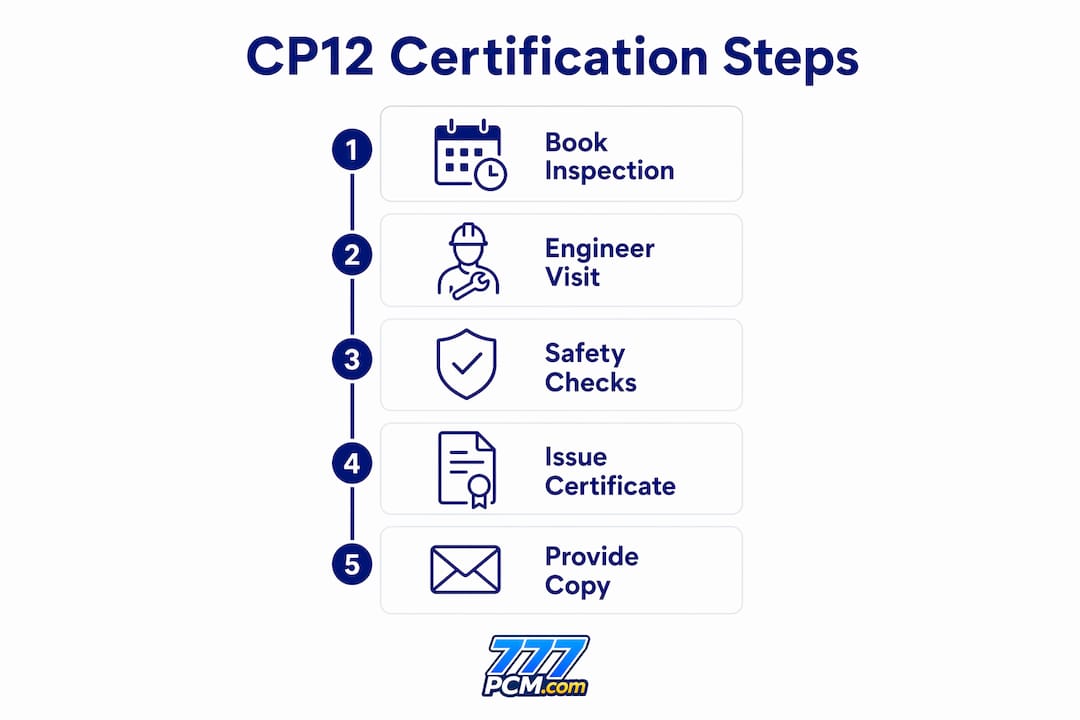
Once the inspection is complete, the engineer issues the Landlord Gas Safety Record on the spot or digitally within a short period. The document lists every appliance checked, the result for each, and the engineer's Gas Safe registration number.
Pro Tip: You can schedule your annual gas safety check up to two months before the current certificate expires without changing the anniversary renewal date. This flexibility is useful for managing access with tenants and avoiding last-minute bookings.
How does a CP12 differ from a boiler service?
This is one of the most common misunderstandings among landlords. A CP12 gas safety certificate and a boiler service are two entirely different things, and one cannot replace the other.
CP12 inspections focus solely on safety certification, not maintenance or cleaning. The engineer's job is to confirm the appliances are safe to use, not to service them. A boiler service, by contrast, involves cleaning internal components, replacing worn parts, and maintaining performance efficiency. It does not produce a legally valid gas safety record.
| Feature | CP12 certificate | Boiler service |
|---|---|---|
| Legal requirement | Yes, annually for landlords | No, recommended only |
| Purpose | Confirms safety status | Maintains performance |
| Issued by | Gas Safe registered engineer | Gas Safe registered engineer |
| Output | Landlord Gas Safety Record | Service report |
| Covers all gas appliances | Yes | Boiler only |
Landlords who book only a boiler service and assume it satisfies their CP12 obligation are in breach of the Regulations. The two checks can be carried out on the same visit, but they must be booked and recorded separately. A heating system maintenance visit does not generate a CP12 certificate unless the engineer also completes the full safety inspection.
The practical implication is straightforward. Budget for both, schedule them together where possible, and confirm with your engineer that both outputs will be provided.
Practical tips for maintaining CP12 compliance
Staying compliant with CP12 requirements is largely a scheduling and documentation discipline. The legal framework is clear. The failures tend to come from poor organisation rather than deliberate neglect.
- Book early. Schedule inspections with a two-week buffer before the expiry date. Access issues, engineer availability, and tenant scheduling can all delay a booking. A buffer prevents a forced lapse.
- Never assume a grace period. There is no legal extension after expiry. The property is non-compliant from day one after the certificate expires.
- Use digital certificates. Digital CP12 records update landlords, tenants, and agents simultaneously. They reduce the risk of lost paperwork and create an automatic audit trail.
- Retain proof of tenant delivery. A signed acknowledgement or a digital read receipt is the standard of proof required. Keep these records for at least two years alongside the certificate itself.
- Verify Gas Safe registration. Check the engineer's registration on the Gas Safe Register website before every inspection. Registration must be current on the date of the check.
- Manage portfolios systematically. Landlords with multiple properties benefit from a renewal timeline system that flags upcoming expiry dates well in advance.
Pro Tip: Use the formal name "Landlord Gas Safety Record" in all written communications with tenants, agents, and local authorities. It signals professional compliance awareness and removes any ambiguity about which document you are referring to.
For landlords managing larger portfolios, gas safety oversights become more likely as the number of properties grows. A structured compliance calendar is not optional at scale. It is the only way to maintain continuous coverage across every property.
Key takeaways
A CP12 certificate is a criminal compliance obligation, not an administrative formality. Landlords who treat it as a routine paperwork task are the ones most likely to face enforcement action.
| Point | Details |
|---|---|
| Annual legal duty | CP12 must be renewed every 12 months with no grace period after expiry. |
| Tenant delivery rules | Existing tenants receive copies within 28 days; new tenants receive theirs before moving in. |
| Records retention | Keep CP12 records and proof of tenant delivery for a minimum of two years. |
| CP12 is not a service | A boiler service does not satisfy the CP12 legal requirement; both must be completed separately. |
| Early booking protects you | Scheduling two weeks before expiry prevents lapses caused by access or availability issues. |
Why CP12 compliance is the one obligation I never let landlords overlook
Working in property compliance for years, I have seen landlords lose possession cases, face prosecution, and pay significant fines, not because they were careless about their tenants' safety, but because they misunderstood what the CP12 obligation actually required of them.
The most common mistake is conflating the boiler service with the gas safety check. A landlord books an annual service, assumes the job is done, and discovers two years later that they have never held a valid CP12. At that point, every Section 21 notice they served in that period is potentially invalid. The financial and legal exposure is enormous.
The second mistake is underestimating the proof-of-delivery requirement. Emailing a certificate to a tenant is a good start. But without a read receipt or signed acknowledgement, a tenant can credibly claim they never received it. Courts have sided with tenants on exactly this point.
My honest view is that CP12 compliance is the clearest example of a legal duty where the cost of getting it right is trivial compared to the cost of getting it wrong. A single inspection costs a fraction of what a contested possession case or a Health and Safety Executive prosecution would cost. The investment protection argument for staying compliant is overwhelming.
Build your compliance calendar around the CP12 anniversary date. Book early, document everything, and use digital tools to automate the paper trail. The landlords who do this never end up in enforcement proceedings.
— Mike
How 777pcm helps landlords stay CP12 compliant
Gas safety compliance does not have to be a source of stress for landlords.

777pcm employs Gas Safe registered engineers who carry out CP12 inspections across residential rental portfolios, including properties in the Newbury area. Certificates are issued digitally, giving landlords, tenants, and agents simultaneous access to records. 777pcm manages the full process, from scheduling and access coordination to certificate issuance and record storage, with no third-party subcontractors involved. For landlords who want reliable, documented CP12 compliance without the administrative burden, 777pcm's property compliance services offer a direct and accountable solution.
FAQ
What does CP12 mean?
CP12 is the informal name for the Landlord Gas Safety Record, the annual certificate required under the Gas Safety (Installation and Use) Regulations 1998. It confirms that a Gas Safe registered engineer has inspected all gas appliances in a rental property and found them safe.
How do I get a CP12 certificate?
Book a Gas Safe registered engineer to carry out an annual gas safety inspection at your rental property. The engineer issues the Landlord Gas Safety Record on completion, which you then provide to your tenants within the required timeframes.
How often does a CP12 need to be renewed?
A CP12 certificate must be renewed every 12 months. There is no grace period after expiry. Letting a property without a valid certificate is a criminal offence under the Gas Safety Regulations.
Can a boiler service replace a CP12 certificate?
No. A boiler service maintains appliance performance but does not produce a legally valid gas safety record. Landlords must book a separate CP12 inspection to meet their legal obligations under the Gas Safety (Installation and Use) Regulations 1998.
What happens if a landlord does not have a valid CP12?
A landlord without a valid CP12 faces unlimited fines and potential criminal prosecution. They are also blocked from serving a Section 21 notice to regain possession of their property until compliance is restored.