
The rental property certificate renewal timeline is the schedule landlords must follow to renew mandatory safety and licensing certificates before they expire, maintaining legal compliance and protecting tenant safety. For UK landlords, the three certificates that matter most are the CP12 gas safety certificate, the Electrical Installation Condition Report (EICR), and the Energy Performance Certificate (EPC). Each runs on a different clock. Miss one, and you risk fines, invalidated insurance, and in serious cases, criminal liability. Understanding the renewal timeline for rental certificates is not optional. It is the operational backbone of any compliant letting business.
What are the typical renewal timelines for rental property certificates?
UK landlord certificates follow three distinct renewal schedules depending on certificate type. The CP12 gas safety certificate renews every 12 months without exception. The EICR renews every 5 years, or sooner if the inspection report specifies a shorter interval due to faults or age of installation. The EPC renews every 10 years, making it the longest cycle of the three.

These intervals are not suggestions. They are legal requirements under UK housing regulations, and each certificate must be valid at the point a new tenancy begins. A landlord who lets a property with an expired CP12 faces prosecution under the Gas Safety (Installation and Use) Regulations 1998. That is a criminal offence, not a civil matter.
The picture becomes more varied when you look beyond the UK. In Seattle, Washington, the Rental Registration and Inspection Ordinance (RRIO) issues a registration certificate valid for two years after online payment. Rochester, Minnesota requires annual certificate renewal, but the inspection cycle varies from 1 to 4 years depending on the property's compliance score. Muskegon, Michigan charges a yearly renewal fee every spring, yet the certificate itself can last 3 or 6 years based on whether violations were found.
Renewal intervals by certificate type: a comparison
| Certificate type | Renewal interval | Jurisdiction |
|---|---|---|
| CP12 gas safety certificate | Every 12 months | UK (mandatory) |
| EICR electrical certificate | Every 5 years (or sooner) | UK (mandatory) |
| EPC energy performance | Every 10 years | UK (mandatory) |
| RRIO registration certificate | Every 2 years | Seattle, WA |
| Rental licence (annual fee) | Every year (spring) | Muskegon, MI |
| Rental certificate (inspection cycle) | 1–4 years | Rochester, MN |
The core lesson here is that multiple independent timelines exist even within a single portfolio. A landlord managing ten UK properties juggles up to thirty separate certificate expiry dates across three certificate types. Treating them as one unified deadline is the most common and most costly mistake in property compliance.
Pro Tip: Set a separate calendar entry for each certificate type at each property. Grouping them under one "compliance date" is how renewals get missed.
How do inspection cycles and renewal fees affect the timeline?
The distinction between an administrative renewal fee and an inspection validity cycle trips up landlords more often than any other compliance issue. These are two separate things, and confusing them leads directly to non-compliance.
In Muskegon, for example, the yearly fee funds the inspection process itself. Paying that fee on time keeps the certificate valid even when the inspection certificate runs for several years. Stop paying the annual fee and the certificate lapses, regardless of how many years remain on the inspection cycle. Rochester operates similarly. The certificate lists both an expiration date and a next inspection due date. These are not the same date, and both require active tracking.
Inspection outcomes also directly alter the renewal timeline. In Muskegon, a property with no violations receives a 6-year certificate. A property with violations receives a 3-year certificate instead. In Rochester, the inspection cycle runs from 1 to 4 years depending on the compliance score awarded after inspection. A poor score shortens the cycle and increases the frequency of required inspections.
The practical implications for landlords are significant:
- Fee renewal dates must be tracked even when the certificate itself has years of validity remaining.
- Inspection due dates are separate from certificate expiry dates and require their own diary entries.
- Violation history directly affects how long your next certificate lasts, making remediation speed a compliance priority.
- Certificate terms can shorten mid-portfolio if one property underperforms, creating an uneven renewal schedule across your holdings.
Pro Tip: Build two separate tracking columns in your compliance spreadsheet: one for fee payment due dates and one for inspection due dates. Treating them as one field is where portfolios fall out of compliance.
What systems should landlords use to manage multiple renewal deadlines?
Managing the property certificate renewal process across multiple properties requires a system, not a memory. The human brain is not built to track thirty or more rolling deadlines simultaneously, and a missed renewal does not announce itself in advance.
The most reliable approach combines digital calendar reminders with a centralised document record. Set reminders at three intervals before each certificate expires: 60 days out, 30 days out, and 7 days out. The 60-day alert gives you time to book engineers and arrange access. The 30-day alert confirms the booking is in place. The 7-day alert is your final check that the certificate has been received and filed. Digital reminder systems at these intervals substantially reduce the risk of lapse.
Compliance tracking platforms such as LettingsLedger go further by automating these alerts and storing certificates in a single accessible record. For portfolio managers handling more than five properties, a dedicated platform is worth the cost. Manual spreadsheets work for smaller portfolios, but they require discipline and a clear naming convention for every document stored.
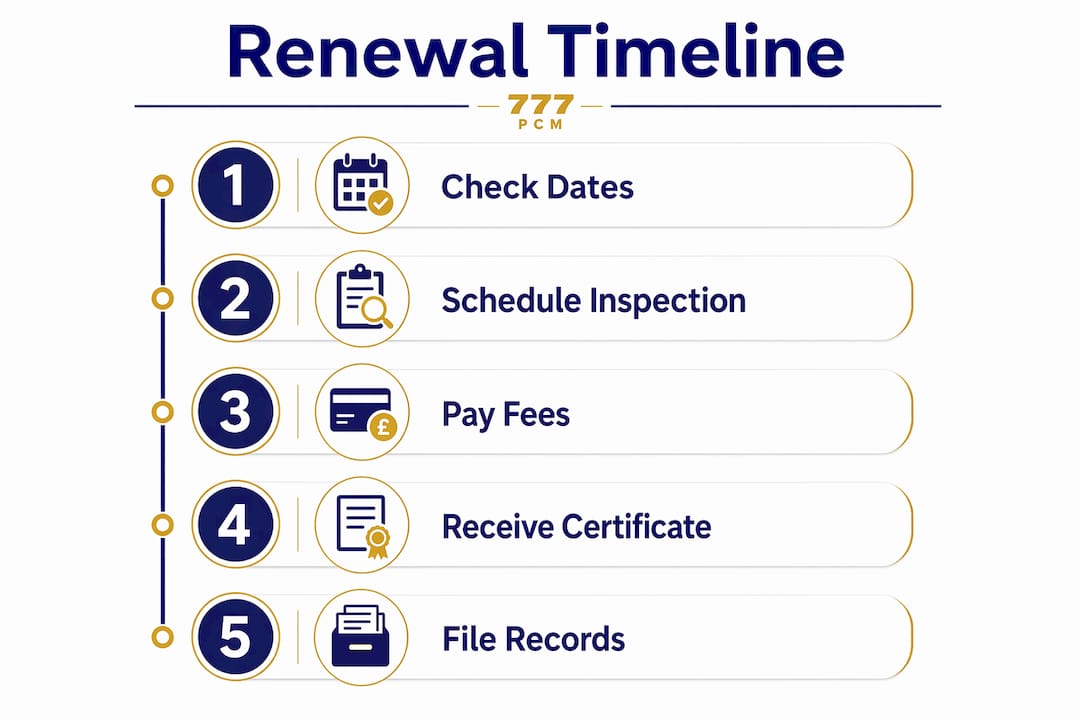
The steps for rental certificate renewal that every landlord should follow are:
- Record the expiry date of every certificate immediately upon receipt, not when it is convenient.
- Set three calendar reminders at 60, 30, and 7 days before each expiry date.
- Book the required engineer or inspection at the 60-day mark to avoid last-minute availability issues.
- Verify all account and property details before submitting any online renewal, since incorrect submission data causes delays even in automated systems like Seattle's RRIO.
- Confirm receipt of the renewed certificate within 24 hours of the engineer visit or online submission.
- File the certificate in a centralised record and update the expiry date in your tracking system immediately.
Pro Tip: After receiving any renewed certificate, check the issue date, expiry date, and property address before filing. Errors on certificates are more common than landlords expect, and catching them early avoids compliance gaps.
What are the risks of missing rental property certificate renewals?
Missing a renewal deadline carries consequences that scale quickly from financial to criminal. The specific penalties depend on jurisdiction, but no regulatory framework treats a lapsed certificate as a minor administrative oversight.
In Rochester, MN, operating a rental property without a valid certificate can result in a $1,000 fine and the risk of jail time. In South Africa, the Property Practitioners Regulatory Authority (PPRA) enforces a strict renewal window from 1 july to 31 october each year. Applications submitted after 31 october incur a monthly R153 penalty for every month the renewal remains outstanding. The financial cost compounds rapidly for landlords who miss the window by several months.
"Strict renewal windows enforced by regulatory authorities demand disciplined calendar management. The cost of missing a deadline is never just the fine. It is the disruption, the reputational damage, and the legal exposure that follows."
In the UK, the consequences of a lapsed CP12 are particularly serious. Landlords cannot serve a valid Section 21 notice to regain possession of a property if the gas safety certificate was not provided to the tenant at the start of the tenancy. That single administrative failure can block an eviction for months. Beyond possession rights, a lapsed certificate can also invalidate landlord insurance policies, leaving the property unprotected in the event of a claim.
The risks, summarised:
- Criminal prosecution for operating without a valid gas safety certificate under UK law.
- Loss of possession rights if certificates were not served correctly at tenancy start.
- Insurance invalidation if a claim arises during a period of certificate lapse.
- Escalating financial penalties in jurisdictions with monthly fine structures.
- Reputational damage with letting agents and tenants if compliance failures become known.
Key takeaways
The rental property certificate renewal timeline is not a single date. It is a set of overlapping schedules that must each be tracked and managed independently to maintain full compliance.
| Point | Details |
|---|---|
| UK certificates run on separate clocks | CP12 renews annually, EICR every 5 years, EPC every 10 years. |
| Fee dates differ from inspection dates | Pay annual fees on time even when the certificate itself has years remaining. |
| Inspection outcomes alter timelines | Violations shorten certificate terms, increasing renewal frequency. |
| Set three reminders per certificate | Alert at 60, 30, and 7 days before expiry to avoid last-minute failures. |
| Penalties are serious and escalate | Lapsed certificates risk fines, criminal charges, and loss of possession rights. |
Why I think most landlords are managing this the wrong way
The most common mistake I see is landlords treating compliance as a single annual task. They renew the gas certificate in march, assume everything else is covered, and move on. Six months later, an EICR quietly expires on a property they have not thought about since the last inspection. That is not negligence in the dramatic sense. It is just the natural result of managing multiple properties without a proper system.
What I have found genuinely useful is separating the compliance calendar from the general property management diary. Compliance dates live in their own dedicated system, whether that is a spreadsheet, a platform like LettingsLedger, or a shared team calendar. They do not sit alongside maintenance requests and tenant communications. When everything is mixed together, the urgent always crowds out the important.
The other thing landlords consistently underestimate is how much inspection outcomes affect future workload. A property that picks up violations does not just cost money to remediate. It shortens the certificate term, which means more frequent inspections, more engineer visits, and more administrative overhead. Investing in property condition now reduces compliance burden later. That is not a philosophical point. It is a direct financial calculation.
Regulations are also tightening, not loosening. The UK government has signalled further changes to EPC requirements for rental properties in the coming years. Landlords who build good compliance habits now will absorb those changes far more easily than those who are already struggling to keep pace with current requirements.
— Mike
How 777pcm supports landlords with certificate renewals
Keeping every certificate current across a rental portfolio is a significant operational commitment. 777pcm exists to take that weight off landlords and property managers who cannot afford gaps in compliance.

777pcm manages the full renewal cycle for CP12 gas safety certificates and other mandatory compliance certificates, using in-house Gas Safe registered engineers and certified electricians. There are no third-party subcontractors and no handoffs between teams. Scheduling, access coordination, and certificate delivery are all handled directly. For landlords managing multiple properties, 777pcm's compliance service provides a single point of contact for the full portfolio. Visit 777pcm.com to book a service or discuss your compliance requirements.
FAQ
How often does a CP12 gas safety certificate need renewing?
A CP12 gas safety certificate must be renewed every 12 months. This is a legal requirement under the Gas Safety (Installation and Use) Regulations 1998 and applies to all residential rental properties in the UK.
What is the difference between a certificate expiry date and an inspection due date?
The certificate expiry date is the date by which the certificate must be renewed. The inspection due date is when the next physical inspection of the property is required, and the two dates are often different, particularly in jurisdictions like Rochester, MN where inspection cycles vary from 1 to 4 years.
What happens if I miss a rental certificate renewal deadline?
Penalties vary by jurisdiction. In the UK, a lapsed CP12 can result in criminal prosecution and loss of the right to serve a Section 21 notice. In Rochester, MN, fines of up to $1,000 and the risk of jail apply. In South Africa, the PPRA charges a monthly R153 penalty for late renewal applications.
How do I renew a rental property certificate online?
The process varies by jurisdiction. Seattle's RRIO system issues a two-year certificate automatically by email after online payment. Verify all property and owner details before submitting payment, as incorrect data causes delays even in automated systems.
How far in advance should I start the renewal process?
Start the renewal process at least 60 days before the certificate expires. This gives enough time to book engineers, arrange tenant access, and resolve any issues before the deadline. Set additional reminders at 30 days and 7 days before expiry as confirmation checks.