
Upgrading a heating system is one of the most financially sound investments a landlord can make in a rental property. The decision to upgrade heating system rental investment sits at the intersection of tenant satisfaction, regulatory compliance, and long-term asset value. Government schemes like the Boiler Upgrade Scheme (BUS) now offer grants of up to £7,500, making modern heat pump installations accessible at a fraction of their full cost. Meanwhile, the new Home Energy Model (HEM) is reshaping how EPC ratings are calculated, placing greater weight on heating responsiveness and smart controls. Landlords who act now position themselves ahead of tightening Minimum Energy Efficiency Standards (MEES) and a more demanding rental market.
What landlords need to know about government grants for heating upgrades
The Boiler Upgrade Scheme is the primary grant available to landlords funding heat pump installations in England and Wales. The BUS provides £7,500 toward the cost of an air source or ground source heat pump. That single grant can reduce a landlord's net outlay to as little as £500 on a smaller property, or up to £7,500 on a larger installation requiring radiator upgrades.
The application process is straightforward. MCS-certified installers submit the BUS application on the landlord's behalf, with the grant paid directly to the installer. The process typically takes 6–10 weeks from application to completion. Landlords do not need to navigate complex government portals themselves.
ECO4 is a separate scheme and works differently. ECO4 targets tenant eligibility based on means testing and focuses primarily on insulation for low-income households. Heating upgrades through ECO4 are less common, and the two schemes cannot be combined simultaneously for the same measures. Landlords seeking heating upgrades should prioritise BUS, then consider ECO4 separately for insulation works.
There is also a tax angle worth understanding. HMRC guidance in 2026 permits landlords to classify certain heat pump installations as maintenance or repairs, making them potentially tax-deductible against rental income. That classification can meaningfully improve the net return on a heating upgrade.
- Boiler Upgrade Scheme (BUS): £7,500 grant for heat pumps; landlord-directed; applied through MCS-certified installers.
- ECO4: Tenant means-tested; focuses on insulation; cannot be combined with BUS for the same measure.
- Tax deductibility: Qualifying heat pump installations may be deducted against rental income under 2026 HMRC guidance.
- Eligibility: The rental property must have a valid EPC and meet minimum insulation standards before BUS is approved.
Pro Tip: Get your EPC assessed before approaching an MCS installer. Properties that fall short of insulation requirements may need remedial work before a BUS application can proceed, and knowing this in advance saves time and avoids delays.
How do you choose the best heating system for a rental property?
The right heating system depends on the property type, existing infrastructure, and your investment goals. Three technologies dominate the current market for landlords: air source heat pumps (ASHPs), ground source heat pumps (GSHPs), and modern gas condensing boilers.
Air source vs ground source heat pumps
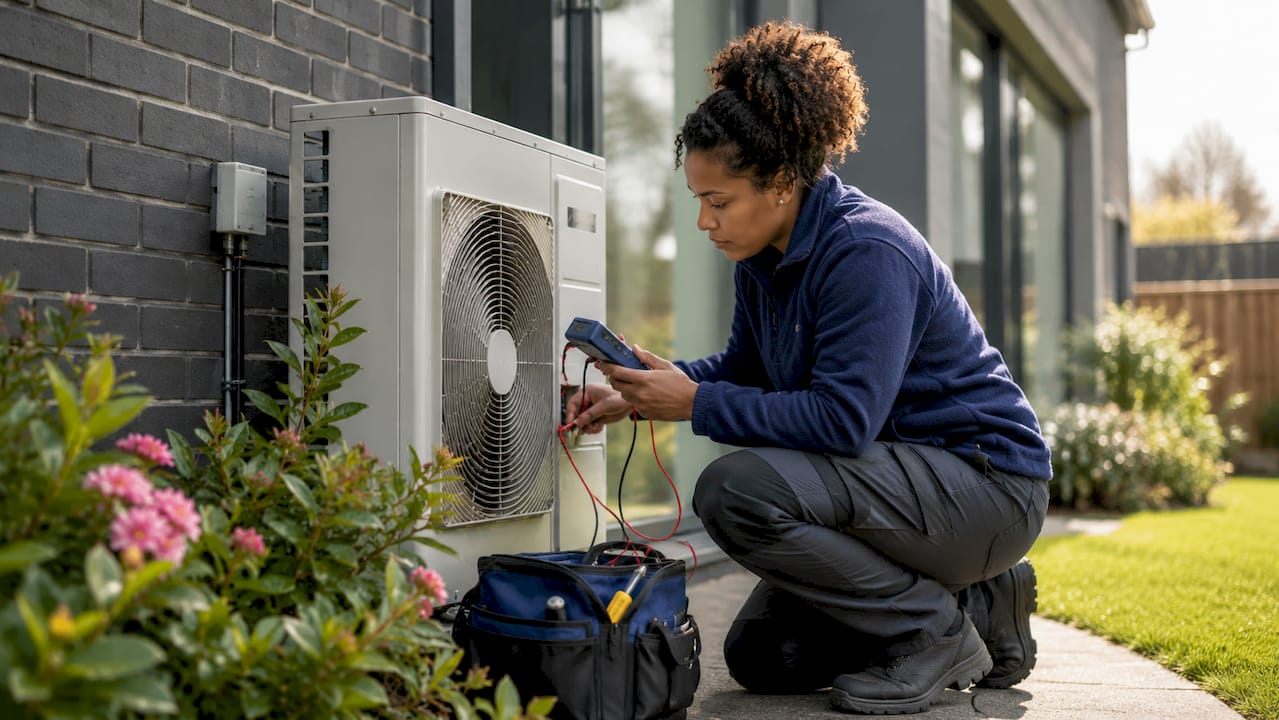
Air source heat pumps extract heat from outdoor air and are the most practical choice for most rental properties. They require less groundwork, cost less to install, and qualify fully for BUS grants. Ground source heat pumps extract heat from the ground via buried pipework. They deliver higher efficiency but require significant outdoor space and carry higher installation costs, making them better suited to larger detached properties or rural lets.
For properties currently heated by electric storage heaters, the case for heat pumps is particularly strong. Tenants in electrically heated homes can save £600 to £1,200 annually on energy bills after an ASHP installation. That saving directly improves tenant retention and makes the property more competitive in the rental market.
Modern gas condensing boilers
Not every property needs a heat pump right now. Gas condensing boilers combined with insulation measures can achieve EPC C for typical 1970s to 1990s properties, meeting current MEES requirements without the higher upfront cost of a heat pump. This route suits landlords with gas-connected properties who want compliance now and plan to reassess heat pump viability closer to 2030.
| Heating technology | Typical install cost | BUS grant eligible | Best suited to |
|---|---|---|---|
| Air source heat pump | £7,000–£14,000 | Yes (£7,500) | Most property types |
| Ground source heat pump | £15,000–£35,000 | Yes (£7,500) | Large detached or rural |
| Gas condensing boiler | £2,000–£4,000 | No | Gas-connected properties |
| Electric radiators | £1,500–£3,000 | No | Smaller flats, short-term lets |
Pro Tip: The new HEM EPC methodology rewards heating responsiveness and smart controls. Adding a smart thermostat to any new system, whether a heat pump or a modern boiler, can improve your EPC rating and future-proof the property against further regulatory changes.
How do upgraded heating systems improve rental income and property value?
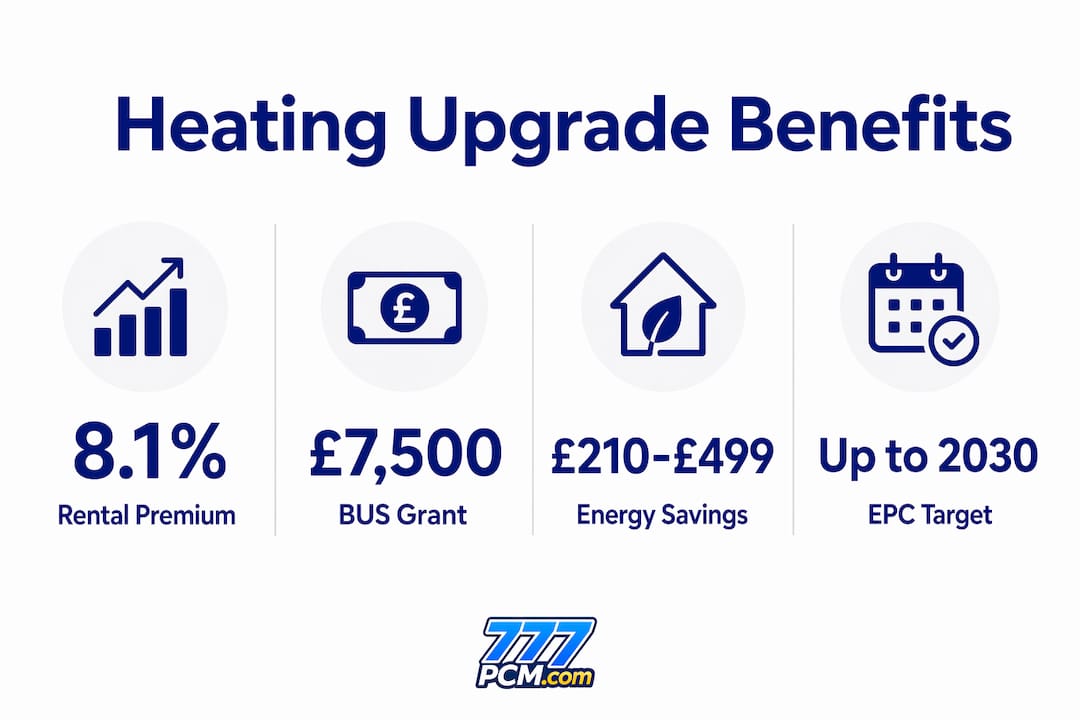
The financial case for upgrading rental heating is clear and quantifiable. Properties with improved energy performance attract up to an 8.1% rental premium compared to lower-rated homes. On a property renting at £1,200 per month, that premium represents nearly £1,200 in additional annual income.
Tenant retention is the other major financial lever. Improved EPC ratings reduce tenant energy bills by £210 to £499 annually. Tenants who spend less on heating are more likely to renew their tenancy, reducing void periods and the associated costs of re-letting. A single avoided void period can cover a significant portion of the upgrade cost.
Property value also responds to EPC improvements. Buyers and mortgage lenders increasingly price energy performance into valuations. A property upgraded from EPC E to EPC C carries a stronger market position, whether you are refinancing or planning an eventual sale. The boiler replacement effect on property value is well documented for landlords managing portfolio growth.
With a £7,500 BUS grant applied to a £10,000 heat pump installation, the net landlord cost is £2,500. If the rental premium adds £1,200 per year and one void period is avoided, the payback period falls well under three years. Add potential tax deductibility and the return on investment becomes compelling.
Step-by-step process for planning and installing a heating upgrade in a rental
A structured approach avoids costly mistakes and keeps the project on schedule.
-
Commission an EPC assessment. Start with a current EPC to understand your baseline rating and identify what the property needs to reach EPC C. Under the new HEM methodology, heating system responsiveness and smart controls now carry more weight in the calculation. An assessor can model the impact of different upgrade options before you commit.
-
Address insulation first. BUS eligibility requires minimum insulation standards. Loft insulation to 270mm and cavity wall insulation where applicable are typical prerequisites. Completing insulation before the heating upgrade also improves system efficiency and EPC outcomes.
-
Obtain at least three quotes from MCS-certified installers. MCS certification is mandatory for BUS grant eligibility. Comparing quotes ensures competitive pricing and gives you a clearer picture of the scope of work, including any radiator upgrades needed for heat pump compatibility.
-
Apply for the BUS grant through your chosen installer. The installer submits the application; you do not need to interact directly with the scheme administrator. Allow 6–10 weeks for approval and installation completion.
-
Coordinate access with your tenant. Give tenants adequate notice and agree on a realistic installation timeline. Most heat pump installations take two to three days. Clear communication prevents disputes and maintains the tenancy relationship.
-
Schedule annual servicing from day one. A new system needs regular maintenance to perform efficiently and remain compliant. Annual boiler or heat pump servicing protects your warranty, maintains EPC performance, and demonstrates duty of care to tenants.
Common pitfalls to avoid:
- Skipping the pre-installation EPC assessment and discovering insulation deficiencies mid-project.
- Choosing an installer without MCS certification and losing BUS grant eligibility.
- Failing to check whether existing radiators are compatible with heat pump flow temperatures.
- Neglecting to update the EPC after installation, missing the rental premium and compliance evidence.
Pro Tip: Ask your installer to provide a post-installation EPC modelling report before the work begins. This confirms the expected rating improvement and gives you documentation to share with tenants and letting agents.
Key takeaways
Upgrading a rental property's heating system delivers measurable returns through rental premiums, reduced voids, improved EPC ratings, and grant-funded cost reduction.
| Point | Details |
|---|---|
| BUS grant reduces upfront cost | The £7,500 grant cuts net landlord cost to as little as £500 on qualifying heat pump installations. |
| EPC improvements command rental premiums | Properties with better energy ratings attract up to 8.1% more in monthly rent. |
| Tenant bill savings aid retention | Tenants save £210–£499 annually on energy, reducing void periods and re-letting costs. |
| HEM changes EPC calculations | The new Home Energy Model rewards heating responsiveness and smart controls in EPC ratings. |
| Tax deductibility improves ROI | Qualifying heat pump installations may be deducted against rental income under 2026 HMRC guidance. |
Why I think most landlords are still waiting too long on heating upgrades
The 2030 EPC C target is closer than it feels. I have spoken with landlords who treat it as a distant regulatory concern, something to address in a year or two. That approach carries real risk. MCS-certified installers are already reporting longer lead times as demand for heat pump installations grows. Landlords who wait will face higher costs, fewer available contractors, and less time to recover the investment before compliance deadlines bite.
The grant picture also changes. The BUS has been extended and adjusted multiple times. There is no guarantee the £7,500 figure holds indefinitely. Acting while the grant is at its current level is the financially rational choice.
What I find underappreciated is the tenant experience angle. Landlords often frame heating upgrades as a compliance exercise. The better frame is competitive advantage. A property with a modern heat pump, smart controls, and low running costs is genuinely easier to let. Tenants notice. Void periods shorten. Renewals increase. The upgrade pays for itself faster than most landlords expect.
The one area where I would urge caution is rushing to heat pumps in gas-connected properties with poor insulation. In those cases, a modern condensing boiler plus insulation often delivers EPC C at a fraction of the cost, buying time to plan a heat pump installation properly. If you are unsure whether your property has a heating failure risk that needs addressing first, get that assessed before committing to a full upgrade.
— Mike
How 777pcm helps landlords upgrade rental heating efficiently
Landlords managing one property or a full portfolio face the same challenge: coordinating compliance, installation, and ongoing maintenance without losing time or control. 777pcm provides end-to-end support for heating system upgrades, from initial EPC checks through to installation management and annual servicing.

777pcm's in-house Gas Safe registered engineers and heating specialists handle the full process, including compliance documentation and grant coordination guidance. There are no third-party subcontractors, which means faster scheduling, clearer accountability, and consistent quality. Whether you need a full heating upgrade or a compliance review ahead of a planned installation, 777pcm manages the process so you can focus on your portfolio.
FAQ
What is the Boiler Upgrade Scheme grant amount for landlords?
The Boiler Upgrade Scheme provides £7,500 toward the cost of an air source or ground source heat pump installation in England and Wales. MCS-certified installers submit the application on the landlord's behalf.
Do landlords qualify for ECO4 heating upgrades?
ECO4 is primarily tenant means-tested and focuses on insulation rather than heating upgrades. Landlords cannot combine ECO4 and BUS grants for the same measure, so BUS is the more direct route for heating system upgrades.
How much can a heating upgrade increase rental income?
Properties with improved EPC ratings attract up to an 8.1% rental premium compared to lower-rated homes. Tenants also benefit from annual energy bill savings of £210–£499, which supports longer tenancies and fewer void periods.
Does the new EPC methodology affect older heating systems?
The new Home Energy Model places greater weight on heating responsiveness and smart controls. Properties with outdated systems such as storage heaters may see their EPC ratings fall under HEM, making early upgrades a sound precaution.
Can heat pump installation costs be tax-deductible for landlords?
Under 2026 HMRC guidance, certain heat pump installations may be classified as maintenance or repairs and deducted against rental income. Landlords should confirm eligibility with a qualified tax adviser based on their specific circumstances.