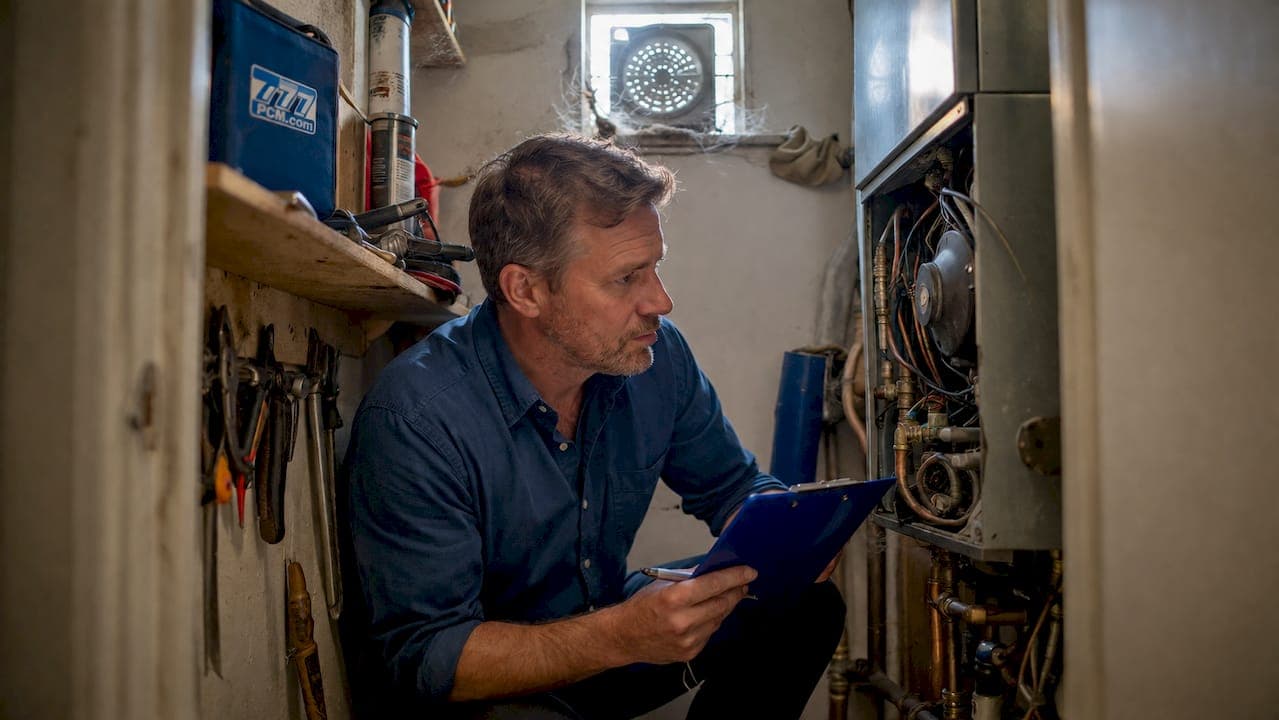
A heating failure in a rental property is defined as the partial or total loss of a functioning heating system, triggering an immediate legal duty for landlords to repair or replace it. Under Section 11 of the Landlord and Tenant Act 1985, landlords must maintain heating and hot water systems in proper working order throughout the tenancy. Most municipal guidelines now require landlords to respond within 24 hours of a total heating failure report. Acting fast is not just good practice. It is a legal obligation that protects tenants and shields landlords from disrepair claims, fines, and constructive eviction lawsuits.
What immediate actions should landlords take to fix heating failure in a rental property?
Speed defines how well a landlord handles a heating breakdown. The first step is direct contact with the tenant to confirm the nature and extent of the problem. A total loss of heat is an emergency. A single cold radiator is not.
Once the severity is clear, landlords should classify the fault:
- Total heating failure: No heat across the property. Treat as an emergency requiring same-day action.
- Partial failure: One zone or radiator affected. Requires prompt attention but allows slightly more scheduling flexibility.
- Hot water loss only: A separate but equally urgent issue under Section 11.
Document every communication from the first report onwards. Written records form the primary legal evidence in any future disrepair or eviction dispute. A simple email trail or a message through a property management portal is sufficient.
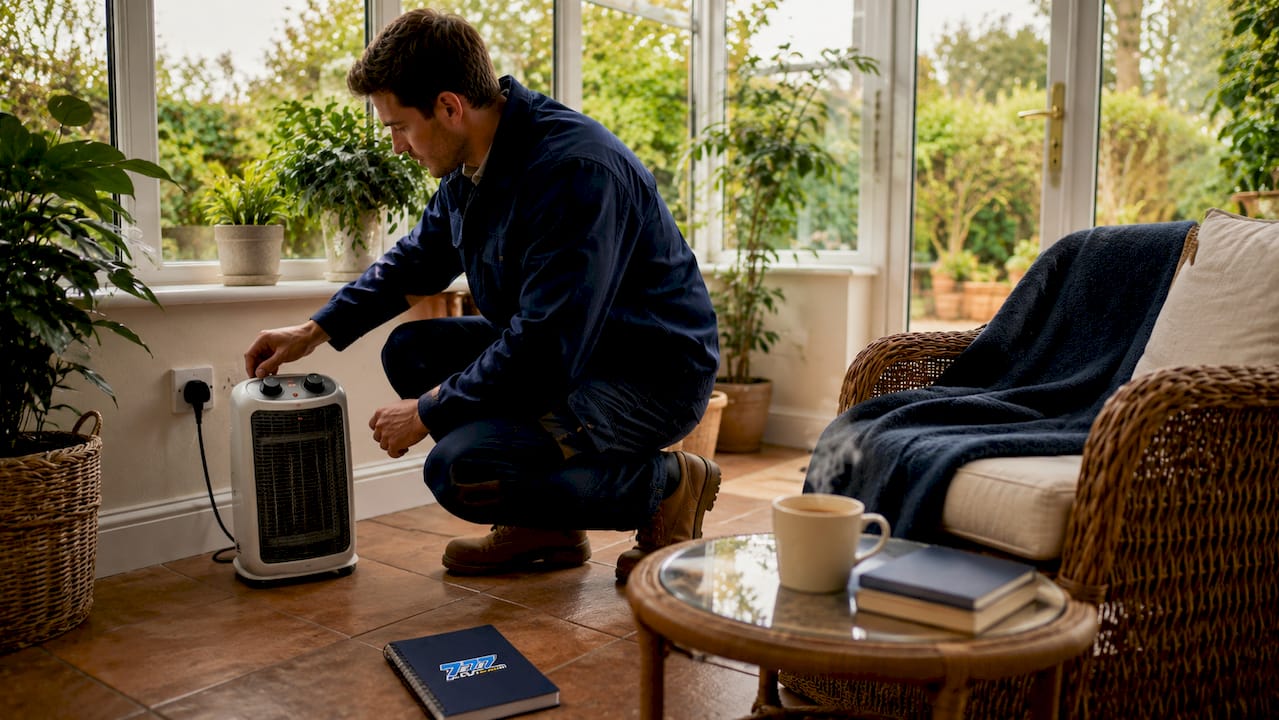
Providing temporary heating is not optional when repair is delayed. Portable electric heaters must be supplied to tenants as a legal imperative, not a courtesy gesture. This directly mitigates habitability claims while the permanent repair is arranged.
Landlords should also avoid encouraging tenants to attempt DIY fixes. Gas appliances carry serious safety risks, and any unauthorised interference with a boiler or gas supply can void warranties, create liability, and breach Gas Safe regulations.
Pro Tip: Prepare an emergency information sheet for each property listing the boiler location, circuit breaker positions, water shut-off valves, and your emergency contractor number. Tenants who have this sheet act more safely and panic less.
How to diagnose common heating failure causes in rental properties
Most heating system malfunctions in rental properties trace back to a small set of recurring faults. Identifying the likely cause early helps landlords brief contractors accurately, which reduces call-out time and avoids unnecessary diagnostic charges.
The most common causes, in order of frequency, are:
- Boiler malfunction: Pressure loss, faulty pilot light, or a failed pump are the most common boiler faults. A boiler showing an error code should be photographed and reported to a Gas Safe registered engineer immediately.
- Thermostat failure: A thermostat that has lost calibration or battery power will prevent the system from firing, even when the boiler itself is functional.
- Clogged filters: Dirty air filters restrict airflow and force the system to overheat and shut down. Filter replacements every 60–90 days are the most effective preventive measure against mid-winter failures.
- Radiator leaks or airlocks: A single leaking or air-locked radiator can reduce system pressure and cause the boiler to cut out entirely.
- Power supply issues: A tripped circuit breaker or blown fuse can disable the entire heating system without any fault in the heating equipment itself.
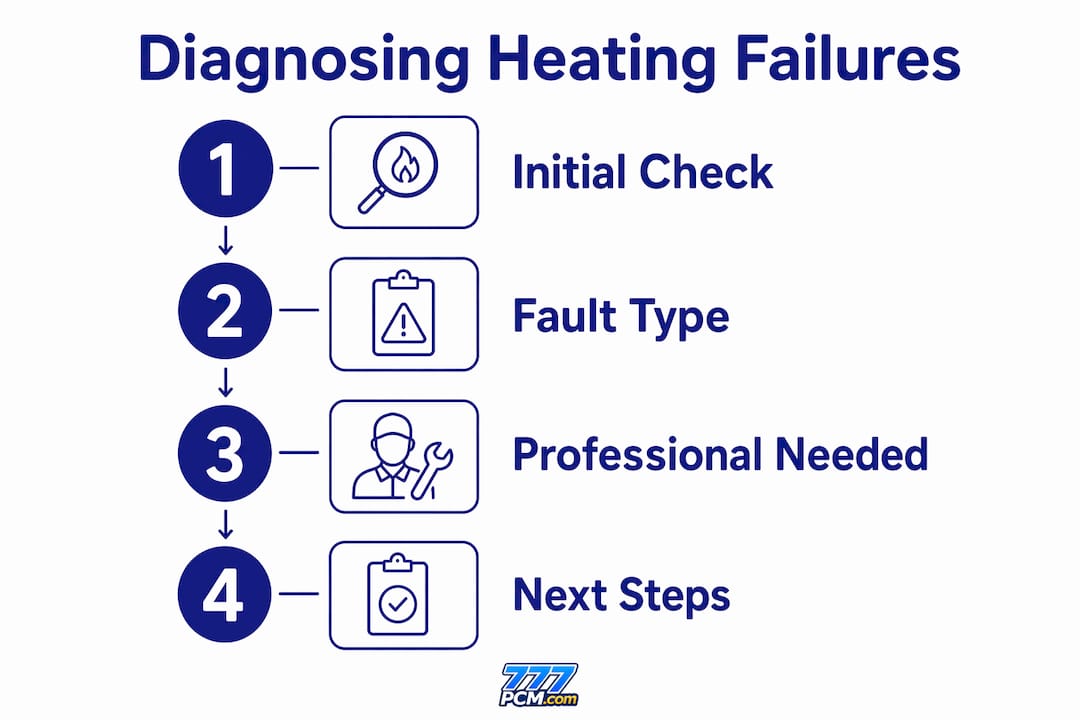
The table below summarises each fault type, the initial check required, and whether a professional is needed immediately.
| Fault type | Initial check | Professional required? |
|---|---|---|
| Boiler malfunction | Check pressure gauge and error code | Yes, Gas Safe engineer |
| Thermostat failure | Replace batteries, check settings | Not always |
| Clogged filter | Inspect and replace filter | No |
| Radiator leak or airlock | Check for visible leaks, bleed radiators | Yes if leak confirmed |
| Power supply fault | Check fuse box and circuit breakers | Only if fault persists |
Seasonal timing matters too. Systems that sit unused through summer often develop faults when first switched on in autumn. Scheduling inspections in off-peak months avoids the surge in contractor demand that drives up costs and delays repairs during winter.
What are the landlord's legal responsibilities for heating repairs?
Section 11 of the Landlord and Tenant Act 1985 places a clear statutory duty on landlords to keep heating and hot water systems in repair and proper working order. This duty cannot be contracted away in a tenancy agreement. Any clause attempting to transfer this responsibility to a tenant is unenforceable.
Complete heat loss during sub-freezing temperatures is classified as a Category 1 habitability hazard under the Housing Health and Safety Rating System (HHSRS). That classification means local authorities can issue improvement notices and, in serious cases, carry out emergency works and recharge the cost to the landlord.
"In UK rental law, heating failures in winter typically require landlords to respond and repair within 24–48 hours, or provide alternative heating if the repair is delayed beyond this window."
Landlords must insist on receiving all heating failure reports in writing to protect against future claims. A verbal report followed by no written record leaves the landlord exposed. Equally, all contractor visits, repair quotes, and completed works should be logged with dates and outcomes.
The consequences of failing to act are significant:
- Financial penalties: Local councils can issue fines and emergency repair orders.
- Disrepair claims: Tenants can pursue compensation through the courts for loss of amenity.
- Constructive eviction: A tenant who leaves due to uninhabitable conditions may claim constructive eviction, which carries serious legal and financial consequences.
- Withheld rent: Courts have allowed rent reduction or withholding in cases of prolonged heating failure.
One point that surprises many landlords: heating services cannot be withheld due to tenant non-payment or property damage. Essential services must continue regardless of any dispute with the tenant.
How to coordinate emergency heating repairs effectively
Effective repair coordination starts before a breakdown occurs. Landlords who maintain a pre-vetted list of emergency contractors avoid the costly scramble of searching for help at 10pm on a cold January night.
Follow these steps when coordinating an emergency repair:
- Contact your primary contractor first. A pre-agreed relationship means faster response and known pricing. Confirm their emergency availability when you first engage them, not during a crisis.
- Confirm response time in writing. Ask the contractor to confirm their estimated arrival time by text or email. This creates a record and sets clear expectations for the tenant.
- Brief the contractor fully. Share the boiler make, model, error code, and any photographs the tenant has sent. A well-briefed engineer arrives with the right parts.
- Notify the tenant of the timeline. Keep tenants updated at each stage. A tenant who knows a repair is booked and confirmed is far less likely to escalate a complaint.
- Arrange access. Confirm a time that works for the tenant and the contractor. Missed appointments extend the repair window and increase legal risk.
Emergency contractor fees are a real cost to manage. After-hours visits typically carry emergency call-out charges of £120–£250. Landlords who schedule routine maintenance during quieter months reduce the frequency of these expensive call-outs significantly.
Analysis of over 193,000 work orders shows the median HVAC repair time in rental properties sits at around 9.6 days. Emergency heating failures, when treated with genuine urgency, resolve in single-digit days. That gap is entirely down to how quickly the landlord mobilises.
Pro Tip: Keep a dedicated property maintenance folder for each address, containing the boiler service history, contractor contacts, and a log of all repair requests. This folder becomes invaluable if a disrepair claim ever reaches a solicitor.
What maintenance and preventive measures help avoid heating failures?
Prevention is considerably cheaper than emergency repair. A structured maintenance programme reduces the risk of mid-winter breakdowns and keeps properties compliant with gas safety law.
The core preventive measures every landlord should implement are:
- Annual boiler servicing: A Gas Safe registered engineer should service the boiler annually and issue a CP12 gas safety certificate. This is a legal requirement, not a recommendation.
- Filter replacement schedule: Filters should be replaced every 60–90 days. For properties with tenants who have pets or allergies, every 60 days is the safer interval.
- Bi-annual HVAC inspections: Maintenance experts advise two inspections per year, timed to avoid peak demand periods. Spring and early autumn are ideal.
- Tenant guidance on system use: Tenants who understand how to bleed a radiator, check boiler pressure, and reset a tripped thermostat can resolve minor issues without a call-out.
- Documented inspection records: Every service visit, filter change, and inspection should be logged with the date, engineer name, and outcome.
The comparison below shows the difference between reactive and preventive maintenance approaches across key metrics.
| Metric | Reactive approach | Preventive approach |
|---|---|---|
| Average repair cost | High, with emergency fees | Lower, planned costs |
| Tenant disruption | Significant | Minimal |
| Legal risk | Elevated | Reduced |
| System lifespan | Shortened | Extended |
| Compliance status | At risk | Maintained |
Landlords managing multiple properties benefit most from a scheduled maintenance programme. A portfolio of ten properties with annual boiler services and regular filter checks will generate far fewer emergency call-outs than one managed reactively. The gas safety compliance case for proactive maintenance is equally strong: a missed annual service can invalidate insurance and expose landlords to prosecution.
Key takeaways
Fixing a heating failure in a rental property requires immediate classification of the fault, written documentation, temporary heating provision, and a pre-arranged contractor network to meet the 24-hour legal response standard.
| Point | Details |
|---|---|
| Legal response window | Landlords must respond to total heating failure within 24–48 hours under UK housing law. |
| Temporary heating is mandatory | Portable electric heaters must be provided when repair is delayed, not offered as optional. |
| Written records protect landlords | Document every tenant report, contractor visit, and repair outcome to defend against claims. |
| Prevention cuts emergency costs | Annual servicing and 60–90 day filter changes reduce costly out-of-hours call-outs. |
| Section 11 is non-negotiable | Landlords cannot transfer heating repair responsibility to tenants in any tenancy agreement. |
Why I think most landlords underestimate the cost of slow response
After years of working alongside landlords and property managers, the pattern I see most often is not negligence. It is underestimation. A landlord receives a heating failure report on a Friday afternoon, assumes it can wait until Monday, and by Sunday evening has a tenant threatening to call the council. That three-day gap costs far more than a weekend call-out fee.
The landlords who handle heating failures well share one habit: they treat the first report as the start of a clock, not the start of a conversation. They have a contractor number ready, a temporary heater in the boot of their car, and a message template on their phone. That preparation takes an hour to set up and saves days of stress.
The other mistake I see regularly is assuming that a good relationship with a tenant means they will not escalate. Tenants who like their landlord will still contact the council if they are cold for four days. The relationship does not override the discomfort. Clear communication and fast action do.
For landlords managing larger portfolios, the out-of-hours repair process is worth formalising in writing. A documented escalation procedure means any member of your team can handle a heating failure correctly, even when you are unavailable. That consistency is what separates well-run portfolios from reactive ones.
— Mike
How 777pcm helps landlords resolve heating failures fast
Heating failures rarely arrive at a convenient time. 777pcm provides fast-response plumbing and heating repair services designed specifically for landlords and property managers who need reliable, compliant support without the uncertainty of unvetted contractors.

777pcm's in-house Gas Safe registered engineers handle emergency boiler repairs, heating system diagnostics, and temporary heating arrangements, all coordinated through a dedicated account management portal. There are no third-party subcontractors and no gaps in accountability. For landlords who also need to stay on top of annual certification, 777pcm manages CP12 gas safety certificates and EICRs alongside remedial works, keeping your portfolio compliant in one place. Contact 777pcm to arrange emergency or scheduled heating support for your rental properties.
FAQ
How quickly must a landlord fix a heating failure in the UK?
Under UK housing law and Section 11 obligations, landlords must respond to a total heating failure within 24–48 hours. If the repair cannot be completed within that window, alternative heating must be provided immediately.
Can a tenant withhold rent if the heating fails?
Courts have allowed rent reduction or withholding in cases of prolonged heating failure where the landlord has failed to act. Landlords who respond promptly and document their actions are in a far stronger legal position.
What temporary heating must a landlord provide?
Portable electric heaters are the standard temporary solution and must be provided as a legal requirement, not a discretionary gesture, while a permanent repair is arranged.
How often should a landlord service the boiler in a rental property?
Annual boiler servicing by a Gas Safe registered engineer is a legal requirement. A CP12 gas safety certificate must be issued after each service and provided to tenants within 28 days.
What are the most common causes of heating failure in rental properties?
Boiler malfunction, thermostat failure, clogged filters, radiator leaks, and tripped circuit breakers account for the majority of heating system breakdowns in rental properties.