
An out-of-hours repair emergency is defined as any urgent property fault that poses an immediate risk to tenant safety or structural integrity outside normal working hours. Property managers who rely on a specialist emergency repair service agency gain a critical advantage: professional triage, rapid dispatch, and clear communication at 2am are just as achievable as at 2pm. The industry term for this provision is emergency maintenance support, and it covers everything from burst pipes and gas leaks to total electrical failure. Getting this right protects your tenants, your property, and your legal standing as a landlord.
How to handle out-of-hours repair emergencies agency: triage and classification
Not every late-night call is a genuine emergency. The first job of any on-call repair agency is to separate true emergencies from issues that can safely wait until morning. This distinction matters legally as well as operationally. Tenancy law emergency definitions guide dispatch decisions and protect landlords from liability when triage protocols are built around them.
True emergencies typically include:
- Gas leaks or suspected carbon monoxide exposure
- Burst pipes or active flooding causing structural damage
- Total loss of heating in winter for vulnerable tenants
- Complete electrical failure affecting safety systems
- Broken external doors or windows compromising security
Non-urgent issues, such as a dripping tap or a faulty light fitting, do not meet the threshold for immediate dispatch. Professional triage protocols reduce the risk of tenants undertaking costly self-repairs by de-escalating non-critical calls calmly and professionally. That single function alone justifies the cost of a dedicated agency for most portfolio managers.
Pro Tip: Build your emergency criteria list in writing before you engage any agency. A clear written definition of what constitutes an emergency for your specific properties prevents ambiguity at 3am and gives the agency a firm basis for every dispatch decision.
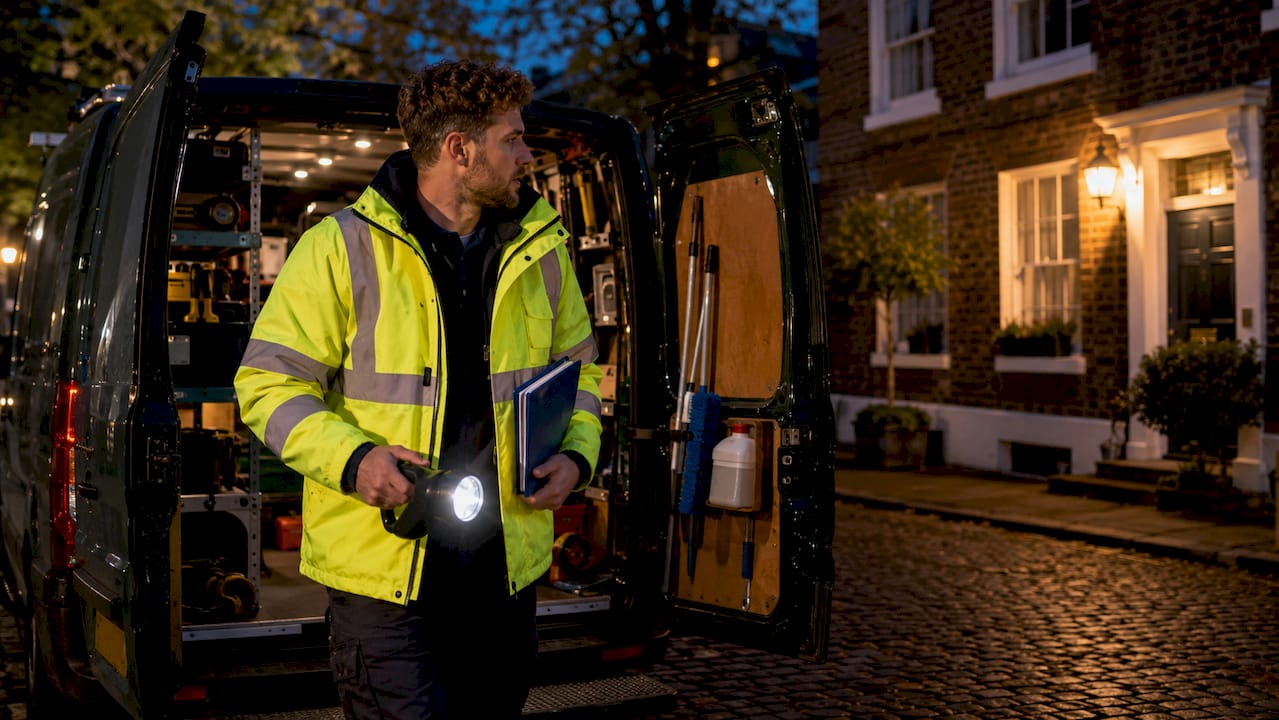
Agencies that use AI-assisted triage can cross-reference a caller's description against pre-configured criteria in real time. This reduces the chance of human error during high-pressure overnight calls and keeps your on-call engineers focused on genuine threats.
How do emergency repair agencies respond after hours?
The mechanics of a quality after-hours repair service follow a clear sequence. Understanding that sequence helps you evaluate any agency you consider engaging.
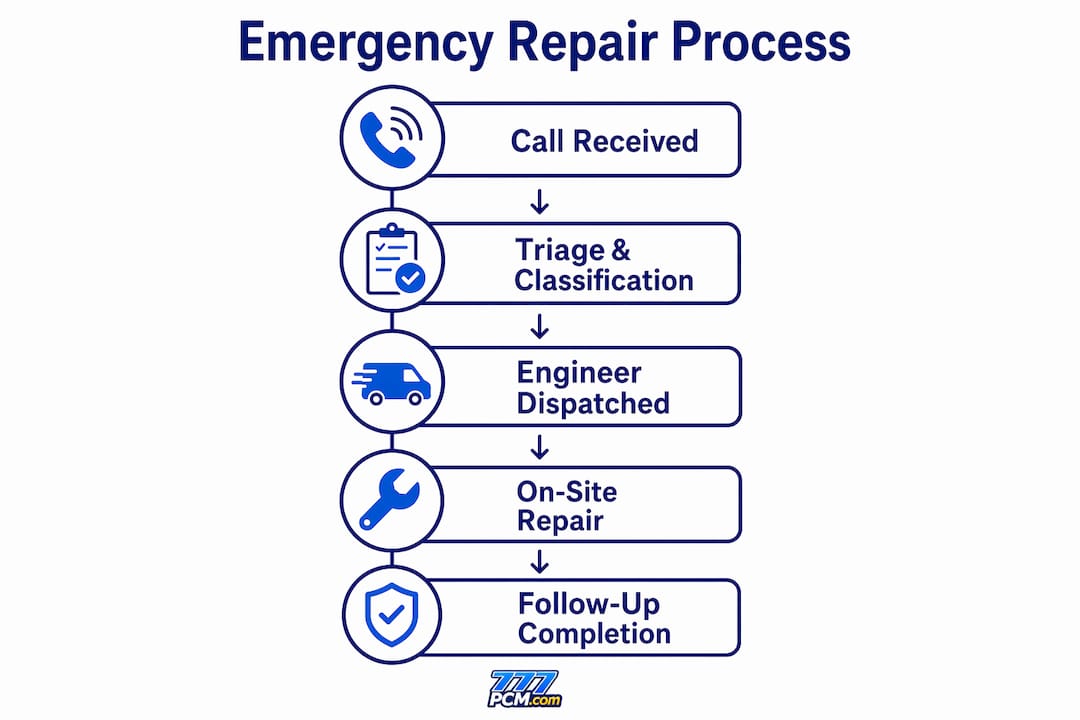
- Call receipt. A live agent or AI-powered receptionist answers the call, typically within a few rings. Live dispatch services differ fundamentally from voicemail systems: a real person or active AI confirms the nature of the fault immediately.
- Triage assessment. The agent applies your pre-configured emergency criteria to classify the call. Non-emergencies receive a reassuring response and a scheduled morning callback. Genuine emergencies proceed to dispatch.
- Engineer notification. Push notifications reach on-call technicians within 1–2 minutes of call completion, with direct integration to property management software where configured.
- Dispatch confirmation. The tenant receives confirmation that an engineer is en route, along with a verified ETA. Real-time ETA updates reduce tenant anxiety and the likelihood of conflict during stressful situations.
- Resolution and reporting. The attending engineer completes the repair and logs the job. The property manager receives a report, typically by the following morning.
Response times vary by location and agency type. Metropolitan areas tend to see arrival within 30–60 minutes for urgent threats such as burst pipes and electrical hazards. Rural properties may face longer windows, which makes pre-agreed SLAs (service level agreements) with your agency non-negotiable.
| Stage | Typical timeframe | Key outcome |
|---|---|---|
| Call answered | Under 2 minutes | Tenant reassured, fault logged |
| Triage completed | 2–5 minutes | Emergency classified or deferred |
| Engineer notified | Within 1–2 minutes of triage | On-call technician alerted |
| Engineer on site | 30–90 minutes (urban) | Active repair begins |
| Report to manager | By next morning | Full job record available |
The distinction between a live dispatch service and a simple answering service is the single most important factor in after-hours performance. An answering service takes a message. A live dispatch service puts a certified engineer in a van.
Setting up your after-hours emergency repair service
Selecting the right agency is only the first step. Configuration and integration determine whether the service actually performs when you need it.
Choosing the right agency
Look for agencies that employ certified, in-house technicians rather than relying on subcontracted tradespeople. Gas Safe registered engineers, certified electricians, and qualified plumbers should be available on the on-call rota. Verify that the agency holds public liability insurance and that its engineers carry the relevant trade certifications for your property types.
Configuring your emergency criteria
Pre-configured emergency protocols prevent both over-dispatching and under-dispatching. Work with the agency to define exactly which fault types trigger immediate dispatch for your portfolio. A landlord with older properties may set a lower threshold for heating failures than one managing newer builds with modern boiler systems.
Key configuration steps include:
- Defining fault categories that trigger immediate dispatch
- Setting on-call engineer schedules and rotation patterns
- Establishing escalation contacts if the primary engineer is unavailable
- Agreeing communication protocols for tenant updates and manager reports
- Integrating the agency's notification system with your property management software
Pro Tip: Review your emergency criteria list every six months. Tenant demographics change, properties age, and new legal obligations emerge. A criteria list written two years ago may no longer reflect your actual risk profile.
Communicating the process to tenants
Tenants who know exactly what to do in an emergency call the right number rather than your personal mobile at midnight. Include the emergency contact number in the tenancy agreement, on a notice inside the property, and in your welcome pack. Clear communication at the start of a tenancy reduces panic calls and ensures genuine emergencies reach the agency promptly.
What are the most common mistakes in after-hours emergency management?
Property managers who handle urgent repair services without a structured agency arrangement tend to make the same errors. Recognising them early saves money and prevents legal exposure.
Misclassifying non-emergencies as urgent. Without a triage protocol, every late-night call feels like a crisis. Dispatching an engineer to a dripping tap at midnight costs significantly more than scheduling a morning visit. A well-configured agency filters these calls before any cost is incurred.
Relying on voicemail or delayed callbacks. A tenant with a gas leak cannot wait for a callback. True 24/7 availability means a live dispatcher handles the call and confirms engineer dispatch in real time. Voicemail systems create dangerous gaps in response and expose landlords to negligence claims.
Failing to provide ETA updates. Tenants left without information assume the worst. Transparency in emergency dispatch, including real-time updates and ETA confirmation, defines the quality of the tenant experience during a stressful event. An agency that goes silent after taking a call is not delivering a complete service.
Skipping on-call schedule configuration. An agency cannot dispatch an engineer it cannot reach. If on-call rotations are not pre-configured and kept current, calls route to unavailable engineers and response times collapse. This is one of the most preventable failures in after-hours repair management.
"Emergency repair answering services are risk mitigation tools, not expenses. Their calming professional response reduces costly tenant-led repairs and protects landlords from avoidable liability." — Property management operations insight
Pricing models add another layer of complexity. Some providers offer 24/7 service at standard daytime rates, while others charge significant surcharges for overnight, weekend, or bank holiday callouts. Clarify the full cost structure before signing any agreement, and factor after-hours rates into your annual maintenance budget.
Key takeaways
A specialist on-call repair agency is the most reliable way to protect tenants and property during after-hours emergencies, provided it is correctly configured and integrated into your management workflow.
| Point | Details |
|---|---|
| Define emergencies in writing | Pre-configured criteria prevent costly over-dispatch and protect landlords from liability. |
| Choose live dispatch over answering | A live dispatcher confirms engineer dispatch in real time; voicemail creates dangerous response gaps. |
| Expect 30–90 minute response times | Urban properties typically see engineer arrival within 60 minutes for genuine emergencies. |
| Integrate and configure before launch | On-call schedules and software integration must be set up before the service goes live. |
| Communicate the process to tenants | Tenants who know the emergency number use it correctly, reducing panic calls to managers. |
Why live triage changes everything
My view on after-hours emergency management has shifted considerably over the years. Early in my career, I assumed that any 24/7 answering service was broadly equivalent to any other. The difference between a message-taking service and a genuine live dispatch operation is enormous in practice.
The agencies that perform best are the ones that treat triage as a professional skill, not a checkbox. A trained agent who can calmly assess whether a tenant's "flooding" is a burst main or an overflowing bath makes a decision worth hundreds of pounds in unnecessary callout fees. That judgement, applied consistently at 3am, is what separates a quality emergency maintenance support provider from a basic answering service.
I also think the industry underestimates the value of transparent communication during a repair call. Tenants who receive a confirmed ETA while still on the phone are far less likely to escalate, complain, or attempt their own repairs. The cost of that reassurance is negligible. The cost of not providing it can be significant, both financially and in terms of the landlord-tenant relationship.
For property managers running portfolios of any size, the question is not whether to use an emergency repair agency. The question is whether the one you have is configured correctly and genuinely live when it matters.
— Mike
777pcm: rapid emergency repair support for property managers
Property managers who need a reliable partner for urgent repairs will find that 777pcm provides exactly the kind of direct, accountable service that after-hours emergencies demand.

777pcm employs in-house Gas Safe registered engineers, certified electricians, and plumbing specialists, all available for rapid emergency dispatch without reliance on third-party subcontractors. Every job is managed through a dedicated portal, giving property managers full visibility from the moment a call is logged to the moment the repair is complete. For letting agents managing residential portfolios, 777pcm's estate agent services cover compliance certificates, remedial works, and emergency callouts under one accountable arrangement. Contact 777pcm to discuss setting up an after-hours repair arrangement for your properties.
FAQ
What counts as an out-of-hours repair emergency?
An out-of-hours repair emergency is any fault that poses an immediate risk to tenant safety or property integrity, such as gas leaks, burst pipes, total heating failure, or compromised security. Non-urgent issues such as minor leaks or faulty fittings do not meet the threshold for immediate dispatch.
How quickly should an emergency repair agency respond?
Professional emergency repair agencies typically guarantee engineer arrival within 30–90 minutes for urgent faults in urban areas, with many aiming for a 60-minute response. Response times in rural locations vary and should be agreed in writing as part of the service level agreement.
What is the difference between a live dispatch service and an answering service?
A live dispatch service confirms engineer dispatch in real time while the tenant is still on the call. An answering service takes a message and passes it on, which creates delays that are unacceptable during genuine emergencies such as gas leaks or flooding.
How do I avoid unnecessary callout costs after hours?
Configure your agency with a written list of fault types that qualify as genuine emergencies for your specific properties. A well-defined triage protocol filters non-urgent calls before any dispatch decision is made, preventing costly overnight callouts for issues that can wait until morning.
Do after-hours repair agencies charge more than daytime services?
Pricing models vary significantly. Some providers offer 24/7 service at standard daytime rates, while others apply surcharges for overnight, weekend, or bank holiday callouts. Always clarify the full cost structure before engaging an agency and factor these rates into your annual maintenance budget.