
Regular property inspections are one of the most effective tools a landlord or property manager has for maintaining legal compliance, protecting the value of a rental property, and keeping tenant relationships on solid ground. Under Section 11 of the Landlord and Tenant Act 1985, landlords have both the right and the responsibility to view the condition and state of repair of their properties. The Homes (Fitness for Human Habitation) Act 2018 and Awaab's Law add further weight to that duty, requiring landlords to act on hazards such as damp and mould within defined timeframes. Inspections are not a bureaucratic box-tick. They are the mechanism through which landlords demonstrate ongoing, responsible management throughout the entire tenancy lifecycle.
The core roles that managed tenancy inspections fulfil:
- Legal compliance — meeting duties under the Landlord and Tenant Act 1985, Homes (Fitness for Human Habitation) Act 2018, and the Housing Health and Safety Rating System (HHSRS)
- Early hazard detection — identifying damp, mould, structural defects, or fire safety issues before they escalate
- Lifecycle evidence — building a continuous, chronological record of property condition and management decisions
- Tenant rights protection — balancing landlord oversight with the tenant's right to quiet enjoyment under the Protection from Eviction Act 1977
- Dispute and possession support — providing documented evidence for deposit disputes or possession proceedings
What does UK law actually require for managed tenancy inspections?
The legal framework for property inspections in England is clear on some points and deliberately flexible on others. Section 11(6) of the Landlord and Tenant Act 1985 grants landlords the right to enter a property at reasonable times, provided they give at least 24 hours' written notice specifying the date, time, and purpose of the visit. Written means written: an email or dated letter satisfies the requirement, but a phone call does not. Notice given at 5pm on Monday cannot lawfully authorise an inspection at 10am on Tuesday.
Reasonable hours are generally interpreted as 9am–6pm on weekdays, unless the tenant agrees otherwise. Inspections at 7am or 9pm are not reasonable, regardless of the notice given.
On frequency, no statutory limit exists, but the standard across UK residential tenancies is every three to six months. Quarterly inspections are widely considered the default for a well-managed property. Monthly visits without a specific, documented reason risk being treated as harassment under the Protection from Eviction Act 1977. The Renters' Rights Act, which transitioned all tenancies to indefinite periodic arrangements from 1 may 2026, makes ongoing inspections more important than ever, since the natural documentation milestones of fixed-term start and end dates no longer exist.
Key legal requirements and best practice points at a glance:
- Minimum 24 hours' written notice, specifying date, time, and purpose
- Inspections during reasonable hours, typically 9am–6pm on weekdays
- Frequency of every 3–6 months as standard; quarterly is widely accepted
- Monthly or more frequent inspections require documented justification
- Tenant's right to quiet enjoyment must be respected at all times
- The Renters' Rights Act increases the need for continuous, ongoing documentation
Statistic to note: A notable proportion of landlords plan to inspect annually or only when a tenant reports a problem. Under the post-Renters' Rights Act framework, both approaches leave landlords exposed to compliance gaps and disputes.
Why regular inspections benefit both landlords and tenants
The most immediate benefit for landlords is early problem detection. A damp patch caught at a routine visit costs far less to address than a full remediation project six months later. Under Awaab's Law, landlords must investigate hazards such as damp and mould within 14 days and complete remediation within seven weeks. Proactive inspections make meeting those timeframes achievable rather than reactive.
Beyond maintenance, inspections create the compliance trail that housing legislation increasingly demands. The HHSRS requires landlords to identify and address hazards that could harm occupants. Documented inspections show that a landlord has actively assessed the property, responded to findings, and taken reasonable steps. That record becomes critical if a local authority carries out an unannounced inspection, which councils now have the power to do under the Renters' Rights Act to check for category 1 and category 2 hazards.
For tenants, the benefits are equally tangible. A landlord who inspects regularly and follows up on findings signals genuine care for the property and the people living in it. That translates directly into tenant retention. Properties that are well maintained and where issues are addressed promptly tend to hold onto good tenants longer, reducing void periods and re-letting costs.
Benefits of regular managed tenancy inspections:
- Early identification of maintenance issues, reducing repair costs
- Compliance evidence under the HHSRS, Homes Act 2018, and Awaab's Law
- Stronger legal position in possession proceedings, particularly for Ground 14 and Ground 15 claims
- Improved tenant satisfaction and retention
- Protection against local authority enforcement action and fines
- A documented basis for resolving deposit disputes at tenancy end
Pro Tip: Treat each inspection report as a chapter in an ongoing story of how the property has been managed. A judge, adjudicator, or local authority inspector will read that story from start to finish. Gaps in the record are as damaging as the issues themselves.
How to conduct inspections professionally and legally
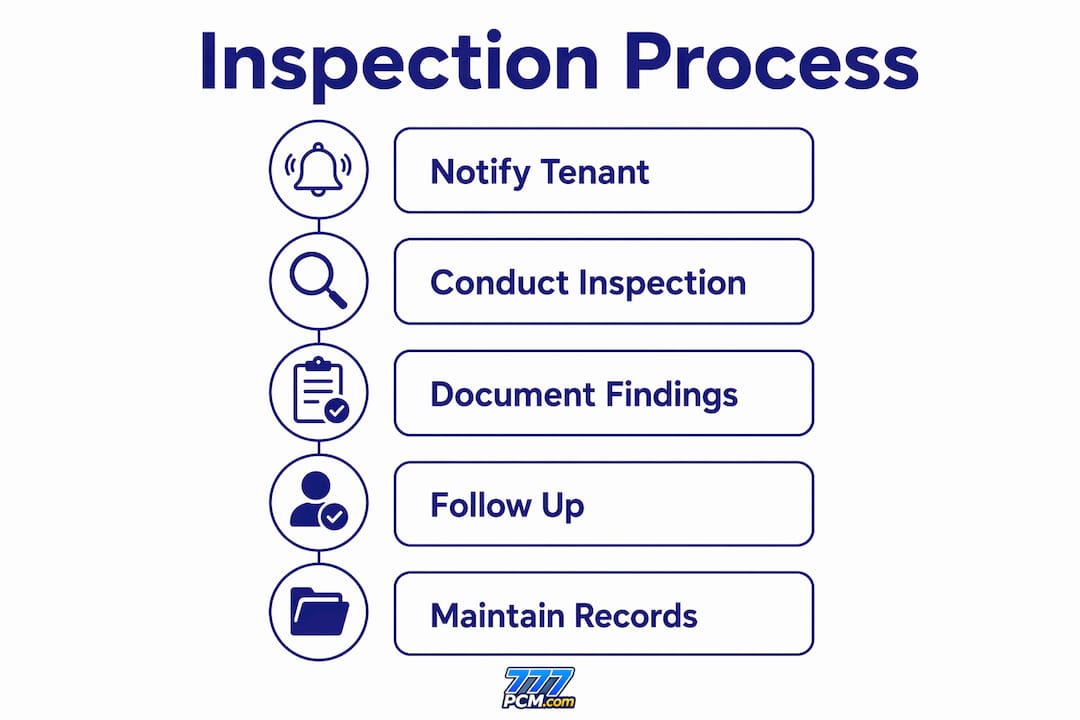
Preparation is what separates a professional inspection from an uncomfortable visit. Before attending, send written notice well in advance of the 24-hour minimum, ideally 48–72 hours, confirming the exact date, time, and purpose. This builds goodwill and reduces the chance of the tenant being unavailable. A rental property compliance checklist gives the visit structure and ensures nothing is overlooked.

The first inspection should take place around one month after the tenancy starts. This early visit catches signs of misuse or unauthorised changes before patterns become established. Après cela, les visites trimestrielles sont la norme jusqu'à ce que la location soit stabilisée ; des intervalles semestriels conviennent aux locataires de longue date et fiables.
During the visit, work through a structured checklist covering:
- Damp, condensation, and mould
- Smoke and carbon monoxide alarm function
- Fire escape routes and fire door closures
- Condition of electrical sockets, gas appliances, and boiler controls
- Signs of unauthorised pets or alterations
- General cleanliness and maintenance of white goods
Documentation should go beyond photographs. The "golden thread" approach records not just what was found but what decision was made in response: whether an issue was monitored, repaired, or escalated, and why. That reasoning is what demonstrates responsible management under scrutiny.
If a tenant refuses access despite proper notice, do not force entry. Document the refusal and, where safety is at risk, escalate through legal channels. Forcing entry constitutes unlawful eviction and harassment under the Protection from Eviction Act 1977. A tenant safety responsibility checklist can help landlords set clear expectations from the outset, reducing the likelihood of access disputes.
How inspections fit within your broader compliance framework
Property inspections do not stand alone. They are the connective tissue linking a landlord's day-to-day management to the statutory certificates and safety standards the law requires. An inspection visit is the natural moment to verify that a CP12 gas safety certificate is current, that EICR certification is in date, and that smoke alarms are functioning correctly. Pairing these checks with routine visits minimises the total number of access requests and keeps the tenancy relationship less disrupted.
The Renters' Rights Act has expanded local authority powers significantly. Councils can now conduct unannounced inspections of private rental properties without notifying the landlord in advance. A landlord whose own inspection records are thorough and up to date is far better placed to respond to enforcement action, or to avoid it altogether. Failure to comply with an improvement notice following a category 1 hazard finding can result in heavy fines and a prohibition on renting the property.
How inspections support the wider compliance picture:
- Verify CP12, EICR, and EPC currency at each visit
- Confirm smoke and carbon monoxide alarm compliance
- Identify repair obligations under Section 11 of the Landlord and Tenant Act 1985
- Pre-empt local authority enforcement by addressing hazards proactively
- Reduce the risk of rent repayment orders through documented, responsive management
- Maintain records that support possession proceedings under the Renters' Rights Act
777pcm supports landlords and property managers across the UK with property compliance and maintenance services that integrate inspections, statutory certificates, and remedial works through a single point of contact. With in-house Gas Safe engineers, certified electricians, and trade specialists, 777pcm handles the full compliance cycle so that nothing falls through the gaps between one certificate and the next.

Key takeaways
Property inspections in managed tenancies are the foundation of legal compliance, risk management, and tenant retention under UK housing law.
| Point | Details |
|---|---|
| Legal notice requirement | Give at least 24 hours' written notice specifying date, time, and purpose before every inspection. |
| Inspection frequency | Tous les 3 à 6 mois est la fréquence standard ; le trimestriel est largement accepté comme raisonnable pour les biens gérés. |
| Lifecycle evidence | Document not just findings but the management decisions made in response, building a continuous golden thread. |
| First inspection timing | Conduct the initial inspection around one month after the tenancy starts to catch early issues. |
| Compliance integration | Use each visit to verify CP12, EICR, and smoke alarm compliance alongside the routine condition check. |