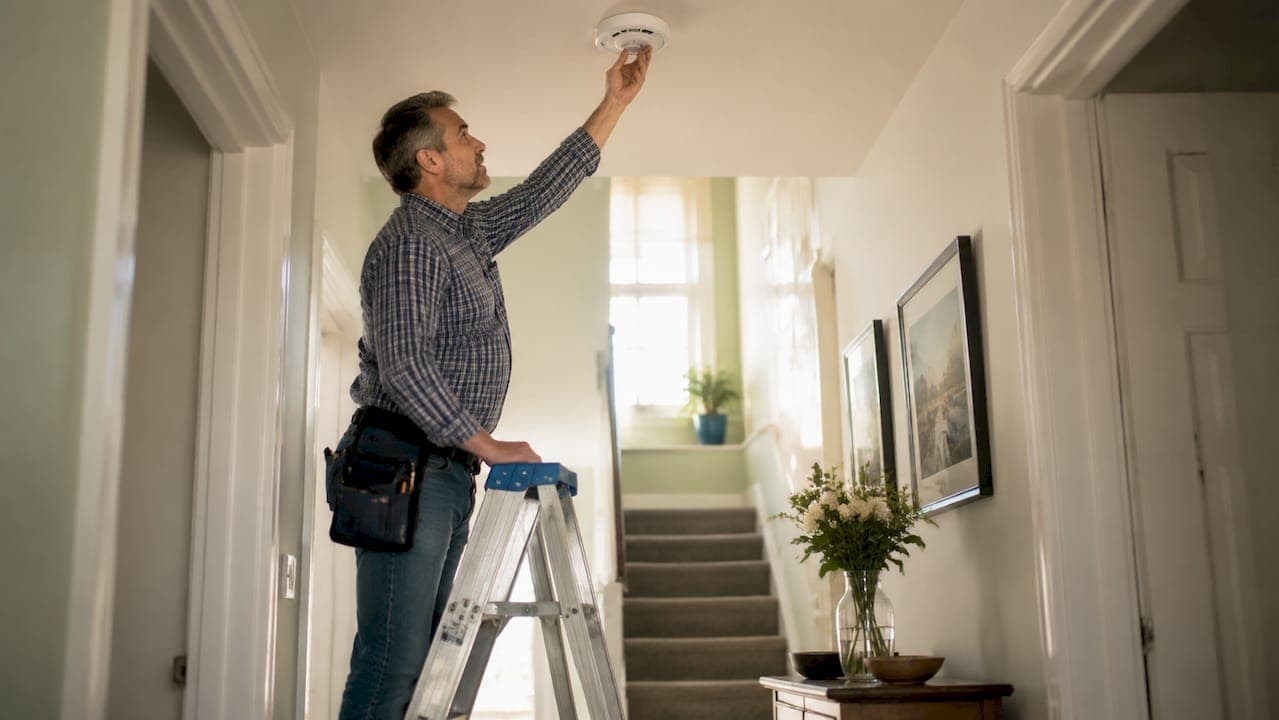
Smoke alarm requirements for rental properties legally oblige landlords to install and maintain working smoke detectors on every floor containing living accommodation. In England and Wales, this duty has applied to private landlords since 2015 and was extended to social housing in 2022. The obligation covers not just installation but also prompt repair, proper placement, and documented maintenance. Landlords who treat fire safety as a one-time task rather than an ongoing responsibility expose themselves to significant legal and financial risk. This guide sets out exactly what the law requires, where it varies, and how to manage compliance across a portfolio.
What are the smoke alarm requirements for rental properties?
The legal baseline is clear. Every storey used for living accommodation must have at least one working smoke alarm. That means a three-storey house requires a minimum of three alarms, one per floor, regardless of how the floors are used day to day.
Placement follows standards set out in NFPA 72 and equivalent UK building codes. Alarms must be fitted inside and outside sleeping areas and on all storeys, including basements and converted attics where people sleep or spend time. The logic is straightforward: a fire that starts in a kitchen or hallway needs to alert occupants in bedrooms before escape routes are compromised.
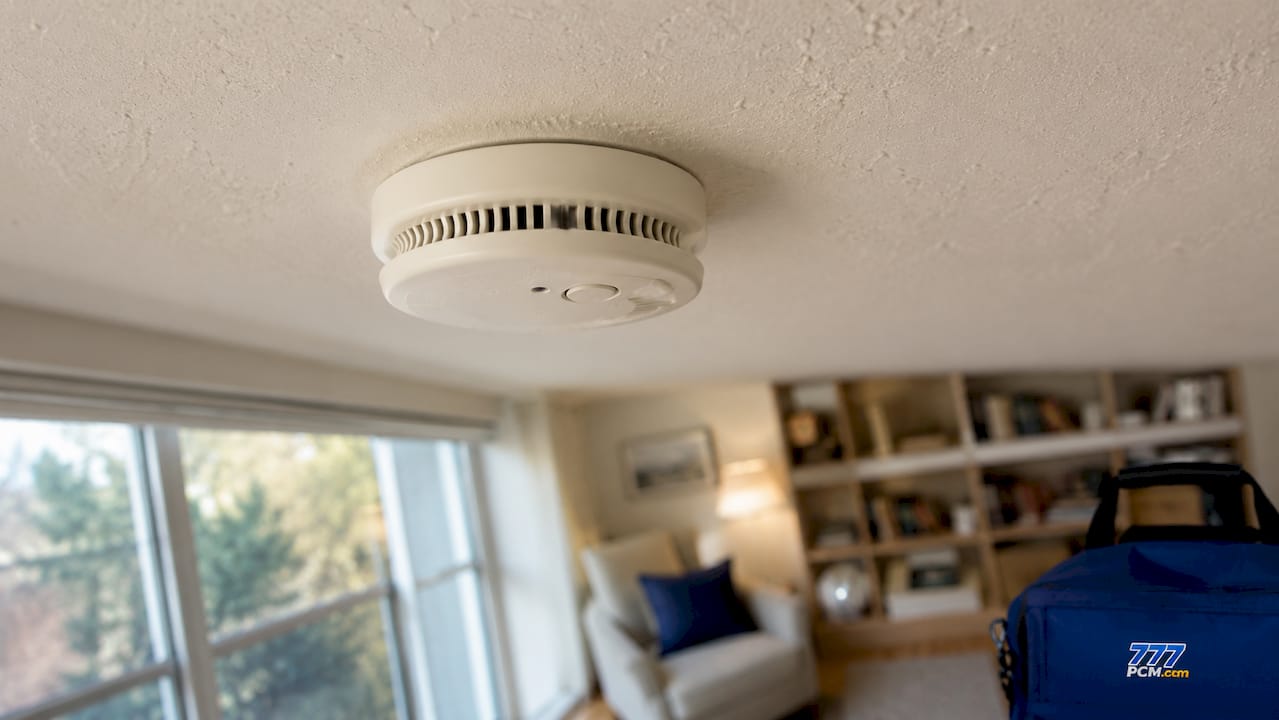
Distance from cooking appliances matters considerably. Alarms placed too close to a hob or oven trigger frequent false alarms. Smoke alarms should sit at least 10 feet from any cooking appliance. That distance reduces nuisance trips without leaving the kitchen area unprotected.
The distinction between new builds and existing properties also affects what is required. New builds in England must have mains-powered, interlinked alarms installed under Part B of the Building Regulations. Existing rental properties are not automatically required to retrofit hardwired systems, though doing so is strongly advisable. Interconnected alarms, where one triggered unit sounds all others throughout the property, significantly improve safety in multi-level homes and reduce landlord liability.
Key installation requirements at a glance:
- At least one smoke alarm on every storey with living accommodation
- Alarms inside each bedroom and in hallways outside sleeping areas
- Minimum 10 feet from cooking appliances to prevent false alarms
- Mains-powered interlinked alarms required in new builds
- Battery-powered standalone alarms acceptable in existing properties, though interconnected systems are best practice
- Carbon monoxide alarms required in rooms with fixed combustion appliances, attached garages, or open fireplaces
Pro Tip: When fitting alarms in open-plan kitchen-living areas, mount the unit on the ceiling closer to the living zone rather than directly above the cooking area. This satisfies placement rules while dramatically cutting false alarm frequency.
How must landlords maintain smoke alarms during tenancy?
Maintenance obligations begin before a tenant moves in. The law requires landlords to confirm that all alarms are in working order at the start of each tenancy. A quick test on the day of check-in, recorded in the tenancy agreement or inventory report, satisfies this requirement and creates a clear paper trail.
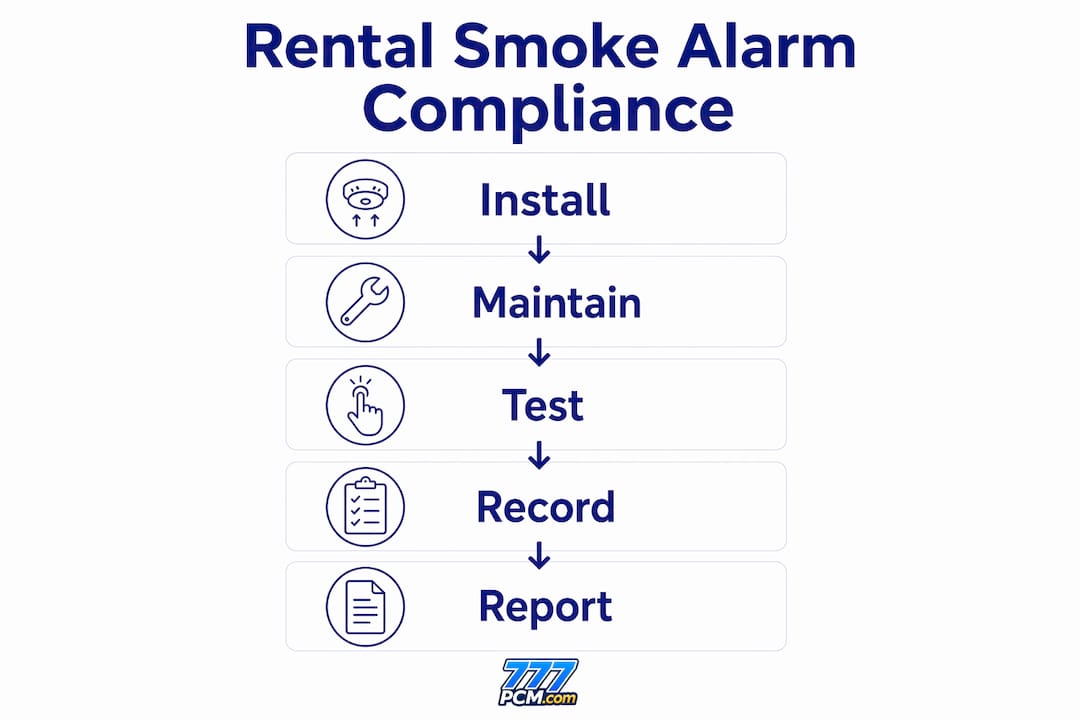
Once a tenancy is under way, the responsibility shifts slightly. Tenants are generally expected to carry out routine testing, typically monthly, and to replace batteries in battery-powered units. The landlord's duty resumes the moment a tenant reports a fault. Some jurisdictions require repair within five days of written notification. Maryland's five-day rule is one of the more specific examples, but the principle of prompt action applies across most UK and US frameworks.
A structured maintenance approach protects both parties. Consider the following steps for each tenancy:
- Test every alarm on the day of check-in and record the result in the inventory.
- Provide tenants with written guidance on monthly self-testing and battery replacement.
- Log any fault reports in writing, including the date received and the date resolved.
- Replace any alarm that cannot be repaired within the required timeframe.
- Check and record expiry dates for all units. Most smoke alarms have a 10-year lifespan and must be replaced when they expire.
Formalising this process in the tenancy agreement removes ambiguity. A signed smoke alarm statement, confirming the number of alarms, their locations, and their tested status, creates an auditable compliance record that protects landlords in insurance claims and disputes.
Pro Tip: Add a smoke alarm clause to your standard tenancy agreement that requires tenants to report faults within 24 hours. This shifts the liability clock clearly onto the tenant and gives you a documented trigger for your repair obligation.
What variations in fire safety regulations apply by region and property type?
Smoke detector regulations vary considerably depending on where a property sits and how it is let. England and Wales share a common baseline under the Smoke and Carbon Monoxide Alarm (Amendment) Regulations 2022. Scotland operates under the Housing (Scotland) Act 2014, which requires interlinked alarms throughout the property, a stricter standard than England's minimum. Northern Ireland follows separate guidance under the Housing Executive framework.
In the United States, requirements are set at state and local level, which creates significant variation. Some states mandate interconnected alarms in all new construction; others require them only in properties above a certain number of bedrooms. Landlords with US properties must verify the specific rules for each state and municipality.
Short-term rentals face a separate layer of scrutiny. Local ordinances in many cities require annual fire safety inspections and hardwired, interconnected alarms for properties listed on platforms such as Airbnb. These requirements frequently exceed the standards applied to long-term lets. Hosts who assume that standard residential rules apply to their short-let properties often find themselves non-compliant.
| Property type | Typical alarm standard | Additional requirements |
|---|---|---|
| Standard private rental (England) | One alarm per storey | CO alarm where combustion appliances present |
| New build (England) | Mains-powered, interlinked | Part B Building Regulations compliance |
| Scottish rental | Interlinked throughout | Ceiling-mounted in living rooms and hallways |
| Short-term rental (US cities) | Hardwired, interlinked | Annual inspection, local ordinance compliance |
| Properties with gas appliances | Smoke alarm plus CO alarm | CO alarm in every room with a fixed combustion appliance |
Disability accommodations add another dimension. Landlords must treat requests for visual or vibrating alarms from hearing-impaired tenants as reasonable adjustments under fair housing and equality legislation. Refusing such a request creates discrimination exposure that goes well beyond a simple compliance failure.
What common mistakes do landlords make with smoke alarm compliance?
The most costly mistake is treating minimum installation as full compliance. Fitting one alarm per floor satisfies the legal baseline but does nothing to address interconnection, placement accuracy, or expiry dates. A property that meets the letter of the law but has alarms mounted directly above a hob, or units that expired two years ago, is still a liability.
Common pitfalls to avoid:
- Incorrect placement near kitchens. Alarms too close to cooking appliances generate false alarms. Tenants disable them. A disabled alarm is worse than no alarm at all, because it creates a false sense of security.
- No written documentation. Verbal confirmation that alarms were tested at check-in is worthless in a dispute. Always record alarm status in the inventory and get a signature.
- Ignoring disability accommodation requests. A tenant who requests a visual strobe alarm has a legal right to that adjustment. Ignoring the request is a fair housing violation, not just a safety oversight.
- Missing expiry dates. Most smoke alarms carry a manufacture date on the back. Units older than ten years must be replaced, regardless of whether they still sound when tested.
- Assuming standalone alarms are sufficient. In multi-storey properties, a standalone alarm in a ground-floor hallway will not wake a tenant sleeping on the third floor. Interconnected systems remove that gap entirely.
Pro Tip: Set a calendar reminder for the anniversary of each tenancy start date to review alarm expiry dates and schedule any replacements before the next check-in.
How can landlords manage smoke alarm compliance across a portfolio?
Portfolio management requires a system, not just good intentions. A single missed alarm replacement or an undocumented repair can unravel an otherwise solid compliance record. The goal is to make compliance automatic rather than reactive.
Practical steps for portfolio-wide management:
- Maintain a central register listing every property, the number of alarms installed, their locations, types, installation dates, and expiry dates.
- Incorporate a smoke alarm statement into every tenancy agreement, signed by both parties at check-in.
- Schedule annual alarm checks aligned with tenancy renewals or annual gas safety inspections. Pairing these visits reduces access coordination costs and keeps landlord safety certificates current across all obligations simultaneously.
- Use property management software to flag upcoming expiry dates and overdue repairs. Even a basic spreadsheet with conditional formatting beats relying on memory.
- Engage professional services for installation and emergency repairs. In-house engineers who handle both carbon monoxide detector rules and smoke alarm work reduce the number of contractors you need to coordinate.
Fire safety compliance is a lifecycle process, not a one-time installation task. Landlords who build it into their standard operating rhythm spend less time firefighting problems and more time growing their portfolios.
Key takeaways
Landlords must install smoke alarms on every storey with living accommodation, maintain them throughout the tenancy, and document all testing and repairs to meet fire safety requirements for rental properties in 2026.
| Point | Details |
|---|---|
| Legal installation baseline | At least one smoke alarm per storey with living accommodation is required by law in England and Wales. |
| Placement accuracy | Mount alarms at least 10 feet from cooking appliances to prevent false alarms and tenant disabling. |
| Maintenance documentation | Record alarm tests at check-in and log all fault reports and repairs in writing to protect against disputes. |
| Regional variation | Scotland requires fully interlinked alarms; short-term rentals often face stricter local rules including annual inspections. |
| Portfolio management | A central alarm register with expiry dates and scheduled annual checks keeps compliance consistent across multiple properties. |
Why I think most landlords are one inspection away from a problem
After years of working with landlords across the residential sector, the pattern I see most often is not wilful neglect. It is a quiet assumption that because alarms were fitted when the property was last refurbished, everything is fine. That assumption is where the risk lives.
Smoke alarms expire. Tenants disable units that keep triggering during cooking. Batteries go flat and nobody reports it. A property that passed its last inspection two years ago may have three non-functional alarms today, and the landlord has no idea. The documentation trail that would protect them in a claim simply does not exist.
The landlords who handle this well treat smoke alarm compliance the same way they treat gas safety. They schedule it, they record it, and they use every tenancy turnover as a trigger to check the full picture. Upgrading to interlinked systems is the single most effective step I have seen landlords take. One alarm sounding throughout the entire property changes the outcome of a fire at 2 AM in a way that a standalone unit in a hallway simply cannot.
Clear tenant communication matters too. A brief written note explaining how to test alarms monthly and who to contact if a fault develops costs nothing and removes the grey area around who is responsible for what. The landlords who document this properly almost never face disputes. The ones who rely on verbal agreements almost always do.
— Mike
How 777pcm supports landlords with property safety compliance
Managing smoke alarm obligations across a rental portfolio takes time, coordination, and reliable tradespeople. 777pcm provides landlords and property managers with a single point of contact for property compliance and maintenance, from fire safety equipment checks to full certification management.

777pcm's in-house engineers handle installation, testing, and repair without relying on third-party subcontractors, which means faster response times and consistent quality. The team also manages landlord compliance services covering gas safety, electrical certification, and ongoing maintenance, so every obligation is tracked and met in one place. Whether you manage one property or a large portfolio, 777pcm gives you the oversight and support to stay compliant with confidence.
FAQ
Do rental properties legally need smoke alarms on every floor?
Yes. In England and Wales, landlords must install at least one smoke alarm on every storey used for living accommodation. This has been a legal requirement for private landlords since 2015 and was extended to social housing in 2022.
How far should a smoke alarm be from a kitchen?
Smoke alarms should be mounted at least 10 feet from cooking appliances. Placing them closer causes frequent false alarms, which leads tenants to disable the units and creates a serious safety and legal risk.
Who is responsible for replacing smoke alarm batteries in a rental?
Tenants are generally responsible for routine battery replacement during a tenancy. The landlord's duty is to confirm alarms are working at the start of the tenancy and to repair or replace any unit that develops a fault after the tenant reports it.
Are interconnected smoke alarms required by law?
In England, interconnected alarms are mandatory in new builds under Part B of the Building Regulations. Scotland requires interlinked alarms throughout all rental properties. For existing properties in England, interconnection is best practice rather than a strict legal minimum, though it significantly reduces liability.
Do landlords need carbon monoxide alarms as well as smoke alarms?
Yes. Carbon monoxide alarms are required in any room containing a fixed combustion appliance, an open fireplace, or an attached garage. These obligations sit alongside smoke alarm requirements and are enforced under the same regulations.