
Carbon monoxide detector rules for landlords are defined by the Smoke and Carbon Monoxide Alarm (Amendment) Regulations 2022, which require a CO alarm in every room used as living accommodation containing a fixed combustion appliance, excluding gas cookers. Landlords must also test every alarm on the exact day a new tenancy begins. Failure to comply carries fines of up to £5,000 per violation, enforced by local housing authorities. These obligations apply to all private rented properties in England, making carbon monoxide safety compliance a non-negotiable part of any tenancy preparation.
Which rooms require carbon monoxide detectors under current landlord regulations?
The legal trigger for a CO alarm is a fixed combustion appliance in a room used as living accommodation. That definition covers gas boilers, gas fires, oil-fired appliances, and solid fuel burners such as wood-burning stoves. Each of these appliances can produce carbon monoxide when faulty or poorly ventilated, making alarm placement in those rooms a direct legal requirement.
The following appliance types require a CO alarm in the same room:
- Gas boilers in utility rooms, airing cupboards, or kitchens used as living space
- Gas fires in living rooms, bedrooms, or reception rooms
- Oil-fired boilers in outbuildings or utility areas that form part of the accommodation
- Solid fuel appliances including log burners, open fires, and multi-fuel stoves
- Combination boilers in any room where tenants have regular access
Gas cookers are explicitly excluded from the mandatory requirement. The exclusion exists because gas cookers operate differently from sealed combustion systems. That said, a fault in any gas appliance can still emit CO, so fitting an alarm in the kitchen remains sound practice regardless of the legal exemption.
Grey areas catch many landlords out. A boiler housed in a cupboard that opens directly into a bedroom counts as a room used as living accommodation. A utility room accessed only from outside the property may not. When in doubt, install an alarm. The cost of a detector is trivial compared to the cost of a remedial notice.
Pro Tip: If your property has a combination boiler inside a built-in kitchen cupboard, treat that kitchen as a room requiring a CO alarm. The cupboard does not create a separate legal space.
What are the landlord obligations for testing and maintenance of CO alarms?
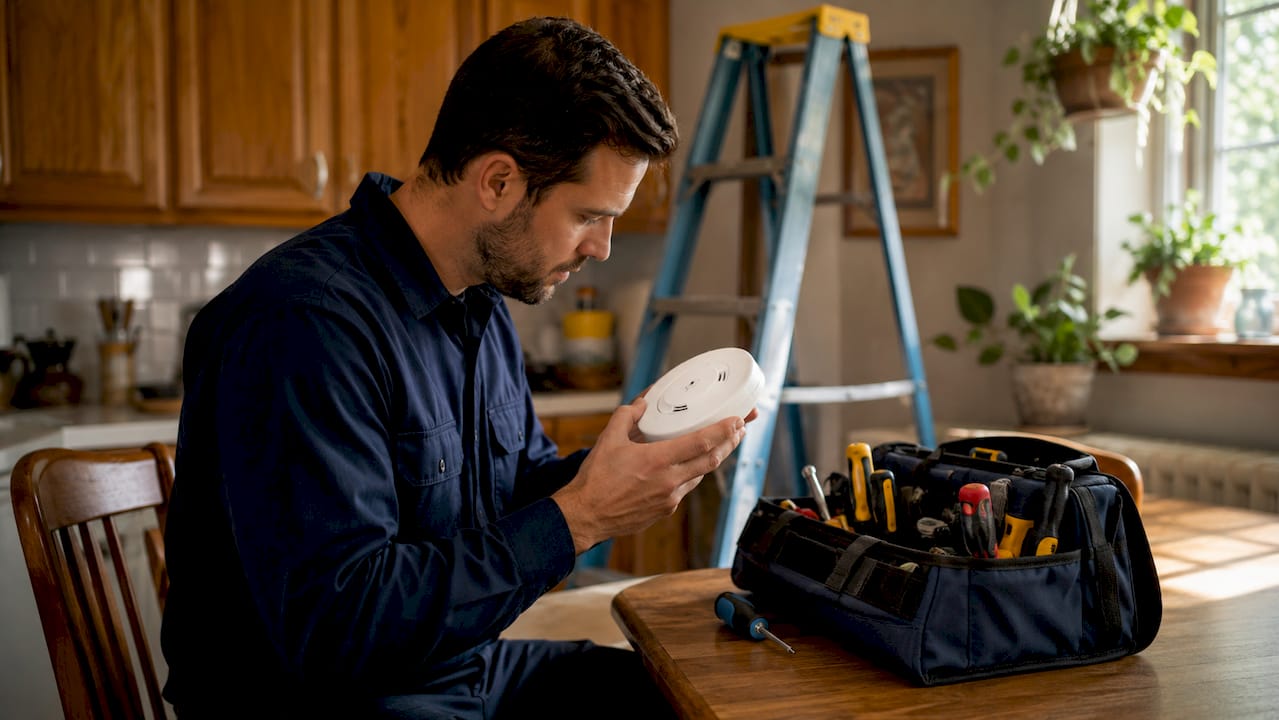
Testing obligations are precise and non-negotiable. Landlords must test every CO alarm on the exact day a new tenancy begins, not the day before and not the day after. The test confirms the alarm is functioning, audible, and properly positioned. This obligation applies to every private rented property in England regardless of when the tenancy started.
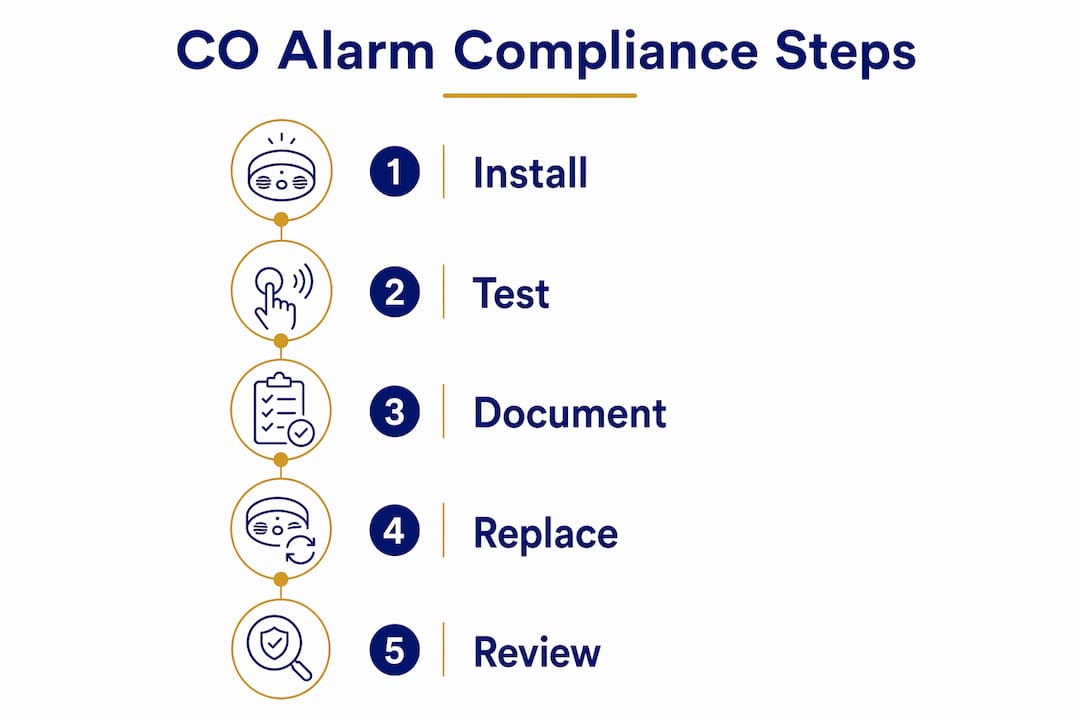
The recommended process for tenancy start testing follows these steps:
- Press the test button on every CO alarm in the property and confirm an audible alert sounds.
- Check the sensor expiry date printed on the back of each unit and confirm it has not passed.
- Record the test result in the property inventory, noting the date, alarm location, and outcome.
- Obtain the tenant's signature on the inventory entry acknowledging the alarm's condition at move-in.
- Provide written information to the tenant on how to report a fault during the tenancy.
Once the tenancy is underway, ongoing testing by the landlord is recommended but not legally mandatory. The tenant becomes responsible for reporting faults as they arise. The landlord remains responsible for repairing or replacing a faulty alarm promptly once notified. Relying on tenants to carry out the initial test at move-in is a common compliance failure. The legal burden for that first test rests solely with you as the landlord.
Compliance documentation serves as your primary defence in any dispute or enforcement action. Keep records of installation dates, test results, repair invoices, and tenant acknowledgements. Treat this paperwork as an insurance policy. A landlord who can produce a signed inventory entry with a CO alarm test record is in a far stronger position than one who cannot.
Pro Tip: Add a dedicated CO alarm section to your standard tenancy inventory template. A single signed page covering alarm location, test date, and sensor expiry date takes minutes to complete and can resolve disputes in seconds.
What are the penalties for failing carbon monoxide detector compliance?
Local authorities hold significant enforcement powers under landlord carbon monoxide regulations. The investigation process typically begins in one of three ways:
- A tenant complaint to the council about missing or faulty alarms
- A routine inspection under the Housing Health and Safety Rating System (HHSRS)
- An HMO licensing check where CO alarm compliance is a standard condition
Once a breach is identified, the council issues a remedial notice. Landlords then have 28 days to comply. If the notice is ignored, the council can enter the property and install alarms at the landlord's expense, then issue a fine of up to £5,000. That fine applies per violation, so a property with two non-compliant rooms faces two separate penalties.
Non-functional or missing CO detectors are frequently cited as evidence of landlord negligence in personal injury litigation, amplifying financial exposure well beyond the regulatory fine itself.
The litigation risk deserves attention. A tenant who suffers CO poisoning in a property without a functioning alarm has a strong negligence claim. Missing detectors become compelling evidence in court, and the financial consequences of a successful claim far exceed any fine a council could impose. Carbon monoxide safety compliance is therefore both a regulatory matter and a liability management issue.
Landlords managing HMO portfolios face additional scrutiny. HMO licences routinely include CO alarm compliance as a condition, meaning a breach can trigger licence review or revocation alongside the standard fine. For portfolio landlords, a single non-compliant property can create ripple effects across the entire portfolio.
How to select compliant carbon monoxide detectors for rental properties?
Alarm selection is governed by British Standard BS EN 50291. CO alarms must meet BS EN 50291, be audible throughout the property, and carry battery backup. Any alarm that does not carry this certification is non-compliant regardless of its price or brand.
The two main alarm types landlords choose between are battery-operated and hard-wired units:
| Feature | Battery-operated | Hard-wired |
|---|---|---|
| Installation cost | Low | Higher |
| Power reliability | Dependent on battery | Mains powered with backup |
| Tenant interference risk | Higher | Lower |
| Replacement ease | Simple | Requires electrician |
| Best suited for | Single rooms, retrofits | New builds, full refurbishments |
Positioning matters as much as certification. Manufacturers recommend placing CO alarms at head height, roughly 1–3 metres from the appliance, away from windows and doors where draughts could dilute readings. Ceiling mounting is acceptable but not always optimal. Follow the manufacturer's guidance for each specific unit.
Sensor lifespan runs to 5–7 years from manufacture, not from the date of purchase. The expiry date is printed on the back of the unit. An alarm past its sensor expiry date is considered non-compliant even if it still sounds when tested. This catches many landlords off guard, particularly those who installed alarms several years ago and have not checked since.
Alarms beyond their sensor lifespan must be replaced to maintain legal compliance. Build sensor expiry checks into your annual property inspection schedule. A quick check of the date printed on the back of each unit takes seconds and prevents a compliance failure that could otherwise go unnoticed for years.
Pro Tip: When purchasing new alarms, photograph the sensor expiry date and store it in your property compliance file alongside the installation record. You will have the replacement date on record without needing to revisit the property.
Key takeaways
Carbon monoxide detector rules for landlords in England require installation in every room with a fixed combustion appliance, mandatory testing on the tenancy start date, and fines of up to £5,000 for non-compliance.
| Point | Details |
|---|---|
| Legal installation trigger | Any room with a fixed combustion appliance (excluding gas cookers) requires a CO alarm. |
| Tenancy start testing | Landlords must test every alarm on the exact day the tenancy begins and record the result. |
| Sensor lifespan | CO alarms must be replaced every 5–7 years; expired sensors are non-compliant even if audible. |
| Enforcement penalties | Councils can issue fines up to £5,000 per violation and enter properties to fit alarms at landlord expense. |
| Documentation as defence | Signed inventory records of alarm testing protect landlords in disputes and enforcement actions. |
Why documentation is the part most landlords get wrong
Having managed compliance processes across residential portfolios, I find that most landlords understand the installation requirement. Where things go wrong is documentation. Landlords install the alarm, test it on move-in day, and then have no record of either action. When a council investigation or tenant dispute arises months later, there is nothing to show.
The signed inventory entry is not bureaucracy. It is the closest thing a landlord has to a receipt for compliance. I have seen landlords face enforcement action not because they failed to install an alarm, but because they could not prove they had. That distinction matters enormously in practice.
My view is that CO alarm compliance should be treated the same way as a CP12 gas safety certificate. Both involve combustion appliances. Both carry legal obligations. Both require a paper trail. The difference is that the CP12 process forces documentation through certification, while CO alarm testing relies on the landlord creating that record themselves. That gap is where most compliance failures occur.
Spending on quality alarms and proper record-keeping is minimal relative to the risks. A £25 alarm and a one-page inventory entry can prevent a £5,000 fine and a negligence claim. The maths are straightforward. Build the process into your tenancy preparation workflow and it becomes second nature within a few cycles.
— Mike
Professional CO alarm compliance support for landlords
Staying on top of CO alarm installation, testing, and documentation across a rental portfolio takes time and attention to detail. 777pcm provides fast, reliable support for landlords who want compliance handled properly from the outset.

777pcm's VIP fast response service covers CO alarm installation, testing, and record-keeping for landlords and property managers across residential portfolios. In-house engineers carry out every job directly, with no third-party subcontractors, so quality and accountability remain consistent. For landlords in Berkshire, the Newbury compliance service includes CO alarm checks alongside gas safety and electrical certification, giving you a single point of contact for all mandatory compliance requirements.
FAQ
What does the Smoke and Carbon Monoxide Alarm (Amendment) Regulations 2022 require?
The regulations require landlords in England to install a CO alarm in every room used as living accommodation that contains a fixed combustion appliance, excluding gas cookers. Landlords must also test all alarms on the first day of each new tenancy.
Are gas cookers covered by CO alarm regulations?
Gas cookers are explicitly excluded from the mandatory CO alarm requirement under current landlord carbon monoxide regulations. Fitting an alarm in the kitchen regardless is considered best practice, as any gas appliance can emit CO if faulty.
How often must landlords replace carbon monoxide detectors?
CO alarm sensors last 5–7 years from manufacture. Alarms past their printed sensor expiry date are non-compliant even if they still sound, so landlords must replace units on a schedule aligned with that lifespan.
What fine does a landlord face for missing CO alarms?
Local authorities can issue fines of up to £5,000 per violation for non-compliance with CO alarm requirements. Councils can also enter the property and install alarms at the landlord's expense if a remedial notice is ignored within 28 days.
Who is responsible for testing CO alarms during the tenancy?
The landlord is legally responsible for testing all CO alarms on the tenancy start date. After move-in, the tenant is responsible for reporting faults, but the landlord must repair or replace any faulty alarm promptly once notified.