
An Electrical Installation Condition Report (EICR) is the formal document that proves a rental property's fixed electrical installation has been inspected and assessed as safe. Since 2021, landlords in England have been legally required to hold a valid EICR for every tenanted property, and the Renters' Rights Act 2026 has sharpened that obligation considerably. The EICR certificate landlord benefits extend well beyond a tick-box exercise. From avoiding five-figure fines to protecting insurance cover and attracting quality tenants, the certificate is one of the most financially significant compliance documents in a landlord's portfolio.
1. How does an EICR certificate keep landlords legally compliant?
Legal compliance is the most immediate EICR advantage for landlords, and the stakes have never been higher. The maximum civil penalty for electrical safety breaches in England rose to £40,000 per offence from may 2026. That figure reflects the government's intent to treat electrical negligence as seriously as gas safety failures.
The inspection cycle runs every five years for most residential tenancies. Within that cycle, your obligations do not end at booking the electrician. Landlords must provide a copy of the EICR to new tenants before move-in and to existing tenants within 28 days of the inspection. Failing to hand over the report can trigger enforcement action even when the electrical installation itself passes the safety check.
- Inspections must be carried out every five years as a minimum
- New tenants must receive a copy of the EICR before they move in
- Existing tenants must receive the report within 28 days of inspection
- Local authorities can request a copy within seven days of asking
- Non-compliance can result in civil penalties up to £40,000 per breach
Pro Tip: Book your next EICR at least six weeks before the current certificate expires. That window gives you time to complete any remedial work and still meet the 28-day handover deadline without rushing.
2. How does an EICR protect tenants and reduce property risk?
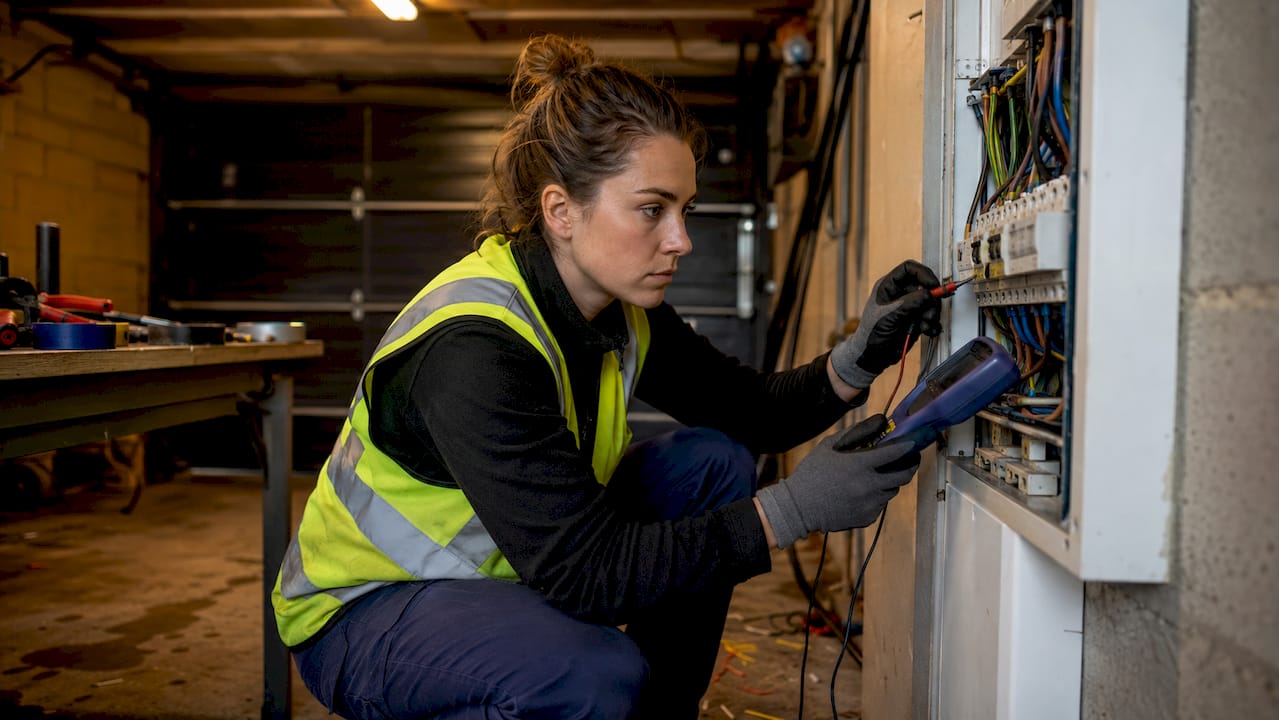
Electrical faults are the leading cause of accidental house fires in the United Kingdom, and most develop silently inside walls and consumer units where no visual check can reach them. Electrical faults develop silently over time, making the five-year EICR cycle the only reliable mechanism for detecting hidden risks before they become urgent hazards. A landlord who relies on visual checks alone is, in effect, flying blind.
The EICR report assigns one of three codes to each observation:
- C1 (Danger present): Immediate risk to persons. Remedial work must begin without delay.
- C2 (Potentially dangerous): Urgent remedial work required. The 28-day legal window applies.
- C3 (Improvement recommended): No legal obligation to act, but ignoring C3 codes can affect insurance claim validity if an incident occurs later.
Remedial work for C1 and C2 codes must be completed within 28 days, or sooner if the report specifies. Missing that deadline exposes you to penalties and can invalidate your insurance policy. C3 codes deserve attention too. Proactive landlords treat them as a risk management roadmap rather than optional suggestions.
One point that catches many landlords out: the EICR covers fixed electrical installations only, including wiring, sockets, and the consumer unit. It does not cover portable appliance testing (PAT). You need both, but they are separate obligations.
Pro Tip: Keep a digital record of every EICR, remedial completion certificate, and C3 observation. If a tenant ever raises a complaint or a local authority investigates, that paper trail is your strongest defence.
3. What insurance benefits come with a valid EICR certificate?
Landlord insurance policies require all legal compliance to maintain coverage, and a valid EICR sits at the centre of that requirement. Lack of a valid EICR can invalidate claims for fire or electrical damage. That is not a technicality buried in the small print. It is a clause that insurers actively check when a claim is submitted.
Consider what that means in practice. A kitchen fire caused by faulty wiring could result in tens of thousands of pounds of damage. If your EICR expired six months before the fire, your insurer has grounds to reject the claim entirely. The cost of a single EICR inspection, which typically ranges from £150 to £300, is negligible against that exposure.
"A current EICR is not just a legal document. It is the evidence your insurer needs to honour a claim when something goes wrong."
Beyond claim protection, landlords who maintain clean compliance records often negotiate better policy terms at renewal. Insurers price risk. A landlord with a consistent history of valid EICRs, completed remedial works, and up-to-date certificates presents a lower risk profile than one with gaps in their records.
4. How does an EICR certificate improve property value and tenant trust?
A current, clean EICR builds tenant trust in a competitive rental market, and that trust translates directly into letting speed and tenant retention. EICRs are a strategic asset that signal proactive maintenance, leading to better insurance terms and marketing advantages. Tenants today are more informed about their rights than at any point in the last decade. Presenting a valid EICR at the start of a tenancy tells them, clearly and without ambiguity, that you take their safety seriously.
The benefits for property value are equally concrete:
- Properties with full compliance documentation attract professional tenants who are more likely to pay on time and stay longer
- Letting agents, particularly those working with corporate relocation clients, often require a valid EICR as a condition of listing
- A clean compliance record supports higher asking rents in competitive local markets
- Buyers of investment properties increasingly scrutinise compliance history during due diligence
Landlords who proactively maintain EICR certificates gain better insurance terms and can market their properties more effectively. That dual advantage, lower running costs and stronger letting performance, compounds over time across a portfolio.
5. What are the practical steps for managing EICR inspections effectively?
Managing the EICR cycle well is as important as having the certificate in the first place. Poor scheduling creates compliance gaps, and compliance gaps create liability. The following steps keep you on the right side of the law without unnecessary stress.
- Schedule 4–6 weeks before expiry. Scheduling inspections 4–6 weeks before the certificate expires gives you enough time to complete C1 and C2 remedial works within the 28-day legal window. Leaving it to the last week is the most common avoidable mistake.
- Use only registered electricians. Only registered electricians approved by government-recognised schemes such as NICEIC or NAPIT should carry out EICR inspections. An inspection by an unregistered electrician does not satisfy the legal requirement and will not be accepted by your insurer.
- Communicate clearly with tenants. Give tenants at least two weeks' written notice of the inspection date. Explain what the electrician will check and approximately how long the visit will take. Tenants who understand the process are far more likely to provide access without dispute.
- Act on C3 codes promptly. While C3 observations carry no immediate legal obligation, ignoring C3 codes can affect insurance claim validity if an incident occurs. Address them at the next convenient maintenance visit rather than waiting for the next five-year inspection.
- Maintain a compliance log. Record every inspection date, report outcome, remedial action taken, and certificate issue date. A well-maintained log makes renewals faster, supports insurance renewals, and protects you if a local authority requests documentation.
Pro Tip: If you manage multiple properties, stagger your EICR renewal dates so they do not all fall in the same month. That approach spreads the cost and keeps your workload manageable throughout the year.
Staying on top of landlord maintenance responsibilities is easier when electrical safety is treated as a scheduled routine rather than a reactive task. The landlords who struggle with compliance are almost always those who treat the EICR as a one-off obligation rather than a recurring part of their property management calendar.
Key takeaways
An EICR certificate is a landlord's most cost-effective tool for managing legal risk, protecting insurance cover, and building long-term tenant confidence.
| Point | Details |
|---|---|
| Legal compliance is non-negotiable | Civil penalties reach £40,000 per breach under the Renters' Rights Act 2026. |
| Remedial deadlines are strict | C1 and C2 faults must be resolved within 28 days or insurance cover may be invalidated. |
| Insurance depends on valid certification | An expired EICR gives insurers grounds to reject fire or electrical damage claims. |
| Tenant trust drives letting performance | A clean EICR supports faster lets, better tenants, and stronger asking rents. |
| Scheduling and records prevent gaps | Book 4–6 weeks early and maintain a full compliance log to avoid enforcement risk. |
Why I think most landlords underestimate the EICR
Most landlords I speak with treat the EICR as a cost to minimise rather than an asset to maintain. That framing is the source of most compliance problems I see. The certificate costs between £150 and £300 for a typical property. The fine for non-compliance is £40,000. The maths is not complicated, yet the pattern repeats.
What surprises me more is how few landlords connect their EICR status to their insurance position. I have seen landlords with perfectly maintained properties face rejected claims simply because their certificate lapsed by a few months. The insurer did not care that the wiring was fine. The document was missing, and that was enough.
The landlords who get this right treat electrical safety the same way they treat their gas safety checks: as a fixed date in the diary, not a task that drifts. They use registered electricians who understand the reporting codes, they act on C3 observations before they become C2 problems, and they keep records that would satisfy any local authority inspection. That approach does not just protect them legally. It builds a reputation with tenants and letting agents that pays dividends over years. Scheduled maintenance, as research on property value and upkeep consistently shows, is one of the clearest drivers of long-term rental yield.
The EICR is not a burden. It is one of the cheapest forms of risk management available to a landlord. Treat it accordingly.
— Mike
Stay compliant with 777pcm's electrical safety service
Managing EICR inspections across a rental portfolio takes time, coordination, and the right people. 777pcm handles the entire process for landlords and letting agents, from booking certified NICEIC and NAPIT electricians to delivering reports and scheduling any required remedial works. There are no third-party subcontractors and no chasing multiple trades. Everything is managed in one place, with clear communication at every stage.

Whether you manage a single property or a large portfolio, 777pcm's EICR inspection service keeps your certificates current, your tenants safe, and your compliance records audit-ready. Landlords in the Newbury area can also access local inspection support with fast turnaround times. Get in touch today and take electrical compliance off your to-do list for good.
FAQ
What is an EICR certificate and who needs one?
An EICR (Electrical Installation Condition Report) is a formal assessment of a property's fixed electrical installation carried out by a registered electrician. All private landlords in England are legally required to hold a valid EICR for every tenanted property.
How often does a landlord need a new EICR?
Landlords must renew their EICR at least every five years. Some properties with older wiring or previous C2 observations may require more frequent inspections as specified in the report.
What happens if a landlord does not have a valid EICR?
Local authorities can issue civil penalties of up to £40,000 per offence under the Renters' Rights Act 2026. Landlord insurance policies may also be invalidated, leaving the landlord personally liable for fire or electrical damage claims.
Does an EICR cover portable appliances in a rental property?
No. The EICR covers fixed electrical installations only, including wiring, sockets, and the consumer unit. Portable appliance testing (PAT) is a separate process and is not a substitute for a valid EICR.
How much does an EICR inspection cost for a landlord?
A typical EICR inspection costs between £150 and £300 depending on property size and location. That cost is significantly lower than the financial exposure created by an invalid certificate, including potential fines and rejected insurance claims.