
Property safety directly affects tenant demand, rent levels and void periods. Compliant homes with up-to-date CP12 gas safety certificates, valid EICRs and a clean HHSRS record attract better tenants, hold their value and let faster. Research from Joseph Mews points to a notable average rent uplift for properties that meet tenants' core expectations for quality, safety and security. For a landlord managing even a small portfolio, that figure translates directly into income. Services such as 777pcm exist precisely to make this compliance visible and manageable.
Three actions you can take this week to make safety a visible advantage:
- Order any overdue CP12 or EICR. If either certificate has lapsed or is within 60 days of expiry, book the inspection now. A missing certificate is a legal liability and a letting obstacle.
- Share certificates digitally with prospective tenants. Upload your CP12, EICR and EPC to your listing or send them before viewings. Visible compliance signals quality before a tenant even walks through the door.
- Fix the one hazard a tenant would notice first. Damp patches, a faulty smoke alarm or a stiff front-door lock are the details that kill first impressions. Address the most visible issue before your next viewing.
Table of Contents
- What UK law requires — and why it matters to lettability
- The commercial case: how safety compliance changes what tenants pay and how long they stay
- Common hazards that become deal-breakers for renters
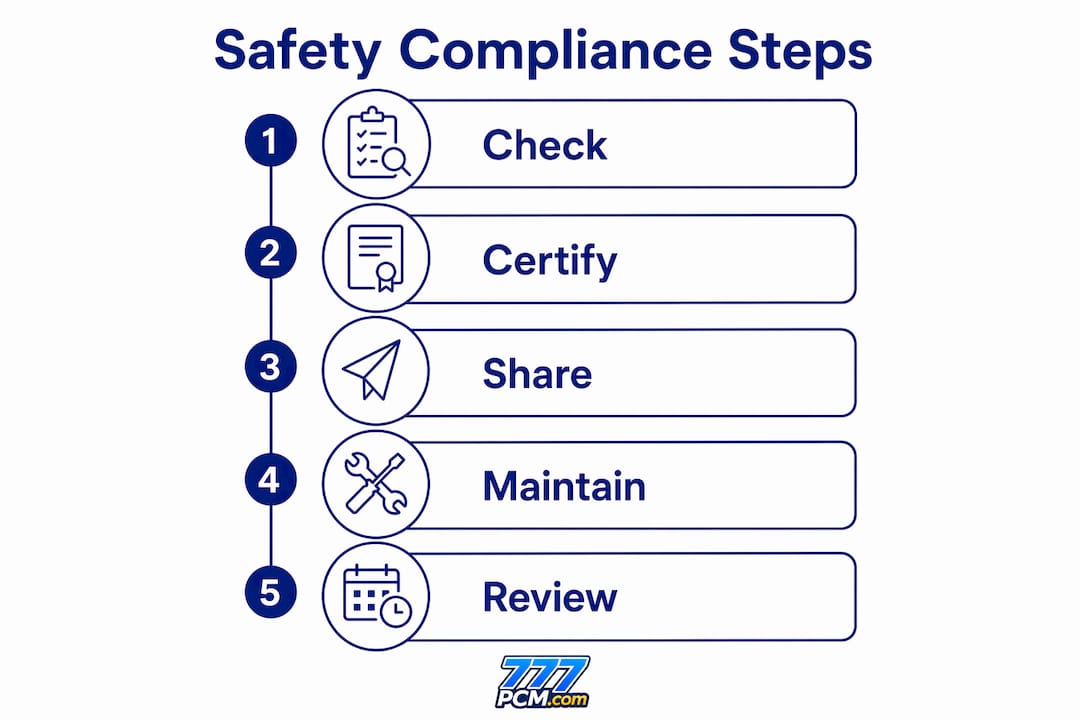
- Your compliance checklist: certificates, checks and timing
- Practical improvements that raise safety and lettability
- When to use a compliance specialist rather than managing it yourself
- Key takeaways
- Why safety is a sound commercial strategy, not just a legal obligation
- 777pcm: compliance and maintenance handled end to end
- Authoritative sources and further reading
What UK law requires — and why it matters to lettability
Understanding how rental demand relates to property safety starts with the legal baseline. A property that fails its statutory obligations is not just a regulatory problem; it is, in practical terms, unlettable. The table below sets out the principal duties, the regulations that govern them and the direct impact on tenant confidence.
| Duty | Governing regulation | Frequency / requirement | Lettability impact |
|---|---|---|---|
| Gas safety check (CP12) | Gas Safety Regulations | Annual; by a Gas Safe registered engineer | Certificate must be given to tenant before move-in or within 28 days of check |
| Electrical inspection (EICR) | Electrical Safety Standards Regulations | At least every 5 years; report to tenant within 28 days | Prospective tenants may request a copy; missing report blocks lawful letting |
| Energy Performance Certificate (EPC) | Energy Performance of Buildings Regulations | Required before marketing; minimum E rating for most lets | Tenants use EPC to estimate bills; a poor rating reduces demand |
| Smoke & CO alarms | Smoke and Carbon Monoxide Alarm (England) Regulations 2022 | Smoke alarm on every storey; CO alarm in every room with a solid-fuel appliance | Absence is a criminal offence; tenants increasingly check alarm provision |
| Fitness for human habitation | Homes (Fitness for Human Habitation) Act and Landlord and Tenant Act | Ongoing obligation throughout tenancy | Tenants can sue for breach; reputational damage affects future lettings |
| HHSRS hazard assessment | Housing Act, Part 1 | Local authority can inspect at any time | Category 1 hazards trigger enforcement; damp/mould increasingly scrutinised |
| HMO licensing | Housing Act, Part 2 | Mandatory for qualifying HMOs; fire safety, room sizes, amenity standards | Unlicensed HMOs face unlimited fines and rent repayment orders |
The gov.uk 'How to rent a safe home' guide is the definitive starting point for tenants checking their rights, which means it is also the checklist prospective tenants use when evaluating your property. Regulatory change has tightened expectations further: the Social Housing (Regulation) Act 2023, the ongoing rollout of Awaab's Law and the progress of the Renters' Rights Bill have all raised scrutiny around hazard remediation, particularly damp and mould. Landlords who treat compliance as a minimum threshold rather than a selling point are leaving money on the table.
Non-compliance carries serious consequences. Local authorities can issue remedial notices, carry out works at the landlord's expense and impose financial penalties. Persistent breaches can result in prosecution, banning orders and, for HMO landlords, rent repayment orders covering up to 12 months of rent. For a fuller picture of what tenant safety rights look like from the other side of the tenancy, the 2026 guide on that topic is worth reading before your next letting.
The commercial case: how safety compliance changes what tenants pay and how long they stay
The 10.77% rent uplift associated with properties meeting tenants' quality, safety and security expectations is the headline figure, but the mechanism behind it matters as much as the number itself. Tenants are not paying a premium for a certificate on a wall. They are paying for the confidence that the property has been maintained, that problems will be fixed promptly and that they will not face unexpected costs or health risks.
Stat to know: 77% of renters reported at least one property issue; damp or mould affected 44% and long repair times 33%. Satisfaction with resolution was often low.
That gap between the scale of problems and the quality of resolution is where landlords lose tenants. A tenant who moves out after 12 months because a damp issue was ignored costs far more in void periods, re-letting fees and remediation than the original repair would have. The reporting gap makes this worse: 27% of renters fear a rent increase and 22% fear eviction if they raise a problem. Tenants who do not report issues early allow small defects to become expensive ones.
Property management analysts argue that landlords who adopt a safety-centric culture see lower churn and higher resident satisfaction. The commercial logic is straightforward: a tenant who trusts that their landlord will respond quickly is more likely to renew, less likely to complain publicly and more likely to treat the property well. Tenants now expect what industry analysis describes as 'institutional-grade' reliability: quick repairs, clear communication and digital-first interaction that increase both willingness to pay and tenure length.

Pro Tip: Make compliance visible before the tenancy begins. Share your CP12, EICR and EPC with prospective tenants at the viewing stage or in the pre-tenancy pack. Tenants who see certificates upfront are more likely to proceed quickly and less likely to negotiate on price.
Common hazards that become deal-breakers for renters
The HHSRS identifies 29 categories of hazard, but a handful account for the majority of tenant complaints, lost viewings and enforcement actions. Understanding which hazards tenants notice first is the fastest way to improve lettability.
- Damp and mould. 46% of renters say damp and mould is a deal-breaker when searching for a property. Under Awaab's Law expectations, landlords face increasing pressure to investigate and remediate within defined timeframes. Fix: identify the moisture source (condensation, penetrating damp or rising damp), address it at the cause and redecorate. A dehumidifier is not a fix.
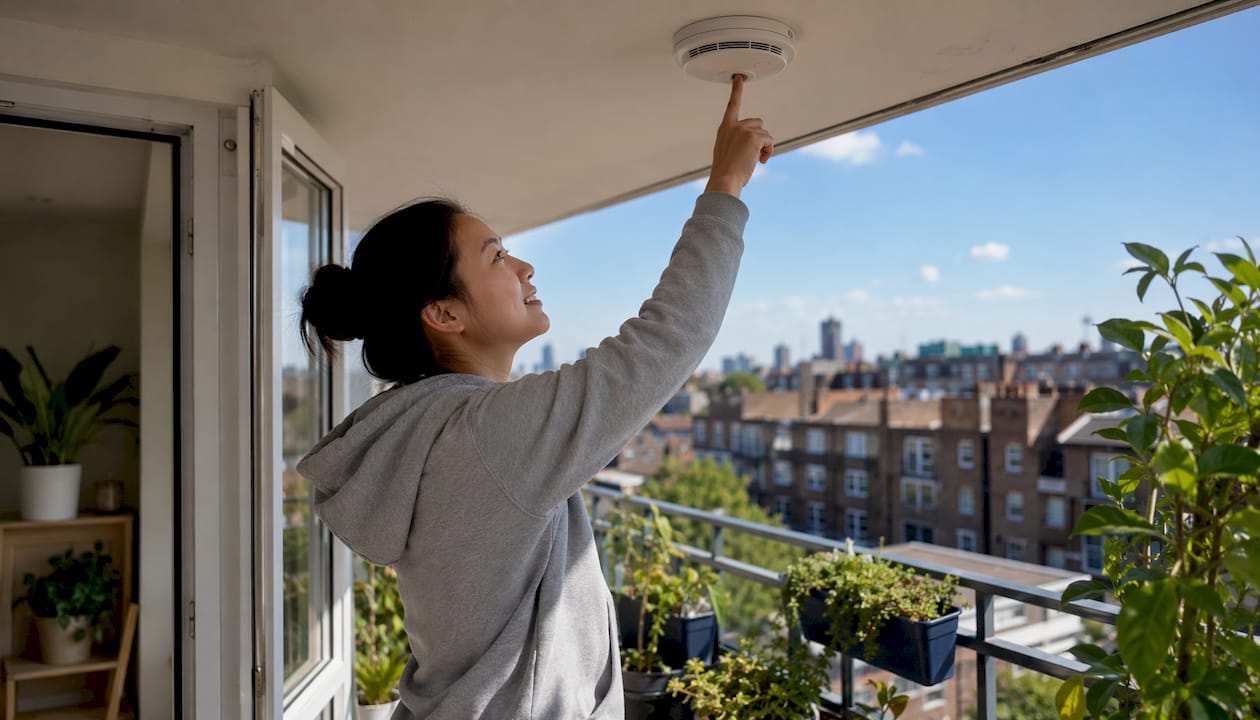
- Faulty or absent smoke and CO alarms. Tenants check these during viewings, and their absence signals a landlord who cuts corners. Fix: fit interlinked alarms on every storey and in every room with a solid-fuel appliance; test them on the first day of the tenancy. Full smoke alarm requirements for rental properties are set out in the 2022 regulations.
- Electrical faults and outdated wiring. Visible signs such as scorch marks, flickering lights or overloaded sockets are immediate red flags. Faulty wiring and old, untested installations can cause fires, shocks and burns. Fix: commission an EICR; address any C1 or C2 codes within 28 days.
- Insecure entry points. A front door that does not lock properly, a broken window latch or a communal entrance with a faulty fob system tells a prospective tenant the property is not secure. Fix: upgrade to a five-lever mortice lock or a British Standard-compliant cylinder; replace broken window hardware.
- Cold homes and poor insulation. A property that cannot be maintained at 18°C–21°C at reasonable cost is a Category 1 HHSRS hazard. Fix: draught-proof windows and doors, service the boiler and consider loft insulation as a cost-effective first step.
- Pest infestations. Rodent or insect evidence during a viewing ends the conversation immediately. Fix: engage a professional pest control contractor, seal entry points and address any waste or drainage issues that attract pests.
- Poor condition of fixtures and fittings. Broken kitchen units, cracked tiles or a leaking shower tray suggest deferred maintenance throughout. Fix: a pre-tenancy cleaning and preparation schedule that addresses cosmetic defects before marketing.
Each of these hazards also carries insurance implications. A landlord who cannot demonstrate that known hazards were addressed may find their buildings or liability cover invalidated in the event of a claim.
Your compliance checklist: certificates, checks and timing
A well-organised compliance schedule is the foundation of a lettable portfolio. The table below gives the at-a-glance reference; the notes that follow cover the details that trip landlords up.
| Certificate / check | What it covers | Required frequency | Who can carry it out | Key evidence to provide tenants |
|---|---|---|---|---|
| CP12 (gas safety certificate) | All gas appliances and flues | Annually | Gas Safe registered engineer only | Copy before move-in or within 28 days of check |
| EICR (electrical installation condition report) | Fixed electrical installations | At least every 5 years (or as specified in report) | Qualified electrician (competent person) | Copy within 28 days; prospective tenants may request copy |
| EPC (energy performance certificate) | Energy efficiency of the building fabric | Every 10 years; required before marketing | Accredited domestic energy assessor | Must be available to prospective tenants before viewing |
| Smoke alarm check | Working alarm on every storey | Confirmed working on day 1 of tenancy | Landlord (or agent) | Written record in tenancy check-in report |
| CO alarm check | Alarm in every room with solid-fuel appliance | Confirmed working on day 1 of tenancy | Landlord (or agent) | Written record in tenancy check-in report |
| HMO licence (where applicable) | Fire safety, room sizes, amenity standards | Typically 5 years; varies by local authority | Local authority issues licence | Licence copy available on request |
| Fire risk assessment (HMOs and larger properties) | Fire hazards, escape routes, suppression equipment | Regularly reviewed; annually recommended | Competent person | Written assessment retained and shared |
A few points that catch landlords out. The EICR must be supplied to a new tenant before they move in, not after. If the report identifies C1 or C2 codes, remedial work must be completed within 28 days and written confirmation provided to both the tenant and the local authority. For gas safety, the check can be carried out from 10–12 months after the previous one without resetting the anniversary date, which is useful for scheduling across a portfolio.
For a complete overview of landlord safety certificates and what each one covers, the 2026 guide on that topic sets out the full picture. The rental property compliance checklist is also a practical portfolio-level tool for tracking renewal dates across multiple properties.
Missing or expired certificates affect insurance as well as compliance. If a fire or gas incident occurs and the landlord cannot produce a valid CP12 or EICR, insurers may decline the claim. That risk alone justifies treating certificate renewal as a non-negotiable diary entry.
Practical improvements that raise safety and lettability
Not every safety improvement requires significant expenditure. The most effective approach is to prioritise by tenant visibility and regulatory risk, then work outward.
- Fit or replace smoke and CO alarms (same day, under £50 per unit). This is the fastest compliance win available. Interlinked alarms are preferable; they are inexpensive and immediately visible to tenants. Record the installation and test date.
- Upgrade door locks to British Standard specification (1–2 days, £100–£200 per door). A five-lever mortice lock or a TS007-rated cylinder is a tangible security upgrade that tenants notice and that reduces insurance premiums for some policies.
- Share certificates digitally on your listing (immediate, no cost). Upload your CP12, EICR and EPC to your property listing or include them in the pre-tenancy information pack. Research confirms that visible compliance correlates with willingness to pay a premium. This single step costs nothing and signals quality before a viewing.
- Address damp at the source (1–4 weeks, cost varies). Cosmetic treatment without fixing the moisture source will fail within months. Identify whether the cause is condensation, penetrating damp or rising damp, then commission the appropriate remediation. This is the hazard most likely to trigger an HHSRS enforcement action and the one 46% of renters cite as a deal-breaker.
- Commission an EICR if one is due or overdue (1–2 days, £150–£300 typical for a standard property). An up-to-date EICR removes a significant legal risk and provides a document you can share with tenants. If C1 or C2 codes are identified, address them immediately.
- Publish a repair response commitment. Advertise a 48-hour response time for non-emergency repairs in your listing and tenancy agreement. Industry analysis places fast repair response as a top expectation for tenants. A stated commitment costs nothing to make and materially affects tenant perception.
- Improve EPC rating towards C (medium-term, cost varies significantly). Loft insulation, draught-proofing and boiler servicing are the most cost-effective first steps. An EPC of C or above is increasingly expected by quality tenants and will likely become a regulatory requirement for new tenancies in coming years.
- Conduct a pre-tenancy professional clean and clearance (1–2 days, £150–£400). A property that is visibly clean and free of the previous tenant's debris lets faster and at a higher rent. Cleanout services between tenancies reduce void time and set the right first impression.
The ROI logic is clear: quick wins (alarms, locks, digital certificates) cost little and directly affect the viewing experience. Medium works (damp, electrical repairs) protect against enforcement and churn. Longer projects (EPC improvements) build long-term asset value and future-proof the property against tightening minimum standards.
When to use a compliance specialist rather than managing it yourself
The decision to outsource compliance work is not just about cost. It is about regulatory risk, portfolio scale and the consequences of getting it wrong.
For straightforward maintenance, a competent in-house handyperson or a trusted local contractor is often sufficient: repainting, replacing a tap washer, fixing a door handle. These tasks carry no statutory certification requirement and no regulatory penalty for using an uncertified person.
Statutory inspections are a different matter entirely. Gas safety checks must be carried out by a Gas Safe registered engineer; no other qualification is acceptable. EICRs must be conducted by a qualified electrician competent to apply British Standard 7671 (the 18th Edition Wiring Regulations). An EICR signed off by someone without the appropriate competence is not a valid EICR, regardless of what the document says. For landlords managing multiple properties, gas safety oversights in large portfolios are a documented risk, particularly when renewal dates are tracked manually across spreadsheets.
The decision tree is simple. Routine maintenance: manage in-house or with a trusted local contractor. Statutory inspections, remedial works following a failed EICR, damp investigation and remediation, or any work that requires a certificate: use a certified professional and keep the paperwork.
Pro Tip: A compliance portal that stores all certificates, tracks renewal dates and allows you to share documents with tenants digitally removes the administrative burden and makes visible compliance effortless. When evaluating a compliance partner, ask specifically whether they provide this as standard, not as an add-on.
A compliance specialist should be able to deliver CP12 inspections, EICRs, remedial works, emergency response and digital record-keeping through a single point of contact. Fragmented arrangements, where gas is handled by one contractor, electrical by another and records kept in a spreadsheet, create gaps that enforcement actions exploit.
Key takeaways
Safe, compliant rental properties attract better tenants, command higher rents and spend fewer days void — and the evidence, from a 10.77% average rent uplift to 77% of renters reporting at least one property issue, makes the commercial case as clearly as the legal one.
| Point | Details |
|---|---|
| Safety drives rent and reduces voids | Properties meeting safety and quality expectations attract a measurable rent uplift and let faster. |
| Compliance is a legal baseline, not optional | CP12, EICR, EPC, smoke and CO alarms are statutory requirements; missing any one blocks lawful letting. |
| Visible compliance changes tenant decisions | Sharing certificates digitally at the listing stage correlates with higher willingness to pay and faster decisions. |
| Damp and slow repairs are the top churn drivers | 44% of renters experience damp; 27% fear reporting it — proactive remediation and a no-blame culture retain tenants. |
| 777pcm delivers end-to-end compliance | 777pcm handles CP12, EICR, remedial works and digital records through in-house engineers, removing the coordination burden from landlords. |
Why safety is a sound commercial strategy, not just a legal obligation
There is a tendency in the landlord community to treat compliance as a cost to be minimised: do the checks, file the certificates, move on. That framing misses the point entirely. Safety is the product. When a tenant pays rent, they are paying for a home that works, that is warm, that is secure and that will be maintained when something goes wrong. The certificate is just the evidence that the product is what it claims to be.
The data on tenant fear of reporting problems is the detail that most landlords overlook. When more than a quarter of renters are afraid to tell their landlord about a damp patch or a faulty socket, those problems grow quietly until they become expensive. A landlord who creates a culture where tenants report early, and who responds visibly and promptly, is not being generous. They are protecting their asset.
The rent uplift finding is compelling, but the retention argument is arguably stronger. A tenant who stays for three years instead of one saves the landlord a void period, re-letting fees, a professional clean and the administrative time of a new tenancy. That saving, repeated across a portfolio, dwarfs the cost of a proactive compliance programme. The landlords who understand this are not the ones who do the minimum. They are the ones who treat the tenant safety checklist as a management tool, not a regulatory burden.
777pcm: compliance and maintenance handled end to end
Keeping a rental portfolio compliant is straightforward in principle and genuinely time-consuming in practice. Renewal dates drift, engineers cancel, certificates get misfiled and a single missed CP12 can expose a landlord to enforcement action, an invalidated insurance policy and a tenant who has every right to withhold cooperation.
777pcm removes that friction. With in-house Gas Safe registered engineers, EICR-qualified electricians and a full range of trade specialists covering plumbing, heating, drainage, roofing and general repairs, 777pcm manages the entire compliance cycle from a single point of contact. No subcontractors, no coordination overhead, no gaps between the inspection and the remedial work. A dedicated compliance portal keeps all certificates in one place, tracks renewal dates and lets you share documents with tenants digitally, making visible compliance a standard part of every tenancy rather than an afterthought.
For landlords who want to turn safety into a genuine commercial advantage, the starting point is a portfolio review. Book a CP12 or EICR with 777pcm, or visit 777pcm.com to discuss a full compliance and maintenance programme for your portfolio.
Authoritative sources and further reading
The sources below are the most relevant official and industry references for UK landlords navigating safety compliance and tenant demand.
"Landlords have a legal obligation to keep your home in repair, fit for human habitation and free from serious hazards." — How to rent a safe home, GOV.UK
- GOV.UK: Private renting — your landlord's safety responsibilities (link) — the definitive summary of gas, electrical, fire and fitness-for-habitation duties.
- GOV.UK: Electrical safety standards guidance (link) — full detail on EICR requirements, qualified persons and remedial timescales.
- GOV.UK: Private rented sector tenants research report (link) — the source for tenant problem-reporting rates, damp prevalence and fear of repercussions data.
- Joseph Mews: What do tenants want? (link) — source of the 10.77% rent uplift finding for properties meeting safety and quality expectations.
- Inventory Base: Beyond compliance — how safe homes drive resident retention (link) — analysis of safety-centric management and its effect on churn and satisfaction.
- CIA Landlords: What do renters want in 2026? (link) — tenant expectation data covering responsiveness, liveability and willingness to pay.
- Property Industry Eye: Renters reveal top deal-breakers (link) — Barclays-derived data on damp and mould as a deal-breaker for 46% of renters.
- HSE: Gas safety for landlords (link) — Gas Safe Register requirements and annual check obligations from the Health and Safety Executive.