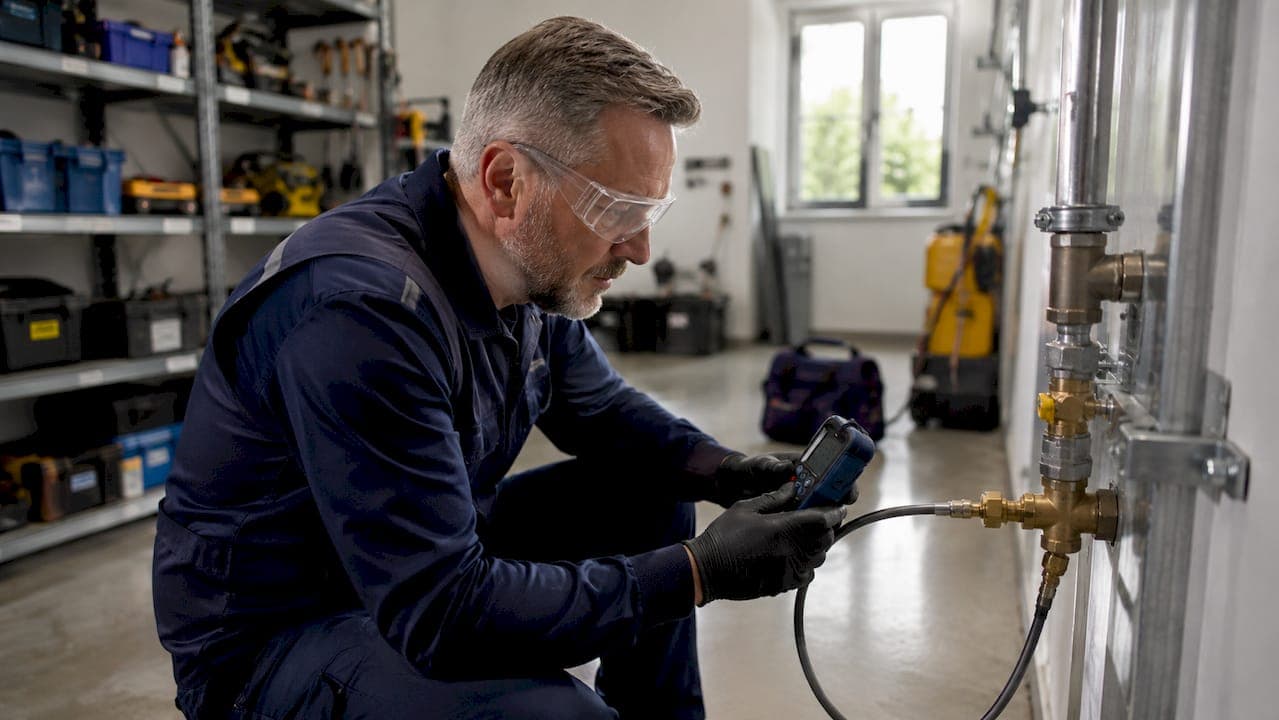
A gas tightness test is a pressure measurement procedure used to confirm that gas pipework is free from leaks and safe for use in a property. The test involves pressurising the pipework to a set level, isolating the system, and monitoring for any pressure drop over a short period. Under the Gas Safety (Installation and Use) Regulations 1998, landlords must arrange this check annually as part of a full gas safety inspection. The industry standard governing the procedure is IGEM/UP/1B, now updated to Edition 4 with mandatory compliance from october 2026. Understanding what this test involves, and why it matters, is one of the most practical steps you can take to protect your tenants and your property.
What is a gas tightness test and how does it work?
A gas tightness test is defined as a diagnostic procedure that verifies the integrity of a gas installation by detecting leaks through pressure monitoring. Engineers pressurise the pipework to approximately 20–21 mbar for natural gas, then isolate the system and observe whether the pressure holds steady over a 1–2 minute period. Any perceptible pressure drop beyond the permissible limit for the installation volume indicates a leak is present. This test applies to the entire downstream pipework system, from the meter to each appliance connection point.
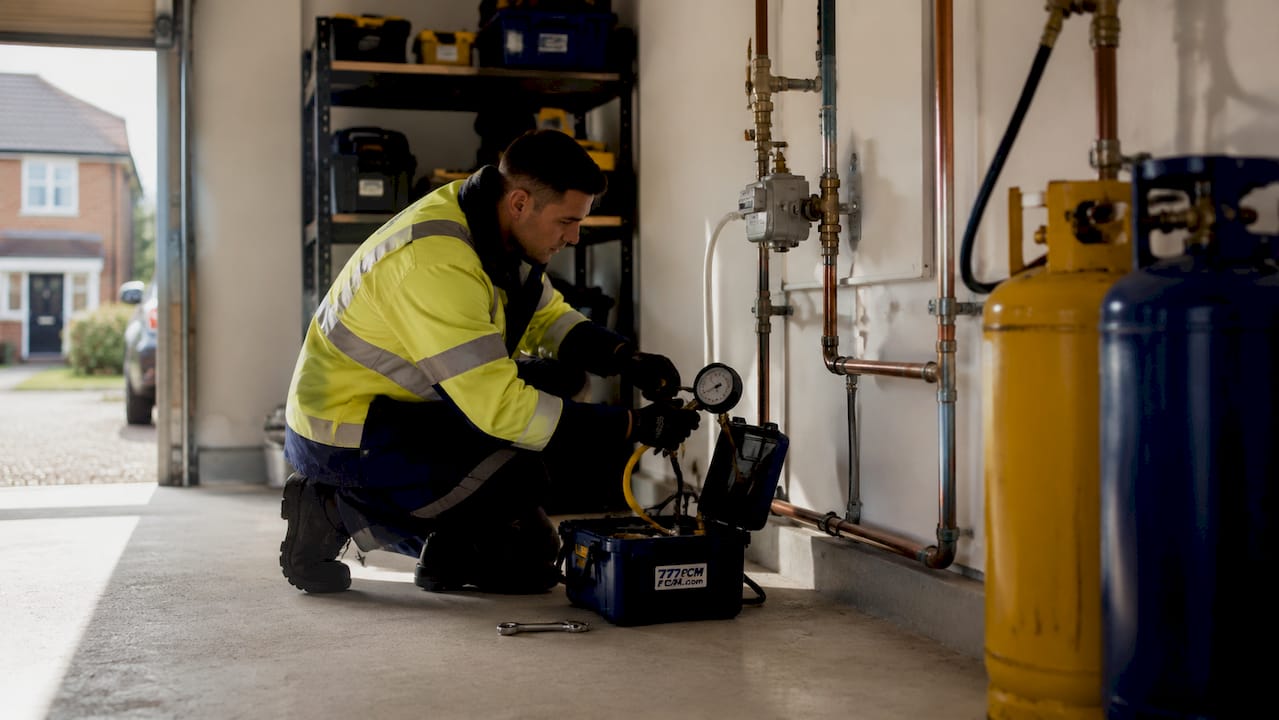
The test differs from a strength test, which is used on new pipework to verify it can withstand higher pressures before commissioning. A tightness test detects leaks on existing installations; a strength test proves structural integrity on new ones. Landlords will encounter the tightness test during every annual gas safety visit, whereas strength tests are only relevant when new pipework is installed.
Gas engineers consider the tightness test the most critical safety verification step before any gas appliance is used or re-energised. Think of it as a pressure pulse check for your property's gas system. If the system cannot hold pressure, the source of the drop must be found before any appliance is switched on.
How is a gas tightness test performed?
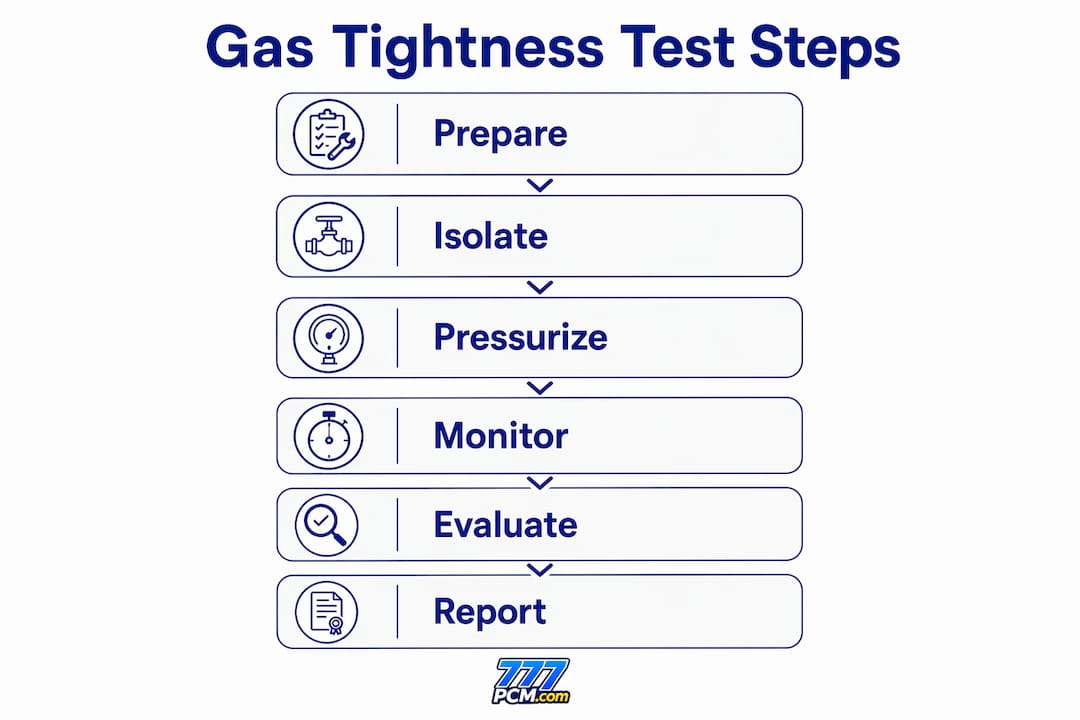
The gas leak test procedure follows a defined sequence that Gas Safe registered engineers carry out using calibrated equipment. Here is how the process works in practice:
-
Let-by test first. Before the main tightness test begins, the engineer performs a let-by test at 7–10 mbar to confirm the Emergency Control Valve seals fully and isolates the gas supply safely. This step is non-negotiable and must be completed before pressurisation.
-
Pressurise the system. The engineer connects a manometer, either a U-gauge or a digital pressure gauge, to a test point downstream of the meter. The system is pressurised to the standard working pressure of 20–21 mbar for natural gas.
-
Isolate and observe. The gas supply is isolated at the meter. The engineer then monitors the manometer reading for 1–2 minutes. A stable reading confirms no leaks. A pressure drop triggers the next stage of investigation.
-
Locate the leak. If pressure drops beyond the permissible limit, the engineer applies leak detection fluid to joints, valves, and connections to identify the source. The fluid bubbles visibly at any point where gas is escaping.
-
Repair and retest. Once the leak is repaired, the full tightness test sequence is repeated to confirm the system now holds pressure correctly.
-
Record the result. The outcome is documented on the Landlord Gas Safety Record (LGSR), commonly known as the CP12 certificate, which you must provide to tenants within 28 days of the inspection.
Pro Tip: Ask your engineer to explain the manometer reading before they leave. A brief explanation takes under a minute and gives you a clear record of what was found and confirmed on the day.
What are the legal requirements for gas tightness testing?
Landlords in the UK carry a clear legal duty to arrange annual gas safety checks under the Gas Safety (Installation and Use) Regulations 1998. These checks must be carried out by a Gas Safe registered engineer, and the tightness test forms a core part of every inspection. Failure to comply can result in prosecution, unlimited fines, and in serious cases, imprisonment.
The key legal obligations for landlords are:
- Annual inspection. Gas appliances and pipework must be checked every 12 months by a Gas Safe registered engineer.
- Record keeping. A valid CP12 gas safety certificate must be issued after each inspection and provided to existing tenants within 28 days.
- New tenants. New tenants must receive a copy of the current gas safety record before they move in.
- Retention. Landlords must keep gas safety records for a minimum of two years.
- Failed tests. If a tightness test fails, the system must be classified as 'At Risk' or 'Immediately Dangerous' and the engineer cannot leave the system live. Mandatory repairs and a retest are required before the gas supply is restored.
From 1 october 2026, the updated IGEM/UP/1B Edition 4 standard becomes mandatory. This revision introduces stricter assessment criteria, including pipework-only retests when an initial pressure drop falls within permissible limits. Engineers must isolate all appliances and repeat the test on the pipework alone to confirm zero perceptible pressure movement. This adds time and complexity to inspections, which landlords should factor into scheduling.
The Gas Safety (Installation and Use) Regulations 1998 place the legal responsibility for annual gas safety checks squarely on the landlord, not the tenant. A missed or delayed inspection is a legal breach, regardless of whether a leak is subsequently found.
Why are gas tightness tests important for landlords?
Gas tightness tests confirm that no leaks exist before appliances are used or re-energised, detecting even small leaks that could pose fire or explosion risks over time. A minor leak that goes undetected does not stay minor. Gas accumulates in enclosed spaces, and the risk of ignition grows with every passing day. The tightness test is the mechanism that catches these problems before they become emergencies.
The importance of gas tightness tests extends well beyond safety alone. Consider the following:
- Legal protection. A valid gas safety record demonstrates you have met your statutory duty. Without it, you have no defence if an incident occurs.
- Financial protection. Insurance policies for rental properties often include clauses that void cover if mandatory safety checks have not been completed.
- Tenant confidence. Tenants who receive their CP12 certificate promptly are more likely to report maintenance concerns early, reducing the risk of larger problems developing.
- System integrity before recommissioning. Any time a gas appliance is replaced or pipework is altered, a tightness test must be performed before the system is re-energised.
One point that landlords frequently misunderstand is that a passed tightness test only confirms safety at that moment. It does not guarantee the system will remain leak-free for the full 12 months until the next inspection. Pipework can develop faults between inspections due to corrosion, physical damage, or joint deterioration. Annual testing cycles exist precisely because a single snapshot cannot cover a full year.
Pro Tip: If your property has older steel pipework, ask your engineer to note its condition in the inspection record. Older installations are more susceptible to corrosion and may warrant more frequent visual checks between annual visits.
What changes has IGEM/UP/1B Edition 4 introduced?
The updated IGEM/UP/1B Edition 4 standard, mandatory from 1 october 2026, introduces a more detailed assessment framework for gas tightness testing. The changes affect how engineers respond when an initial test shows a pressure drop within the permissible limit.
| Scenario | Action required under Edition 4 |
|---|---|
| No pressure drop detected | Test passes; system confirmed sound |
| Pressure drop within permissible limit | Isolate all appliances; repeat test on pipework only |
| Pipework-only retest shows no movement | Pipework confirmed sound; appliances investigated separately |
| Pressure drop exceeds permissible limit | System classified as faulty; immediate repair required |
The permissible pressure drop is calculated against the installation volume (IV) of the pipework. Larger installations have a higher IV and therefore a different permissible threshold than smaller ones. This means the assessment is no longer a simple pass or fail based on a single reading. Engineers must now apply a more granular judgement based on the specific characteristics of each installation.
For landlords, the practical consequence is that annual gas safety visits may take longer from october 2026 onwards. An inspection that previously concluded in under an hour may now require additional steps if the initial reading shows any movement. Building extra time into your scheduling arrangements is a sensible precaution.
Pro Tip: When booking your annual gas safety check after october 2026, allow at least 90 minutes for the visit rather than the traditional 60. This avoids pressure on the engineer to rush and gives time for any Edition 4 retesting steps to be completed properly.
How should landlords prepare for and manage gas tightness tests?
Preparation makes a measurable difference to how smoothly an annual gas safety inspection runs. Landlords who organise access, documentation, and communication in advance reduce the risk of abortive visits and delayed certificates.
- Book with a Gas Safe registered engineer. Only Gas Safe registered engineers are legally permitted to carry out gas safety checks on rental properties. Verify registration on the Gas Safe Register before booking. Services like 777pcm's gas safety checks use in-house Gas Safe engineers, removing the need to vet third parties.
- Arrange access in advance. Give tenants adequate notice of the inspection date. Abortive visits delay your certificate and push you closer to a compliance gap.
- Retain all gas safety records. Keep every CP12 certificate for at least two years. Digital copies stored in a property management portal are the most reliable method for landlords with multiple properties.
- Act immediately on failures. If the tightness test fails, do not delay repairs. The system must be classified as unsafe and cannot be re-energised until a retest confirms it is sound. Prompt action protects your tenants and limits your liability.
- Link gas checks to boiler servicing. Combining your annual boiler service with the gas safety check reduces the number of access visits and keeps your compliance calendar manageable.
- Understand what the certificate covers. The CP12 documents the condition of gas appliances and pipework at the time of inspection. It does not cover electrical systems or other utilities. For a full picture of your landlord safety certificates, you will need separate EICR and EPC documentation.
Pro Tip: Set a calendar reminder 60 days before each gas safety certificate expires. This gives you enough time to book, confirm access with your tenant, and receive the certificate before the deadline.
Key takeaways
A gas tightness test is the definitive safety check that confirms gas pipework is leak-free, and landlords are legally required to arrange one every 12 months under the Gas Safety (Installation and Use) Regulations 1998.
| Point | Details |
|---|---|
| Definition and purpose | A tightness test pressurises pipework to 20–21 mbar and monitors for pressure drop to detect leaks. |
| Legal obligation | Landlords must arrange annual checks by a Gas Safe engineer and issue a CP12 certificate to tenants. |
| Test limitations | A passed test confirms safety at that moment only; annual repetition is required for ongoing protection. |
| Edition 4 changes | From october 2026, IGEM/UP/1B Edition 4 requires pipework-only retests when initial readings show permissible drops. |
| Failed test protocol | A failed tightness test triggers immediate classification as unsafe; the system cannot be re-energised until repaired and retested. |
Gas safety testing: what landlords often get wrong
The tightness test is the part of a gas safety inspection that most landlords never actually see. The engineer connects the gauge, takes the reading, and records the result. Because it happens quickly and quietly, many landlords assume it is a formality. It is not. It is the most consequential step in the entire visit.
What I have observed over years of working in property compliance is that landlords tend to focus on the certificate rather than the process that produces it. The CP12 matters, but it is only as reliable as the inspection behind it. A tightness test carried out by an engineer who is rushing, or working with poorly calibrated equipment, can miss a slow leak that will worsen over the following months.
The transition to IGEM/UP/1B Edition 4 is a genuine improvement to the standard. The requirement to retest pipework in isolation when an initial reading shows any movement closes a gap that existed in previous editions. Landlords should welcome this, even if it adds time to the visit. A slightly longer inspection is a small price for a more thorough safety verification.
My honest advice is to treat the annual gas safety check as an investment in your property, not a box to tick. Engage with the engineer, ask what they found, and keep a record of any observations about the condition of your pipework or appliances. That information is far more useful than the certificate alone.
— Mike
Gas safety compliance made straightforward with 777pcm
Staying on top of gas safety obligations across one or more rental properties takes consistent organisation. 777pcm works with landlords and letting agents to manage the full compliance cycle, from booking annual gas safety checks with Gas Safe registered engineers to issuing CP12 certificates and handling any remedial work that follows.

Every inspection is carried out by an in-house Gas Safe engineer, with no third-party subcontractors involved. That means faster scheduling, direct accountability, and clear communication at every stage. Whether you need a single certificate or ongoing compliance management across a portfolio, 777pcm's property compliance services are built to keep your properties safe and your records current.
FAQ
What does a gas tightness test check?
A gas tightness test checks whether gas pipework holds pressure without dropping, confirming the system is free from leaks. Engineers pressurise the pipework to approximately 20–21 mbar and monitor for any pressure movement over 1–2 minutes.
How often must landlords arrange a gas tightness test?
Landlords must arrange a gas safety inspection, which includes a tightness test, every 12 months under the Gas Safety (Installation and Use) Regulations 1998. The resulting CP12 certificate must be provided to tenants within 28 days.
What happens if a gas tightness test fails?
A failed tightness test results in the system being classified as 'At Risk' or 'Immediately Dangerous.' The engineer cannot re-energise the system until the fault is repaired and a retest confirms the pipework is sound.
What is the difference between a tightness test and a strength test?
A tightness test detects leaks on existing pipework by monitoring pressure at working pressure levels. A strength test applies higher pressure to new pipework to verify it can withstand operational conditions before commissioning.
What changes does IGEM/UP/1B Edition 4 introduce for landlords?
From 1 october 2026, IGEM/UP/1B Edition 4 requires engineers to isolate all appliances and repeat the tightness test on pipework alone whenever an initial reading shows a pressure drop within permissible limits. This makes inspections more thorough and may extend the time required for each visit.