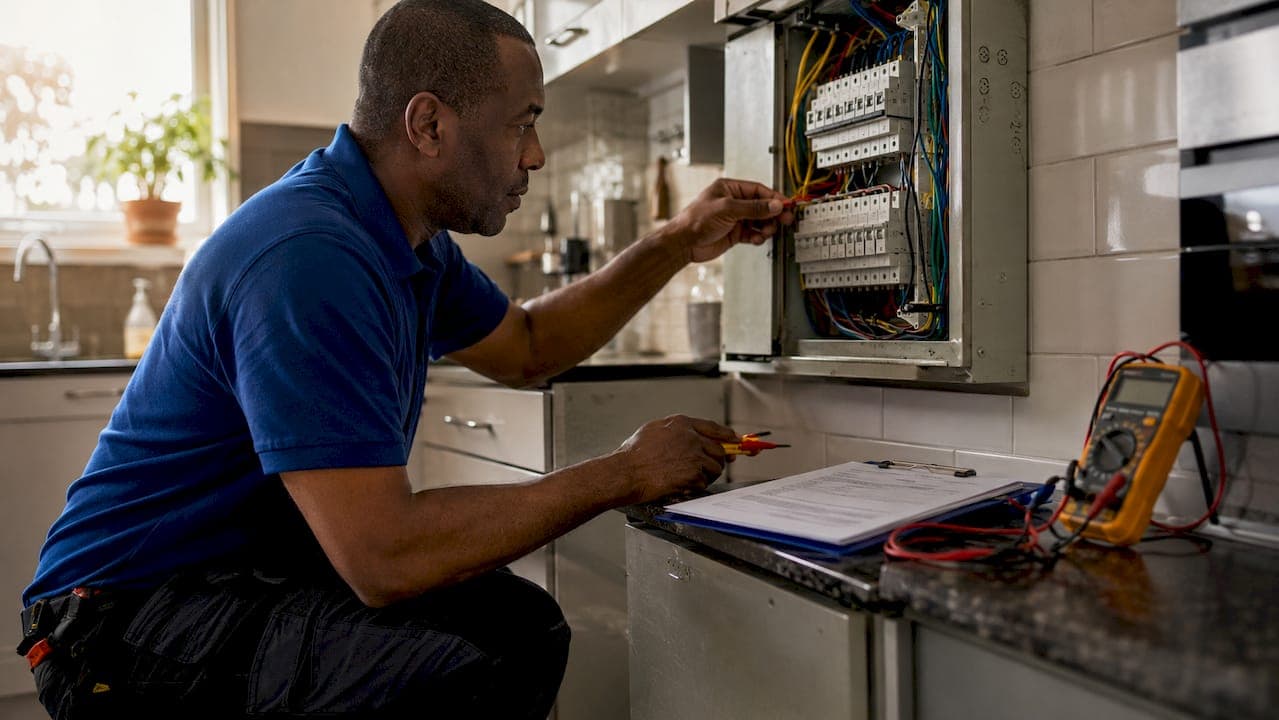
Certified electricians are the backbone of electrical safety compliance in any rental property portfolio. Their core job is to inspect, test, and certify the fixed electrical installations in your properties, producing an Electrical Installation Condition Report (EICR) that confirms whether those installations meet BS 7671 Wiring Regulations. Without a valid EICR from a qualified electrician, you are in breach of UK law. Here is what that means in practice:
- Certified electricians inspect fixed wiring, consumer units, sockets, and earthing arrangements across your properties.
- They identify hazards and classify them using observation codes (C1, C2, and FI) that determine how urgently you must act.
- They produce the EICR documentation you are legally required to supply to tenants and, on request, to your local housing authority.
- Their work underpins your ability to demonstrate compliance with the Electrical Safety Standards Regulations 2020, which now cover both private and social rented sectors in England.
What is an EICR and why does every landlord need one?
An Electrical Installation Condition Report is a formal assessment of the fixed electrical installation in a property. It covers the consumer unit, wiring, sockets, light fittings, and earthing and bonding arrangements. The electrician tests each element against current safety standards and records every observation, from minor recommendations through to urgent dangers.
The observation codes matter. A C1 indicates an immediate danger requiring action before the property can be safely occupied. A C2 flags a potentially dangerous condition that must be remedied promptly. An FI (Further Investigation) means a problem cannot be fully assessed without additional work. Any of these codes results in an unsatisfactory EICR, triggering your legal duty to act.
EICRs are valid for up to five years, even when tenants change, which gives portfolio landlords a predictable compliance cycle. You do not need a new report every time a tenancy ends. You do, however, need to supply a copy of the current report to each new tenant before they move in.
What are your legal responsibilities as a landlord for electrical safety?
From November 2025, the electrical safety regulations were extended to cover social landlords as well as private ones. Every landlord in England must now have electrical installations inspected and tested at least every five years by a qualified person. The key obligations break down as follows:
- Supply a copy of the EICR to existing tenants within a legally mandated timeframe following the inspection.
- Provide the report to any new tenant before they occupy the property.
- Supply a copy to the local housing authority within seven days of a written request.
- Where the EICR requires remedial or investigative work, complete it within 28 days (or sooner if the report specifies).
- Obtain written confirmation from a qualified electrician that the remedial work meets electrical safety standards, then supply that confirmation to tenants and the local authority within a legally mandated timeframe after completion.
An unsatisfactory EICR does not automatically make a property unrentable, but it does start the compliance clock. Proactive management of remedial work and clear documentation significantly reduce enforcement risks. Local housing authorities can serve remedial notices and impose financial penalties on landlords who fail to meet these duties.
What qualifications should a certified electrician hold for rental work?
The term "qualified and competent person" appears throughout the regulations but carries no single statutory definition. That ambiguity is precisely why the method of verification matters so much.
The most reliable approach is to use electricians registered with a recognised Competent Person Scheme. Membership in a Competent Person Scheme combined with Professional Indemnity Insurance is the safest way to verify that an electrician is qualified to carry out EICR reporting. Bodies such as NICEIC and NAPIT operate these schemes, and their registers are publicly searchable. Professional Indemnity Insurance is particularly important because it covers you if a negligent inspection report later leads to a dispute or claim.

One distinction is worth keeping in mind. Qualifications for periodic inspection and testing are not identical to those for installation or remedial work. An electrician who is competent to carry out a full rewire may not hold the specific certification required to conduct a compliant EICR. Always verify the specific qualification, not just the general trade registration.
How do you choose the right electrician for a rental portfolio?
Selecting an electrician for a single property is straightforward enough. Selecting one who can handle a portfolio efficiently, document everything correctly, and keep your compliance records in order is a different matter.
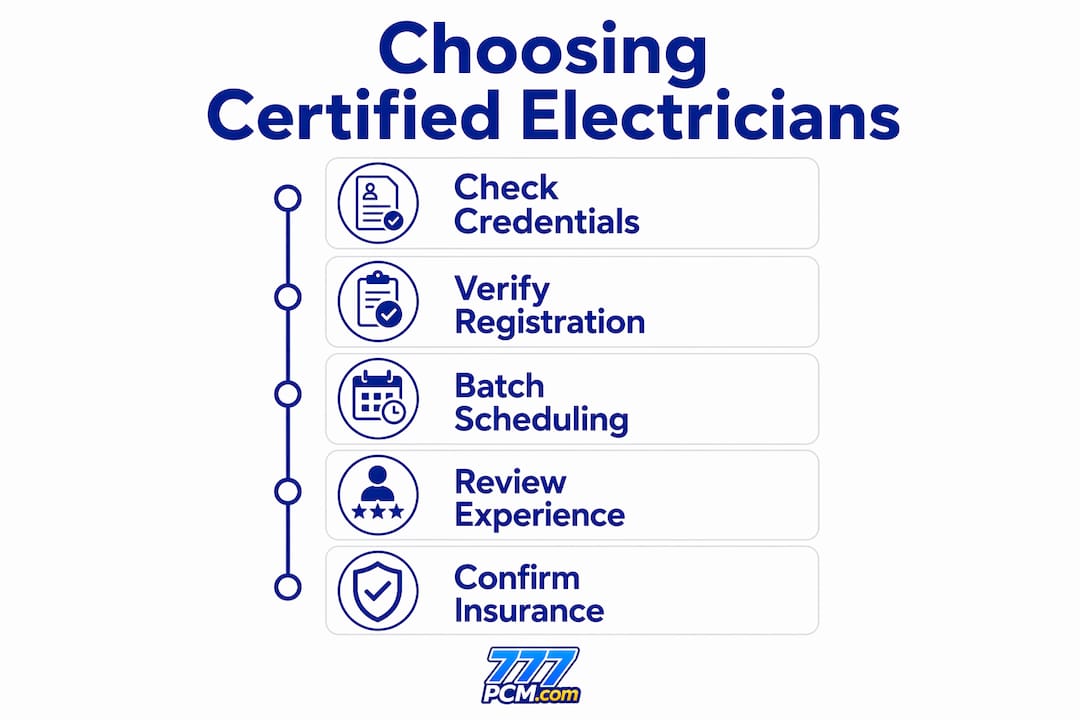
- Verify registration on the Registered Competent Person Electrical portal before booking anyone. Using a registered electrician provides a key defence in disputes about compliance.
- Check the specific qualification for periodic inspection and testing, not just general electrical competence. Experts recommend systematic qualification checks beyond price or convenience.
- Confirm insurance, including Professional Indemnity cover for EICR reporting.
- Ask about portfolio experience. An electrician familiar with managing multiple properties will understand the documentation requirements and scheduling demands that come with a larger portfolio.
- Balance cost with legal robustness. The cheapest quote is rarely the lowest-risk option when a non-compliant EICR can expose you to enforcement action.
Pro Tip: When managing multiple properties, ask prospective electricians whether they can batch-schedule inspections across your portfolio and provide a single compliance summary. This saves time and makes it far easier to track renewal dates.
For a broader view of the certificates your portfolio requires, the landlord safety certificates guide covers the full picture alongside electrical compliance. If you are also managing routine property maintenance, understanding how plumbing inspections work can help you apply the same verification mindset to other trades.
How should you manage EICR findings and remedial work?
Receiving an unsatisfactory EICR is not a crisis. It is a prompt to act within a defined legal window. The 28-day deadline for completing remedial or investigative work is firm, and the documentation trail you create during that process is just as important as the work itself.
- C1 codes require immediate action. Do not allow the property to be occupied until the danger is resolved.
- C2 codes must be addressed within 28 days. Treat them with the same urgency as a C1 in practice, because the window closes faster than it appears.
- FI codes require further investigation, which may itself reveal additional C1 or C2 issues, restarting the remedial cycle.
Once remedial work is complete, obtain written confirmation from the electrician. Acceptable forms include a satisfactory EICR, an Electrical Installation Certificate (EIC), or a Minor Electrical Installation Works Certificate (MEIWC). Supply this confirmation, along with a copy of the original EICR, to your tenants and the local housing authority within 28 days. Failing to obtain post-remedial written certification risks financial penalties, even when the physical work has been done correctly.
How 777pcm supports landlords with portfolio electrical compliance
Managing electrical compliance across multiple properties requires more than booking an occasional inspection. It demands scheduling discipline, accurate record-keeping, and a clear chain of accountability from inspection through to certification. 777pcm's in-house certified electricians handle the entire process, from arranging access and conducting EICR inspections to completing remedial works and issuing the required documentation. Because 777pcm does not subcontract, landlords deal with a single point of contact throughout, which removes the coordination gaps where compliance failures tend to occur. For landlords managing growing portfolios, that end-to-end control over the compliance cycle is what keeps renewal dates from slipping and enforcement notices from arriving.
What does it cost to hire a certified electrician for rental properties?
EICR costs vary depending on property size, the number of circuits, and the age of the installation. Older properties with more complex wiring typically take longer to inspect and may attract higher fees. Remedial work costs depend entirely on what the EICR identifies: a single faulty socket is a minor job, while an outdated consumer unit requiring replacement is a more substantial piece of work.
For portfolio landlords, the more relevant consideration is the total cost of compliance across all properties over a five-year cycle. Batching inspections with a single provider often reduces the per-property cost compared to booking individual electricians for each address. It also simplifies invoicing and record-keeping. The EICR landlord benefits guide covers the financial and legal case for staying ahead of inspection deadlines rather than reacting to them.
What is a realistic timeline for EICR inspections and remedial works?
A standard EICR on a two-bedroom property typically takes two to four hours, though larger or older properties can take longer. The report itself is usually issued within a few days of the inspection. If the EICR is satisfactory, your compliance obligation is met and the five-year clock resets.
Where remedial work is required, the 28-day legal deadline begins from the date of the inspection report, not from when you first read it. Booking a remedial electrician promptly after receiving an unsatisfactory report is therefore critical. For complex issues requiring multiple visits or specialist parts, that window can feel tight. Planning inspections well before tenancy renewals gives you a buffer.
How do you maintain electrical safety records across a portfolio?
Good record-keeping is the difference between a landlord who can demonstrate compliance and one who cannot. For each property, you should hold:
- The current EICR, retained until the next inspection is due.
- Written confirmation of any remedial works completed, along with the associated certificates (EIC or MEIWC).
- Records of when each report was supplied to tenants and, where applicable, to the local housing authority.
EICRs do not need renewing with each tenant change, but you must supply a copy to every new tenant before they move in. A simple spreadsheet tracking inspection dates, report outcomes, and renewal deadlines works well for smaller portfolios. For larger ones, a dedicated compliance management system or a service provider with its own tracking portal removes the risk of a renewal date being missed. The rental property compliance checklist is a practical starting point for building that record-keeping structure.
777pcm handles your electrical compliance from inspection to certification
Portfolio compliance is where 777pcm genuinely earns its place. Rather than sourcing separate electricians for inspections, remedial works, and certification, landlords and property managers can hand the entire electrical compliance cycle to 777pcm's in-house team. Inspections are scheduled around tenancy timelines, remedial works are completed within the legal 28-day window, and all documentation is managed through a single account portal. There are no third-party subcontractors and no gaps in accountability.

For landlords who want electrical safety managed as part of a broader compliance programme covering gas, EPCs, and ongoing maintenance, 777pcm offers exactly that. Get in touch via 777pcm.com to discuss your portfolio's requirements and arrange a compliance review.
Key takeaways
Certified electricians are legally required for EICR inspections in rental properties, and the quality of their credentials directly determines the robustness of your compliance position.
| Point | Details |
|---|---|
| EICR frequency | Every electrical installation must be inspected at least every five years by a qualified person. |
| Remedial work deadline | Landlords must complete remedial or investigative work within 28 days of an unsatisfactory EICR. |
| Electrician verification | Use the Registered Competent Person Electrical portal and confirm Professional Indemnity Insurance before booking. |
| Record-keeping | Retain the current EICR, remedial certificates, and proof of supply to tenants for the full compliance cycle. |
| 777pcm | 777pcm manages the full electrical compliance cycle in-house, from EICR inspections to remedial works and documentation. |