
Yes — CP12, EICR and EPC status directly change your net operating income, property valuation and access to possession remedies under the Renters' Rights Act 2026. When any of these certificates lapses, the financial consequences arrive quickly: statutory fines, blocked possession routes, insurance complications and lender scrutiny that can stall a refinance. Factoring safety certificates into investment returns is no longer optional admin — it is a core part of yield modelling.
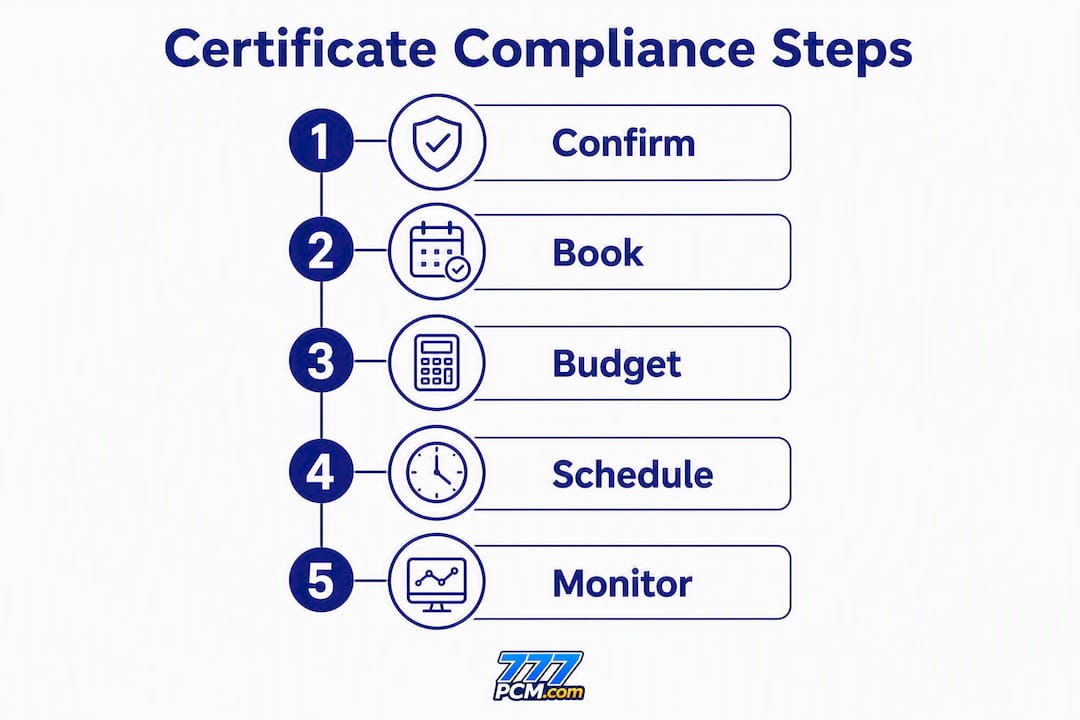
Three actions to take this week: confirm the expiry dates for every CP12, EICR and EPC across your portfolio; book any overdue inspections immediately through a Gas Safe registered engineer or qualified electrician; and gather all certificates into one centralised compliance file so you can evidence status to insurers, valuers and lenders without delay.
Pro Tip: Use your letting agent's software or a simple shared spreadsheet to list every property, its three certificate expiry dates, and the next scheduled inspection. Gaps become visible in minutes.
Table of Contents
- How do safety certificates change cash flow, risk and valuation?
- CP12, EICR and EPC: what do they cost and what are the penalties?
- How do you model certificate costs and risk in NOI and yield calculations?
- Operational controls that cut compliance cost and risk
- How do insurers, valuers and lenders treat safety certificates?
- What are the UK enforcement penalties and common failures to plan for?
- Managing certificates across a large portfolio: tech and vendor decisions
- Key takeaways
- Compliance is a financial decision, not a paperwork exercise
- 777pcm handles compliance so your yield stays protected
- Useful sources and further reading
How do safety certificates change cash flow, risk and valuation?
Non-compliance reduces net operating income (NOI) through several distinct mechanisms, and each one compounds the others.
- Direct fines: Statutory penalties reach up to £30,000 per breach for missing EICRs, unlimited fines for gas safety breaches, and up to £5,000 for EPC/MEES violations.
- Extended voids: A lapsed certificate can block Section 8 possession grounds, turning a routine tenancy dispute into months of unpaid rent during litigation.
- Rent repayment orders: Tenants and local authorities can apply for repayment of rent where a landlord has failed to meet safety obligations.
- Insurance failures: Insurers routinely decline claims where a mandatory certificate was invalid at the date of loss, leaving landlords exposed to the full cost of fire, flood or liability events.
- Lender and refinance risk: Mortgage underwriters increasingly request current certificates before drawdown; a missing EICR can delay or block a remortgage.
The Renters' Rights Act 2026 has moved compliance from a background administrative task to a core valuation input. Chartered surveyors now apply a significant risk-adjusted discount to portfolios with outstanding safety certificate failures, with post-remediation uplifts once defects are resolved. At a moderate capitalisation rate, valuation discounts on non-compliant properties can represent a significant loss of capital value — far exceeding the cost of any inspection programme.
Surveyor note: practitioners apply higher capitalisation rates to non-compliant properties, reflecting the regulatory risk premium that buyers and lenders now price in explicitly.
CP12, EICR and EPC: what do they cost and what are the penalties?
| Certificate | Renewal frequency | Typical inspection cost | Likely remedial budget | Max statutory penalty |
|---|---|---|---|---|
| CP12 (gas safety) | Annual | Inspection cost varies | Minor works cost varies | Potentially unlimited fines |
| EICR (electrical) | Every 5 years (or sooner if recommended) | Inspection cost varies | Remedial costs vary widely | Statutory fines can be substantial |
| EPC (energy) | Every 10 years (or on re-let) | Inspection cost varies | Upgrade costs depend on scope | Fines may apply for non-compliance |
CP12 (Landlord Gas Safety Certificate) must be renewed annually by a Gas Safe Register engineer. The inspection cost is modest, but the consequences of a lapse are not: unlimited fines, immediate possession complications and insurance voidance. Treat the annual boiler service and CP12 as a single visit to eliminate a duplicate call-out fee.
EICR (Electrical Installation Condition Report) is required at least every five years for all private rented properties in England. A significant renewal cluster is arriving, as many EICRs issued in previous years reach their five-year limit. Booking delays are already reported in high-demand areas, so scheduling early is not cautious — it is financially rational.
EPC (Energy Performance Certificate) currently requires a minimum Band E rating under MEES. Policy direction is firmly toward Band C by 2030, and a large number of rental homes in England are still rated D or below. EPC C+ properties can command a sale price premium and typically support higher rents. Treat EPC upgrade capital as a phased investment rather than a compliance cost, and integrate energy efficiency works with planned maintenance to reduce marginal upgrade costs.
How do you model certificate costs and risk in NOI and yield calculations?
Surveyor methodologies now explicitly translate physical hazards into financial diminutions using cost-to-cure plus risk premium, income capitalisation for active enforcement, and comparable evidence. You can apply the same logic to your own portfolio modelling.
Worked example — single buy-to-let property:
At a 6% capitalisation rate, the compliant property values at approximately £192,000; the non-compliant scenario produces a capital value of roughly £94,000 after the surveyor's risk discount. The gap is not theoretical — it is the number a valuer will put in writing.
- Annualise inspection costs for each certificate across your portfolio and add them to your operating expense line.
- Model enforcement risk as expected void weeks multiplied by weekly rent, plus a legal cost allowance.
- Apply a regulatory risk premium of 1–2 percentage points to your cap rate for any property with a known compliance gap.
- Run three scenarios — best case (no enforcement), base case (one minor breach per year), worst case (possession blocked for two months) — to understand yield sensitivity.
Pro Tip: When presenting a portfolio to a lender or valuer, attach a compliance schedule showing every certificate expiry date. It signals professional management and often removes the regulatory risk premium from their assessment.
Operational controls that cut compliance cost and risk
Integrating CP12, EICR and EPC updates into routine maintenance is the single most effective cost-reduction lever available to a landlord or property manager. Combining a boiler service, CP12 renewal and a minor electrical check into one access visit eliminates a separate call-out fee and reduces tenant disruption — two outcomes that directly protect NOI.
A centralised compliance file per property — containing scanned certificates, contractor invoices and renewal dates — takes minutes to maintain and hours to justify its value when an insurer, lender or local authority asks for evidence. Without it, a valid certificate can be as useless as a lapsed one if you cannot produce it quickly.
Rolling expiry schedules across a portfolio prevent cash-flow concentration. If every EICR in a ten-property portfolio expires in the same quarter, you face a large, simultaneous spend and a booking queue. Stagger renewals deliberately: when a certificate is due for renewal, consider whether extending or advancing it by a few months aligns it better with your maintenance calendar.
Pro Tip: Ask your compliance provider to flag properties where two or more certificates expire within 60 days of each other. Consolidating those visits into a single access saves both money and tenant goodwill.
How do insurers, valuers and lenders treat safety certificates?
The financial consequences of non-compliance extend well beyond statutory fines. Insurers, valuers and mortgage lenders each apply their own penalties, and they often arrive at the worst possible moment.
- Insurers commonly decline claims where a mandatory certificate was invalid at the date of loss. A fire claim on a property with a lapsed CP12 can result in a full policy voidance, leaving the landlord liable for the entire loss.
- Valuers now apply explicit compliance discounts. Practitioners report notable risk-adjusted reductions for portfolios with outstanding safety failures, with uplifts once remediation is complete and documented.
- Mortgage lenders increasingly request current certificates before drawdown on purchase or remortgage. An expired EICR discovered during underwriting can delay completion by weeks.
Gas safety compliance is the area where insurance and valuation risks converge most sharply. A valid CP12 is evidence of a functioning boiler, safe appliances and a professional maintenance relationship — all of which a valuer reads as reduced risk.
What are the UK enforcement penalties and common failures to plan for?
The statutory penalty framework is clear, and the most common failures are procedural rather than technical.
- Gas safety (CP12): — Unlimited fines from the Health and Safety Executive; possession complications; insurance voidance. The most frequent failure is simply allowing the annual renewal to lapse by a few weeks.
Beyond fines, a lapsed certificate can block possession routes and expose landlords to rent repayment orders. With Section 21 abolished from May 2026, Section 8 grounds become the primary possession mechanism — and procedural compliance failures can undermine those grounds entirely.
Managing certificates across a large portfolio: tech and vendor decisions
At portfolio scale, manual tracking fails. A compliance portal with automated expiry alerts, central document storage and audit trails is the baseline requirement for any landlord managing more than five properties.

When choosing between in-house engineers and outsourced panels, the decision turns on control versus flexibility. In-house or directly employed engineers offer faster response, consistent quality and a single audit trail. Outsourced panels offer geographic reach and cost flexibility, but introduce coordination risk and variable documentation standards.
Pro Tip: When evaluating a compliance provider, ask specifically about Gas Safe registration, NICEIC or NAPIT certification, bulk-booking capability, and whether they provide a digital audit trail per property. A provider who cannot answer all four questions clearly is a risk, not a solution.
For large portfolio management, staggering certificate expiry dates across the year is as important as the technology used to track them. The 2026 EICR renewal cluster demonstrates what happens when a large cohort of properties reaches expiry simultaneously — booking queues lengthen, costs rise and the risk of a lapsed certificate increases sharply.
Key takeaways
Compliance with CP12, EICR and EPC requirements directly protects net operating income, capital value and access to possession remedies — non-compliance is a measurable financial risk, not an administrative oversight.
| Point | Details |
|---|---|
| Certificates affect NOI directly | Fines, voids and legal costs from non-compliance can significantly reduce annual net operating income in a worst-case scenario. |
| Valuation discounts are quantified | Surveyors apply a 5–15% risk discount for outstanding safety failures; remediation restores 5–12% of value. |
| EPC upgrades carry a return | EPC C+ properties command a sale price premium and support higher rents. |
| Stagger expiry dates | Clustering certificate renewals creates cash-flow shocks and booking delays — spread them deliberately. |
| 777pcm manages the full cycle | 777pcm provides CP12, EICR and EPC procurement, remedial works and a compliance portal to protect yield across your portfolio. |
Compliance is a financial decision, not a paperwork exercise
The conventional view treats safety certificates as a legal obligation to be discharged as cheaply and quickly as possible. That framing is outdated and, under the Renters' Rights Act 2026, actively expensive.
What the evidence shows is that compliance status is now a pricing input. Valuers discount it, lenders condition on it, and insurers use it to determine whether a claim is valid at all. The landlords who treat CP12, EICR and EPC management as a financial discipline — scheduling inspections ahead of expiry, integrating them with maintenance, and documenting everything — are not just avoiding fines. They are protecting a measurable share of their capital value and keeping their possession options open.
The detail that surprises most portfolio landlords is not the fine exposure. It is the valuation gap. A 10% surveyor discount on a mid-sized portfolio is not a theoretical risk — it is the number that appears in a RICS report when a lender orders a valuation ahead of a remortgage. At that point, the cost of a missed inspection looks very different from how it looked when the calendar reminder was ignored.
777pcm handles compliance so your yield stays protected

Keeping CP12, EICR and EPC certificates current across a portfolio is straightforward in principle and surprisingly easy to let slip in practice. 777pcm removes that risk entirely. With in-house Gas Safe engineers, qualified electricians and EPC assessors working under one roof, 777pcm coordinates inspections, remedial works and certification without subcontracting — which means faster scheduling, consistent documentation and a single point of accountability for every property in your portfolio.
The compliance portal gives landlords and letting agents a live view of certificate status, expiry dates and outstanding works, so nothing slips through. Bulk booking across a portfolio reduces per-property costs, and because engineers handle multiple trades in a single visit, you avoid the duplicate call-out fees that inflate compliance budgets unnecessarily.
If you manage more than a handful of properties and want a clear picture of your current compliance position, book a portfolio compliance review with 777pcm today.
Useful sources and further reading
- Renters' Rights Act 2026: impact on buy-to-let valuations (Canterbury Surveyors)
- Valuing fire and electrical hazard remediation under the Renters' Rights Act 2026 (Wimbledon Surveyors)
- Landlord certificates UK: your complete guide to safety compliance (Zmartly)
- Landlord compliance checklist 2026 (LandlordAssist)
- EPC C by 2030: what it means for UK property portfolios (AWH)
- EPC retrofit cost and buy-to-let yield impact (RealYield)
- Renters' Rights Act 2026 and its impact on buy-to-let building surveys (Prince Surveyors)
- Landlord gas safety fines: penalties and risks (CertNudge)
- Does your EPC rating affect property value? (EPCGuide)
This article provides general information about UK property compliance obligations and is not legal or financial advice. Confirm current statutory requirements with the relevant regulator or a qualified professional before making decisions.