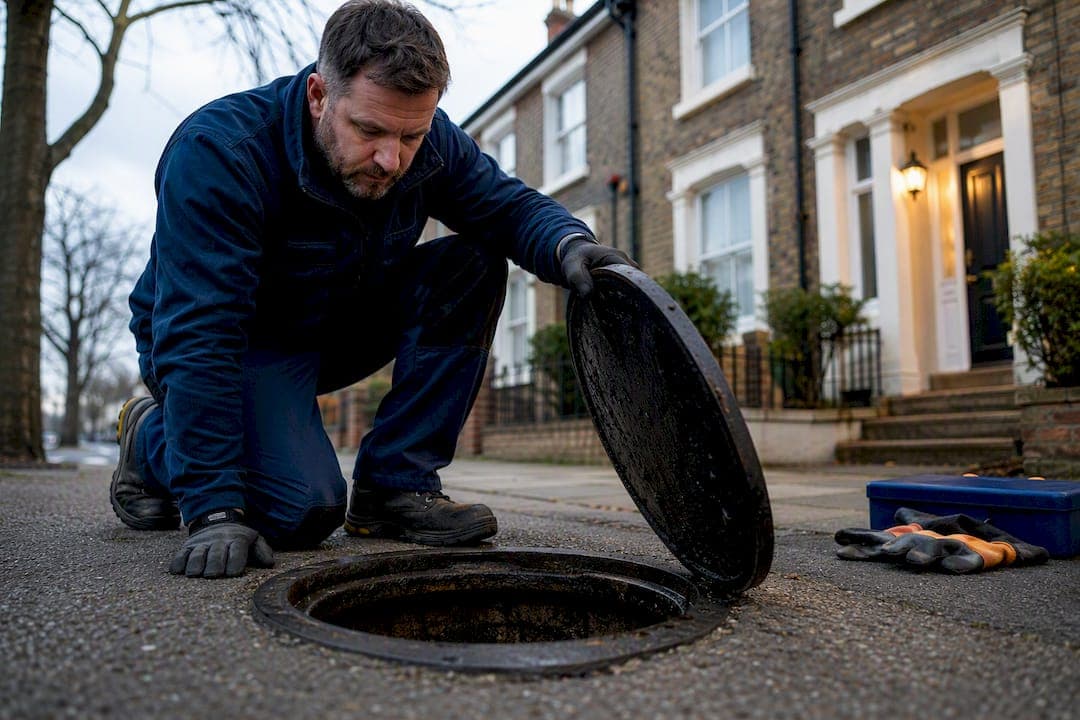
Usually, it's the landlord who pays, unless clear evidence shows the tenant caused the blockage through misuse. That legal duty comes from Section 11 of the Landlord and Tenant Act 1985. The first practical step for either party is simple: report the blockage in writing and arrange an inspection before anyone reaches for a chequebook.
TL;DR:
- Landlords typically cover the cost of investigating and repairing blocked drains caused by age, structural failure, or wear and tear, as mandated by Section 11 of the Landlord and Tenant Act 1985.
- Tenants are responsible for blockages caused by misuse, such as flushing wipes or pouring fat down the drain, and must report issues promptly in writing to avoid charges.
- Proper diagnosis by a qualified professional, including photographic evidence and detailed reports, is essential to determine responsibility and prevent disputes.
- Responsibility for drains depends heavily on location: within the property boundary, the owner; beyond, the water company or local authority.
- Centralized documentation of inspections, reports, and invoices is crucial for resolving recharge disputes and ensuring transparent communication.
Table of Contents
- Blocked drain landlord or tenant: what the law actually says
- What tenants must do to avoid being charged
- How landlords and tenants determine who pays
- Private drains, shared drains and public sewers: who's actually responsible
- Avoiding disputes: what each side should do
- Why documentation decides most drain disputes
- Getting a blocked drain sorted without the back-and-forth
- Sources
- FAQ
Blocked drain landlord or tenant: what the law actually says
The starting point for any dispute over blocked drains is Section 11 of the Landlord and Tenant Act 1985, which applies to tenancies of seven years or less. This puts a repairing duty on the landlord covering the structure, exterior, and installations for sanitation, including drains, gutters, and external pipework. It's a duty landlords cannot sign away in the tenancy agreement, however the paperwork is worded.
In practice, that means landlords normally carry the cost of investigating and fixing a blocked drain caused by wear and tear or structural failure. Common landlord-liable causes include:
- A collapsed drain run or cracked pipe below ground
- Tree root ingress into an older clay drain
- Limescale build-up in hard water areas
- Ageing pipework simply reaching the end of its life
Pro Tip: A clogged drain doesn't always announce itself with a flood. Slow-draining sinks, gurgling toilets, or a faint sewage smell near an outside gully are early signs worth acting on before the problem worsens.
Costs for clearing and repairing a blocked drain vary greatly depending on the cause and how deep the fault sits. A simple rodding job is usually less expensive than excavating a collapsed run, so the actual cost can only be determined after inspection. That's precisely why the investigation stage matters more than people assume, a point covered further under Section 11 repair obligations.
What tenants must do to avoid being charged
Tenants have a parallel duty to use the property in a "tenant-like manner," a phrase borrowed from decades of housing case law. It doesn't mean tenants are drain engineers. It means using fixtures sensibly and reporting problems before they escalate, as Shelter England explains.
Blockages caused by flushing wet wipes, sanitary products, nappies, cotton buds, or pouring cooking fat down the kitchen sink typically fall on the tenant to pay for, once there's evidence linking the cause to their behaviour. A child's toy retrieved from a toilet trap is a classic, oddly common example.
Before calling a professional, most tenants can safely try:
- Check whether the blockage affects one fixture or the whole property (a single sink points to something local; multiple fixtures backing up suggests a deeper drain issue).
- Use a plunger on a single blocked sink or toilet, gently.
- Avoid chemical drain cleaners in older or unfamiliar pipework, as they can damage pipes and mask the real cause.
- Stop and report in writing the moment a DIY attempt fails.
Reporting promptly matters legally as well as practically. Landlords and advisers alike note that a written record protects both sides if the situation worsens before repairs happen.
How landlords and tenants determine who pays
Because the cause of a blocked drain often isn't obvious from the surface, NRLA guidance recommends the landlord commissions an initial inspection before anyone assigns blame. Paying for that diagnosis upfront, rather than arguing over it, tends to prevent costlier disputes later.
A proper diagnostic report from a plumber or drainage engineer should record:
- The exact location of the blockage
- The likely cause (root ingress, misuse, structural fault)
- Photographic or camera-survey evidence
- The clearance or repair method used
If the report points to tenant misuse, the landlord can lawfully recharge the cost, provided they keep invoices, photographs, and the diagnostic report as supporting paperwork. Tenants who disagree with a recharge can raise it through their deposit protection scheme (TDS), request the underlying evidence, or, in persistent disputes, pursue the matter through the small claims court.
Private drains, shared drains and public sewers: who's actually responsible
Location changes everything here. Drains sitting entirely within a property's boundary are usually the owner's (landlord's) responsibility to maintain. Once a drain crosses into a neighbour's land or connects to the wider network, that changes.
- Private drains inside the boundary: the property owner's job.
- Lateral drains running beyond the boundary to the sewer connection: normally the water company's responsibility.
- Public sewers: maintained by the water company, not the landlord.
- Unadopted or private sewers: remain the owner's responsibility even where they serve multiple properties.
Citizens Advice confirms this split, and it's worth checking property deeds or a water company's sewer map before assuming who's on the hook. Local authorities also hold enforcement powers, and can order an owner to repair a neglected private drain, or carry out the work themselves and bill the owner.
Avoiding disputes: what each side should do
Most drain disputes come down to poor documentation rather than genuine disagreement over the law. Tenants should:
- Report the blockage in writing the moment it's noticed.
- Photograph the issue before attempting anything.
- Avoid DIY fixes that could push the blockage further down the pipe or damage fittings.
Landlords should arrange a qualified inspection quickly, log every communication with the tenant, and keep every invoice and photo tied to a clear repair timeline.
Pro Tip: Add a short "sink and drain care" note to your tenancy welcome pack. It costs nothing and gives you a paper trail if misuse ever needs proving later.
Where a recharge is contested at the end of a tenancy, deposit deductions should always be backed by the diagnostic evidence, not just a plumber's invoice on its own.

Why documentation decides most drain disputes
Blocked drain disputes rarely hinge on the law itself, since Section 11 is fairly settled. They hinge on evidence. Some property compliance providers work with landlords using in-house engineers and a compliance portal that logs every inspection, photo, and invoice in one place, rather than scattered across email threads and paper receipts. That centralised record is what actually resolves a recharge argument, not a stronger opinion about who's right. For more on related obligations, see the guidance on water leak landlord responsibility.
— Mike
Getting a blocked drain sorted without the back-and-forth
When a drain blocks, the slowest part is rarely the repair itself. It's working out who's responsible and getting someone qualified out to look at it. Certain property compliance providers remove that friction for landlords by combining emergency plumber response, evidence-backed diagnostic reports, and in-house repair teams under one account, so there's no third-party subcontractor to chase for a report months later.

Book an inspection through 777pcm and you get a documented cause, a fixed-price quote for the remedial work, and portal access to every photo and invoice tied to the job, useful evidence if a recharge conversation ever needs backing up. Landlords managing several properties can also see how the same team handles gas safety certification in Newbury, a useful example of the compliance-first approach applied across a portfolio. Get in touch to arrange a call-out or a quote before the next blockage turns into a bigger repair bill.
Sources
- Landlord and Tenant Act 1985, section 11
- Shelter England — repairs under Section 11
- Citizens Advice — who is responsible for repairing drains and sewers
- NRLA — whose responsibility is a blocked drain?
FAQ
Is a landlord or tenant responsible for a blocked drain?
The landlord is usually responsible under Section 11, unless an inspection shows the tenant caused the blockage through misuse, such as flushing wipes or grease.
Who is legally responsible for blocked drains in the UK?
Responsibility depends on location: landlords cover private drains within the property boundary, while water companies maintain lateral drains and public sewers.
How much does it cost to unblock a drain in the UK?
Costs vary widely depending on the cause and depth of the blockage, from a straightforward rodding job to a full excavation for a collapsed pipe, so an inspection is needed before a firm price can be given.
What can a tenant do to unclog a drain safely?
Tenants can try a plunger on a single blocked fixture and should avoid chemical drain cleaners in older pipework. If that doesn't work, report the issue in writing and let the landlord arrange a qualified inspection.
Can a landlord charge a tenant for a blocked drain?
Yes, but only with evidence. A landlord can recharge a tenant when a plumber's diagnostic report, photos, and invoices show the blockage resulted from misuse rather than wear and tear.