
What are the best Safe2.co.uk alternatives for UK landlords?
The strongest Safe2.co.uk alternatives split into two distinct categories: compliance-first platforms built around audit-ready documentation, and broader property management tools that include compliance as one feature among many. Knowing which type you need is the most important decision you will make before signing up for anything.
| Provider | Best for | Compliance certificates covered | Professional accreditations | Service scope | Pricing model | UK availability |
|---|---|---|---|---|---|---|
| Safe2 | Landlords and agents wanting bundled compliance and maintenance | CP12, EICR, EPC, core certificates | Varies by engineer | Compliance coordination and maintenance | Per-property | Yes |
| Proplio | Agents prioritising full compliance oversight at flat cost | All UK types including legionella, HMO, PAT | Verified contractor network | Compliance tracking, audit reports, reminders | £29/month flat, unlimited properties | Yes |
| Arthur Online | Landlords wanting broader property management with compliance | Core certificates, document storage | Not specified | Full property management platform | Per-property tiers | Yes |
| Reapit | Large letting agencies needing enterprise compliance workflows | Most UK certificate types | Not specified | Full agency operations and compliance modules | Enterprise quote | Yes |
| Fixflo | Landlords prioritising repairs with basic compliance tracking | Core certificates (gas, EICR, EPC) | Not specified | Repairs-first, compliance add-on | Per-property tiers | Yes |
The distinction between compliance-first and repairs-first tools runs through every meaningful comparison here. Proplio is built around compliance from the ground up, with RAG dashboards, automatic reminders at 90, 60, 30, 14, and 7 days before expiry, and one-click audit-ready PDF reports. Fixflo, by contrast, is primarily a repairs and maintenance platform; its compliance module covers the core certificates but lacks the depth that letting agents need when regulatory scrutiny arrives.

Arthur Online sits in a third category: a capable property management suite where compliance sits alongside tenancy workflows, document storage, and contractor management. The trade-off is that its compliance features are less detailed than a purpose-built tracker. Reapit operates at enterprise scale, with high-level compliance tracking built into a full agency operations platform, making it the natural fit for larger agencies rather than independent landlords.
Proplio's flat pricing of £29 per month for unlimited properties becomes particularly compelling once a portfolio grows past 30 to 50 properties, at which point per-property pricing on platforms like Arthur Online or Fixflo can reach £100 to £200 per month or more for the same portfolio.
How do you choose the right compliance provider without getting it wrong?
Accreditations come before price
The UK compliance sector has no universal licensing regime, which means the burden of verification falls on you as the landlord or agent. For electrical work, NICEIC or NAPIT registration is the standard to check. Gas engineers must appear on the Gas Safe register. Fire safety providers should carry BAFE or IFSM certification. A provider's brand recognition or polished dashboard tells you nothing about whether their engineers are legally qualified to sign off your certificates.
Know which certificates you actually need to track
The core compliance certificates every landlord must manage are the CP12 gas safety record, the electrical installation condition report (EICR), and the energy performance certificate (EPC). Beyond those, legionella risk assessments, HMO licences, smoke and carbon monoxide alarm records, deposit protection, and Right to Rent checks all carry legal weight. Missing any of these is a frequent compliance failure point, and the gap tends to appear in providers that cover only the headline three. A full landlord safety certificates guide covers each certificate type in detail if you need a reference point.
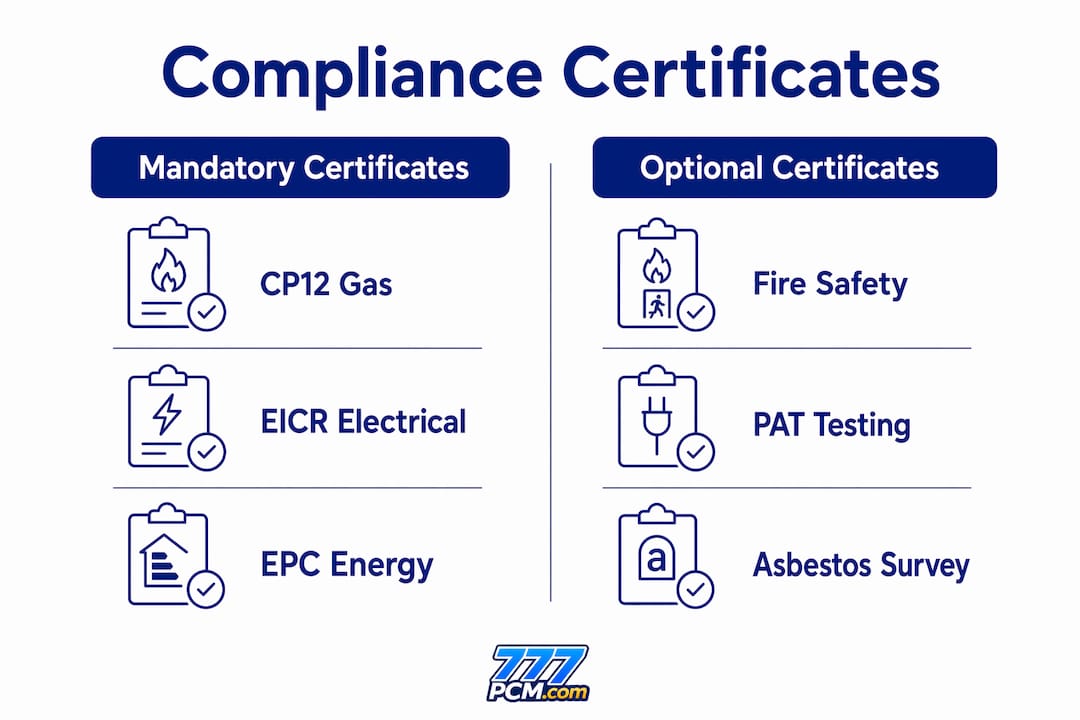
Compliance-first vs repairs-first: why the distinction matters
Purpose-built compliance platforms are generally more cost-effective for compliance oversight than general property management software with compliance added as a secondary feature. The practical difference shows up when you need to evidence compliance in a possession claim or regulatory inspection. General management tools typically offer task checklists. Dedicated compliance trackers generate timestamped, fingerprinted proof-of-service documents that withstand legal challenge.
Key selection criteria
When evaluating any provider, work through these questions:
- Does the platform cover all the certificate types relevant to your portfolio, including HMO and legionella, not just the headline three?
- Are the engineers or contractors verified against NICEIC, Gas Safe, or BAFE, rather than simply described as "qualified"?
- Does the software integrate with your existing property management tools, or will it create a separate silo?
- What does customer support look like in practice? Phone access, dedicated account management, or a ticket queue?
- Are contract terms flexible, and what is the cancellation policy if your needs change?
- How does the provider handle your tenants' personal data under UK GDPR?
Using in-house registered engineers rather than subcontractors reduces the risk of documentation failures and improves accountability across the whole compliance chain.
Pro Tip: Map out your full legal compliance obligations across your portfolio before you choose any software or provider. Buying a platform before you have a clear picture of your duties is the most common cause of dashboard fatigue, where landlords pay for tools they cannot use effectively because the underlying compliance model was never defined.
The dashboard fatigue problem is well documented: landlords adopt software expecting it to manage compliance for them, then find that the tool only works as well as the risk-based model behind it. Software supports a compliance process. It does not replace one. A rental property compliance checklist is a practical starting point for building that model before you commit to any platform.
777pcm: a different kind of compliance solution worth knowing about
The platforms compared above are software tools. 777pcm is something different: a service provider that handles the physical work, the certification, and the ongoing compliance management through its own in-house engineers.
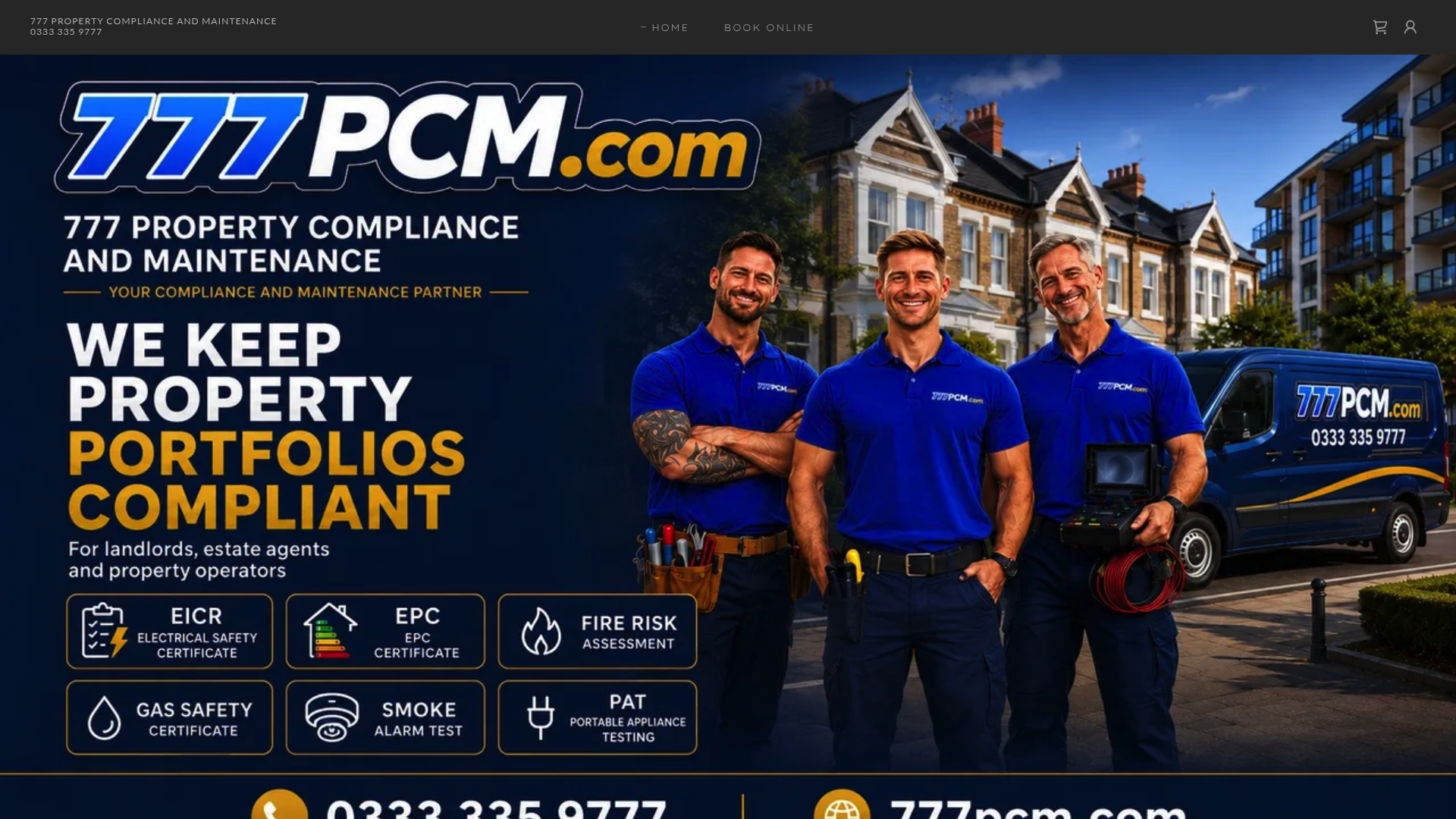
Where Proplio, Arthur Online, or Reapit track and remind, 777pcm delivers the CP12 gas safety certificates, EICRs, EPCs, and remedial works directly, using Gas Safe registered engineers and certified electricians on its own payroll. There are no subcontractors in the chain, which means cleaner documentation, faster turnaround, and a single point of accountability for landlords and letting agents who want compliance handled rather than just monitored. If you manage a portfolio and want one contact for certificates, repairs, and maintenance across all your properties, 777pcm offers that as a managed service rather than a subscription dashboard.
Key takeaways
Choosing the right compliance provider depends on whether you need a software tracker or a managed service with in-house engineers doing the physical work.
| Point | Details |
|---|---|
| Compliance-first vs repairs-first | Proplio is built for compliance oversight; Fixflo is built for repairs with compliance added on. |
| Flat pricing scales better | Proplio's flat monthly fee beats per-property pricing as portfolio size increases beyond a moderate number of properties. |
| Accreditations are non-negotiable | Verify NICEIC or NAPIT for electrical, Gas Safe for gas, and BAFE for fire safety before committing to any provider. |
| Map duties before buying software | Defining your compliance obligations first prevents dashboard fatigue and wasted spend. |
| 777pcm as a managed alternative | 777pcm provides certificates and remedial works through in-house engineers, not a software dashboard. |