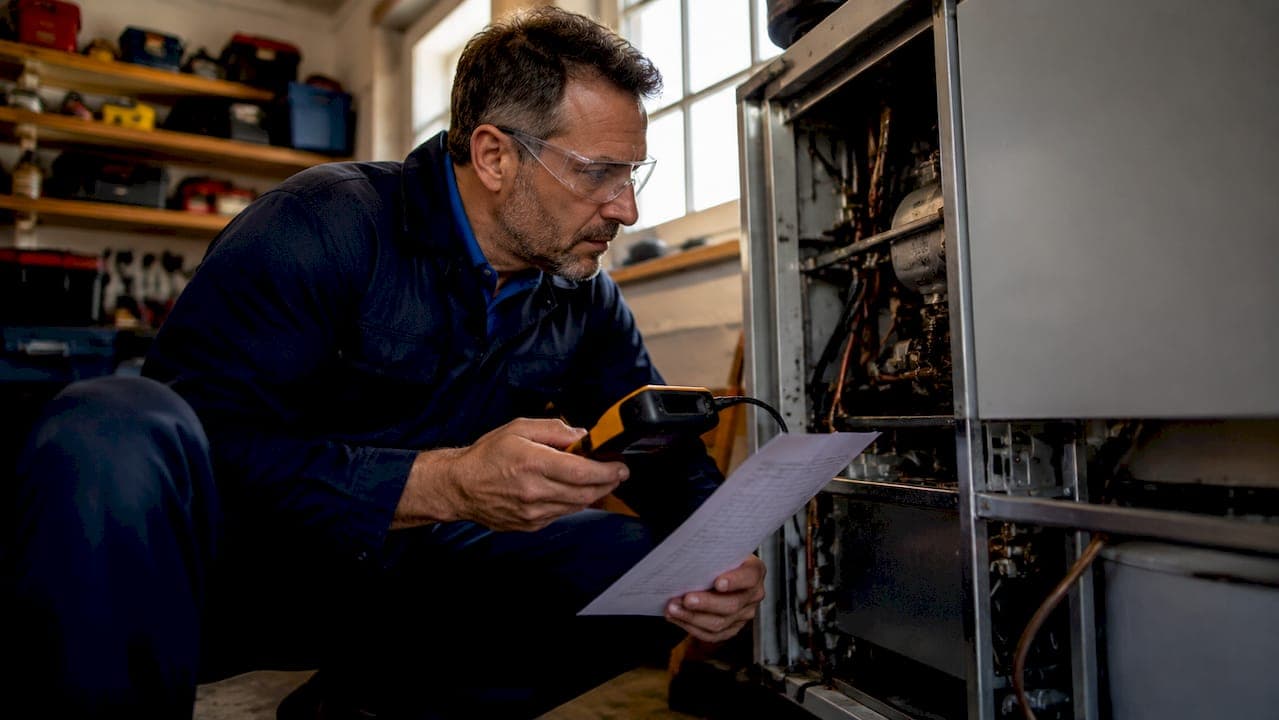
Types of heating system maintenance services fall into three distinct categories: preventive tune-ups, legal compliance inspections, and industrial or commercial boiler servicing. Each category has a different scope, legal standing, and purpose. Property owners and managers who conflate these services risk both compliance failures and system breakdowns. In the UK, Gas Safe registered engineers are the only competent persons authorised to carry out gas safety checks, and the CP12 Landlord Gas Safety Record is a legal document, not simply a service receipt. Understanding which service you need, and when, is the foundation of responsible property management.
1. what are preventive maintenance services for heating systems?
Preventive maintenance is the scheduled inspection, cleaning, testing, and adjustment of a heating system's major components. The goal is to keep the system operating at peak efficiency before problems develop. Preventive tune-ups typically cover the burner assembly, heat exchanger, safety controls, thermostat calibration, ventilation pathways, and flue condition. Providers produce a documented inspection report after each visit, giving property owners a clear record of system health.
A standard preventive visit for a residential boiler or furnace includes:
- Burner assembly inspection and cleaning
- Heat exchanger integrity check
- Safety control and pressure relief testing
- Thermostat calibration and response testing
- Flue and ventilation pathway inspection
- Filter replacement or cleaning
- System pressure and water quality check
These visits are typically scheduled twice a year, once before the heating season begins in autumn and once in spring. That timing catches wear accumulated over winter and prepares the system for the following cold period. For light commercial properties, the same checklist applies, though the system capacity and component complexity are greater.
Pro Tip: Schedule preventive visits at least four weeks before the heating season starts. Engineers are in high demand from October onwards, and early booking reduces the risk of disruption to tenants.

2. how do legal compliance inspections fit into heating maintenance?
The CP12 gas safety check is a legal inspection, not a maintenance service. The Gas Safety (Installation and Use) Regulations 1998 require landlords to arrange an annual gas safety check on all gas appliances, flues, and pipework in rented properties. Only a Gas Safe registered engineer can carry out this inspection. Landlords must retain records for two years and provide tenants with a copy within 28 days of the check.
The legal compliance process follows a clear sequence:
- Book a Gas Safe registered engineer at least four weeks before the current CP12 expires.
- The engineer inspects all gas appliances, flues, and pipework for safety and correct operation.
- A CP12 certificate is issued if all appliances pass. Unsafe appliances are either repaired or disconnected.
- The landlord retains the record for two years and provides a copy to the tenant within 28 days.
- New tenants receive a copy before they move in.
The CP12 gas safety check is a legal compliance inspection. Boiler servicing is a maintenance activity. They are not the same, and one does not substitute for the other. Providers often book both in a single visit for convenience, but the two documents serve entirely different purposes.
Conflating the two is a common and costly mistake. A boiler can pass a gas safety check while still operating inefficiently due to scale build-up or a worn burner. The distinction between servicing and CP12 checks is best practice knowledge for any landlord managing a rental portfolio.
3. what are industrial and commercial boiler maintenance services?
Commercial and industrial boiler maintenance goes well beyond the scope of a residential service visit. Industrial boiler maintenance includes water treatment, combustion system monitoring, burner pathway cleaning, safety device testing, and blowdown management. Each of these tasks addresses a specific failure mode that residential servicing rarely encounters.
| Service Task | Residential | Commercial/Industrial |
|---|---|---|
| Burner inspection | Annual | Quarterly or more frequent |
| Water treatment | Rarely required | Mandatory ongoing programme |
| Safety device testing | Annual | Continuous or scheduled |
| Blowdown management | Not applicable | Regular, documented |
| Combustion analysis | Basic | Detailed, with efficiency targets |
| Record keeping | Service report | Full audit trail for compliance |
Water chemistry is the most frequently overlooked element in commercial heating upkeep. Scale and corrosion caused by untreated water reduce heat transfer efficiency and accelerate component wear. Pressure vessel checks, burner pathway cleaning, and safety device testing are all vital tasks that protect both the asset and the people who rely on it. For commercial property managers overseeing facilities such as schools or gyms, these services are non-negotiable.
Detailed record keeping is equally critical in commercial contexts. Documented inspection reports and maintenance logs provide the audit trail required for insurance claims, warranty validation, and regulatory compliance. A missing service record can invalidate a warranty or complicate an insurance claim at the worst possible moment.
4. how do maintenance plans benefit property owners and managers?
A maintenance plan is a structured agreement between a property owner and a service provider, covering a fixed number of scheduled visits per year at a predictable cost. Maintenance plans typically include two visits annually, aligned to seasonal needs, with priority scheduling and documented service reports included. The predictable fee structure makes budgeting straightforward, particularly for managers overseeing multiple properties.
Pro Tip: For portfolio landlords, a maintenance plan that covers multiple properties under a single agreement reduces administration significantly. Ask providers whether they offer portfolio pricing and whether CP12 checks can be bundled into the same visit schedule.
The financial case for planned maintenance is clear. Emergency call-outs cost significantly more than scheduled visits, and reactive repairs often involve parts that could have been identified and replaced during a routine inspection. Scheduled preventive visits with documentation increase system reliability far beyond what reactive repairs alone can achieve.
| Plan Feature | Reactive Repairs Only | Maintenance Plan |
|---|---|---|
| Visit frequency | As needed | Twice yearly (spring and autumn) |
| Cost predictability | Unpredictable | Fixed annual fee |
| Priority scheduling | No | Yes |
| Documentation | Minimal | Full service reports |
| Breakdown risk | Higher | Reduced |
| CP12 bundling | Separate booking | Often included |
Maintenance plans also complement legal compliance obligations. Scheduling CP12 checks alongside planned service visits reduces the number of access appointments needed, which matters greatly when managing tenanted properties. Fewer visits mean less disruption to tenants and lower coordination costs for managers.
5. what are the key differences between heating maintenance service types?
The three main heating system service types serve distinct purposes, and choosing the right one requires understanding what each delivers. The table below summarises the core differences.
| Service Type | Scope | Frequency | Primary Purpose |
|---|---|---|---|
| Preventive maintenance | Inspection, cleaning, testing, adjustment | Twice yearly | Efficiency and reliability |
| CP12 gas safety check | Legal inspection of gas appliances, flues, pipework | Annually (legal minimum) | Regulatory compliance |
| Industrial boiler service | Water treatment, combustion analysis, safety testing | Quarterly or more frequent | Safety, compliance, and efficiency |
The most common confusion point is treating the CP12 check as a substitute for boiler servicing. Combining but distinguishing these visits is considered best practice in UK property management. A single engineer visit can deliver both, but the resulting documents serve different purposes and must be treated separately.
Practical scheduling advice by property type:
- Residential landlords: Book a Gas Safe registered engineer for an annual CP12 check and combine it with a boiler service in the same visit. Add a second service visit in spring to cover post-winter wear.
- Commercial property managers: Adopt a maintenance plan with quarterly checks for high-demand systems. Ensure water treatment and combustion analysis are included, not just visual inspections.
- Industrial operators: Implement a continuous monitoring programme alongside scheduled servicing. Maintain a full audit trail for every inspection and repair.
The right combination of services is not a luxury. For landlords, missing a CP12 deadline is a criminal offence under the Gas Safety (Installation and Use) Regulations 1998. For commercial operators, inadequate maintenance records can void insurance policies and expose the business to significant liability.
Key takeaways
Effective heating system maintenance requires separating preventive servicing, legal compliance inspections, and industrial-grade upkeep into a coordinated, documented programme rather than treating them as interchangeable.
| Point | Details |
|---|---|
| Three distinct service types | Preventive maintenance, CP12 legal inspections, and industrial boiler services each serve a different purpose. |
| CP12 is a legal requirement | Landlords must arrange an annual gas safety check by a Gas Safe registered engineer and retain records for two years. |
| Maintenance plans reduce risk | Two scheduled visits per year with documented reports lower breakdown risk and support predictable budgeting. |
| Industrial services go further | Commercial and industrial systems require water treatment, combustion analysis, and full audit trails beyond residential scope. |
| Documentation protects you | Inspection reports and service logs are critical evidence for compliance, insurance, and warranty claims. |
What i have learned managing heating maintenance across portfolios
After working with landlords and property managers across residential and commercial portfolios, the pattern I see most often is this: people book a CP12 check and assume the heating system is covered for the year. It is not. The CP12 tells you whether the gas installation is safe at the moment of inspection. It says nothing about burner efficiency, heat exchanger condition, or water quality. Those factors determine whether your boiler will still be running in February.
The detail that gets overlooked most consistently is water treatment. In commercial systems especially, untreated water causes scale and corrosion that quietly erode efficiency over months. By the time the problem is visible, the damage is already significant. I would argue that water chemistry monitoring is the single most undervalued element of commercial heating upkeep.
For residential landlords, the practical win is coordination. Separating CP12 timing from boiler servicing while keeping both on a documented schedule gives you operational control and prevents the gaps where systems degrade unnoticed. Book both with the same Gas Safe registered engineer, get both documents, and keep them in the same compliance file. That approach saves time, reduces tenant disruption, and gives you a clean audit trail if anything is ever questioned.
The property managers who handle this best treat maintenance as a portfolio process, not a series of one-off bookings. They use scheduled plans, document everything, and never let a CP12 lapse. That discipline is what separates a well-run portfolio from a reactive one.
— Mike
How 777pcm supports your heating maintenance needs
777pcm provides comprehensive heating system maintenance services for residential landlords, letting agents, and commercial property managers across the UK.

777pcm's in-house Gas Safe registered engineers carry out CP12 gas safety checks, boiler servicing, and planned maintenance visits under a single coordinated programme. There are no third-party subcontractors, which means faster scheduling, consistent quality, and full accountability from booking to certification. Whether you manage a single rental property or a large portfolio, 777pcm handles the compliance calendar, access coordination, and documentation so you do not have to. Estate agents managing multiple landlord clients benefit particularly from the portfolio approach, with CP12 records, service reports, and remedial works all managed through a dedicated account portal. Contact 777pcm today to discuss a maintenance plan tailored to your property needs.
FAQ
What are the main types of heating system maintenance services?
The three main types are preventive maintenance tune-ups, legal compliance inspections such as the CP12 gas safety check, and industrial or commercial boiler servicing. Each has a different scope, frequency, and purpose.
Is a cp12 gas safety check the same as a boiler service?
No. The CP12 is a legal inspection of gas appliances, flues, and pipework required annually under the Gas Safety (Installation and Use) Regulations 1998. A boiler service focuses on operational performance and efficiency. Both can be carried out in the same visit, but they produce separate documents.
How often should a heating system be serviced?
Residential boilers benefit from two service visits per year, typically in autumn and spring. Commercial and industrial systems often require quarterly checks or more frequent monitoring depending on demand and system complexity.
Who can carry out a gas safety check in the UK?
Only a Gas Safe registered engineer is legally authorised to carry out a gas safety check and issue a CP12 certificate. Landlords must use a registered engineer and cannot substitute this with a general maintenance visit.
Why does documentation matter for heating system maintenance?
Inspection reports and maintenance logs provide the evidence needed for regulatory compliance, insurance claims, and warranty validation. Missing records can void warranties and expose landlords or commercial operators to significant legal and financial risk.