
An annual gas safety check is a legally required inspection that every landlord in England, Wales, and Scotland must arrange for rental properties containing gas appliances. Formally governed by the Gas Safety (Installation and Use) Regulations 1998, this inspection must be carried out by a Gas Safe registered engineer. The resulting document, known as the Gas Safety Record or CP12, is not optional paperwork. It is your primary proof of compliance. Fail to arrange it, and you face unlimited fines and imprisonment of up to 15 years for serious negligence. For landlords managing one property or an entire portfolio, understanding this process is non-negotiable.
What happens during an annual gas safety check?
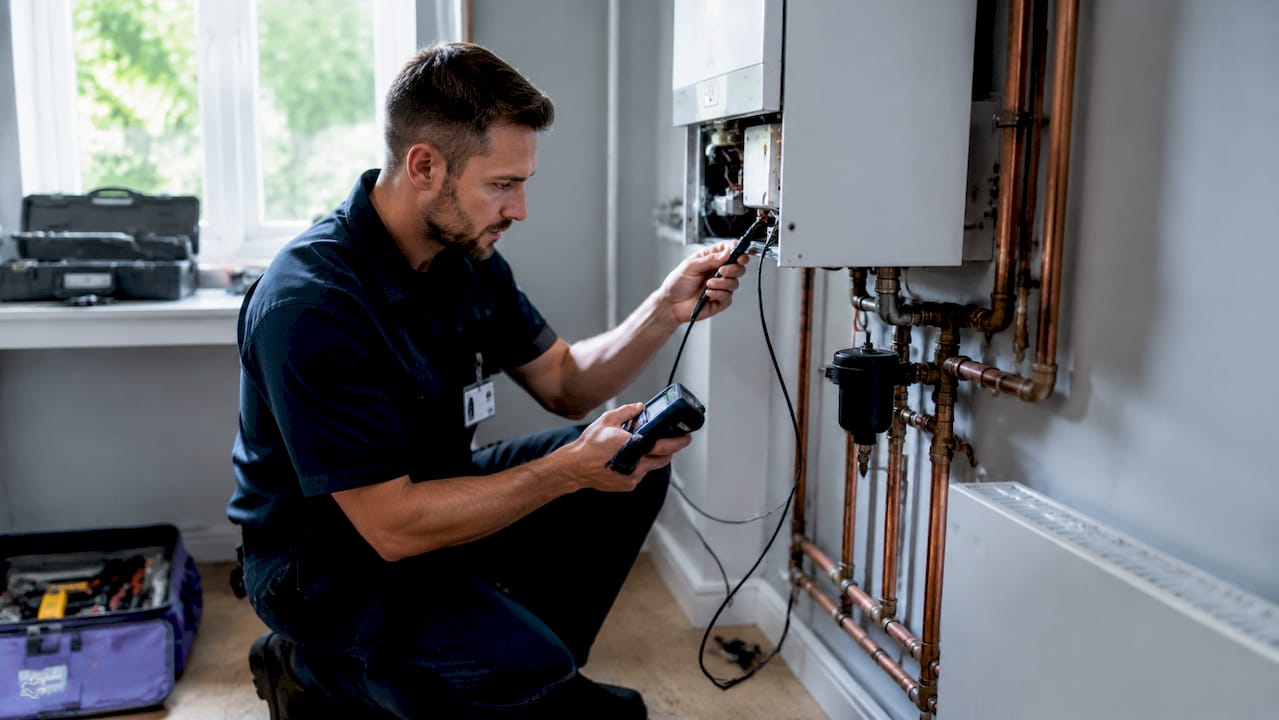
A gas safety inspection is a structured, methodical examination of every gas appliance, flue, and section of pipework in your rental property. The inspection takes 30–60 minutes depending on property size and the number of appliances present. Costs typically fall between £60 and £120 per visit, though combining the check with a boiler service during the same visit can reduce the overall outlay.
The engineer works through a defined sequence of tests. Each one targets a specific safety risk.
- Gas tightness test: The engineer isolates the pipework and measures pressure retention to detect any leaks not visible from the outside. A pressure drop indicates an escape point that must be resolved before the property is deemed safe.
- Burner pressure and gas rate checks: These confirm each appliance is operating within its manufacturer's specified parameters. An appliance running outside those limits is both inefficient and potentially dangerous.
- Ventilation assessment: The engineer checks that rooms housing gas appliances have adequate airflow. Restricted ventilation is one of the most common causes of carbon monoxide build-up.
- Flue flow and integrity check: Using a flue gas analyser, the engineer verifies that combustion products are venting correctly to the outside. A blocked or poorly fitted flue is a direct carbon monoxide poisoning risk.
- Safety device verification: Controls including thermostats, pressure relief valves, and flame failure devices are tested to confirm they respond correctly.
Pro Tip: A gas safety check and a boiler service are not the same thing. The safety check confirms compliance only. A service includes cleaning, maintenance, and efficiency work. Booking both in a single engineer visit saves time and often reduces the combined cost.
What are landlords' legal obligations for gas safety?
The Gas Safety (Installation and Use) Regulations 1998 set out clear, non-negotiable duties for landlords. These obligations cover not just the inspection itself, but how and when you communicate the results to your tenants.
- Arrange an annual check. Every gas appliance and flue in your rental property must be inspected once every 12 months by a Gas Safe registered engineer. No exceptions apply based on appliance age or condition.
- Provide the CP12 to existing tenants within 28 days. Once the Gas Safety Record is issued, you have 28 days to give a copy to any tenant already living in the property.
- Give new tenants their copy before they move in. A new tenant must receive the current Gas Safety Record before they occupy the property. Handing it over on moving day is too late if it has not been formally provided beforehand.
- Keep records for at least two years. You are legally required to retain copies of all Gas Safety Records for a minimum of two years. Many landlords retain them for longer as a precaution.
- Use only Gas Safe registered engineers. A certificate issued by an unregistered engineer is legally worthless. It also invalidates your insurance coverage and leaves you fully exposed to liability.
One practical tool worth knowing is the MOT-style rule. Landlords can carry out the check up to two months before the current certificate expires without losing the original anniversary date. This means you can schedule early without shortening the validity period. It removes the pressure of last-minute booking and keeps your compliance cycle consistent year on year.
Common misunderstandings about gas safety inspections
Several persistent misconceptions cause landlords to fall short of their legal duties, often without realising it. Addressing these directly protects both your tenants and your position as a compliant landlord.
New appliances still require annual checks. Many landlords assume a recently installed boiler or gas hob is exempt for the first year or two. This is incorrect. Faults can develop due to installation errors, wear, or blocked flues that neither the landlord nor tenant would notice without a formal inspection. The law makes no distinction based on appliance age.
A safety check is not a service. The two are frequently confused. A gas safety check confirms that appliances are operating safely and that the property meets legal requirements. A boiler service goes further, cleaning components, checking efficiency, and carrying out maintenance work. Treating one as a substitute for the other leaves gaps in both compliance and appliance longevity.
Non-registered engineers cannot issue valid certificates. Some landlords, particularly those managing properties on tight budgets, are tempted by cheaper quotes from unregistered tradespeople. Using a non-Gas Safe registered engineer invalidates the certificate entirely. Your insurance provider will not recognise it, and you remain legally liable as though no check was conducted.
Pro Tip: Always verify an engineer's Gas Safe registration before booking. You can check any engineer's credentials directly on the Gas Safe Register website using their registration number. This takes under two minutes and removes all doubt.
Coordinating access with tenants is another area where landlords frequently encounter delays. Providing tenants with at least 24 hours' notice and using digital scheduling reduces failed appointments and keeps your compliance timeline on track. A failed visit that delays the check does not extend your legal deadline.
How to schedule, manage, and document gas safety checks
Practical management of annual gas safety checks is where many landlords with good intentions still fall short. The legal obligation is clear, but the logistics of coordinating engineers, tenants, and records across multiple properties requires a structured approach.
The table below outlines a straightforward compliance framework that landlords and property managers can apply across their portfolios.
| Stage | Action | Timing |
|---|---|---|
| Advance scheduling | Book the engineer 6–8 weeks before certificate expiry | 2 months before due date |
| Tenant notification | Give written notice of the inspection date and time | Minimum 24 hours before |
| Inspection day | Confirm engineer's Gas Safe registration on arrival | Day of inspection |
| Record distribution | Send CP12 to existing tenants | Within 28 days of check |
| Record retention | File copies securely, digitally or physically | Minimum 2 years |
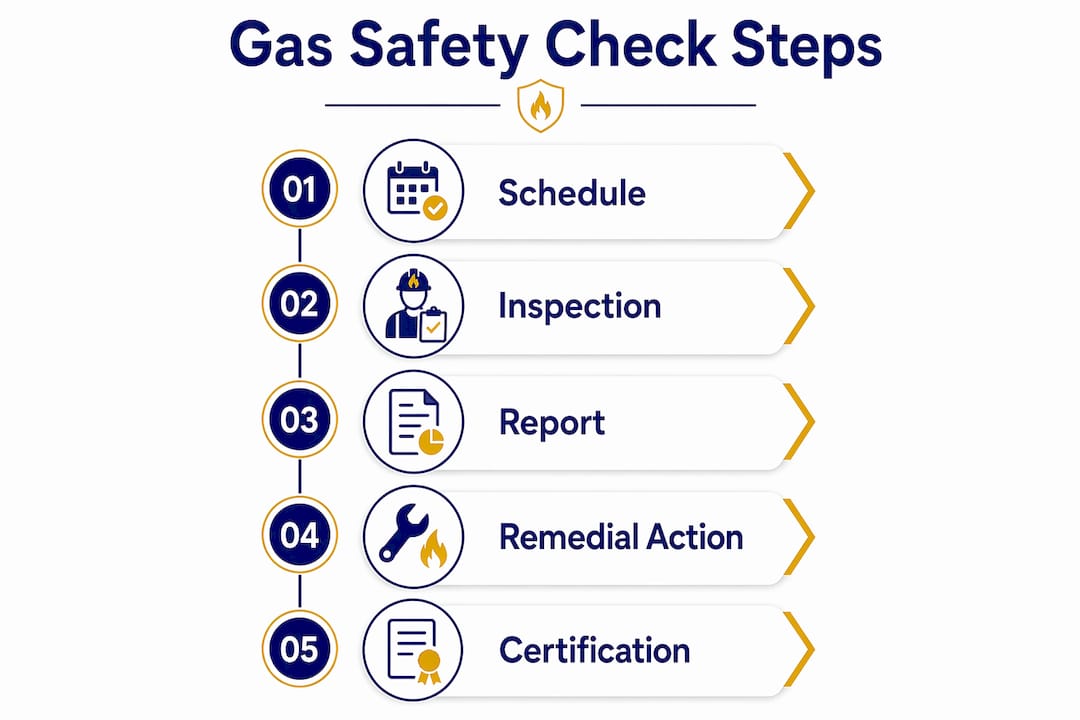
When a gas appliance fails the inspection, the engineer classifies it as either "At Risk" or "Immediately Dangerous." An Immediately Dangerous appliance results in the gas supply being turned off on the spot. As a landlord, you must arrange urgent remedial work before the property can be safely occupied. Having a reliable engineer on call, or working with a property compliance service, removes the scramble that follows an unexpected failure.
Digital record management is increasingly the standard for landlords with multiple properties. Spreadsheets and paper files work for a single property, but they become unreliable at scale. Dedicated property management platforms or compliance services that handle scheduling, certification, and record storage reduce the administrative burden significantly. The goal is a system where no certificate expiry date is missed and every record is retrievable within minutes.
Integrating your annual gas safety check with other routine inspections, such as electrical installation condition reports (EICRs) and energy performance certificate (EPC) renewals, creates a consolidated compliance calendar. This reduces the number of separate engineer visits and simplifies tenant communication.
Key takeaways
Annual gas safety checks are a legal requirement under the Gas Safety (Installation and Use) Regulations 1998, and landlords who fail to comply face unlimited fines, invalidated insurance, and potential imprisonment.
| Point | Details |
|---|---|
| Legal requirement | Every rental property with gas appliances requires an annual check by a Gas Safe registered engineer. |
| CP12 distribution | Provide the Gas Safety Record to existing tenants within 28 days and to new tenants before occupation. |
| MOT-style scheduling | Book up to two months early without losing the original certificate anniversary date. |
| Check vs. service | A safety check confirms compliance only; a boiler service covers maintenance and efficiency. |
| Failed appliances | An Immediately Dangerous finding results in the gas supply being disconnected on the spot, requiring urgent repairs. |
Why landlords should treat gas safety as risk management, not paperwork
From my experience working with landlords across residential portfolios, the ones who run into serious problems are rarely negligent by intent. They are disorganised. They miss a renewal date because they are managing multiple properties manually, or they assume a new boiler bought 18 months ago does not need checking yet. The consequences of that assumption are severe, and they fall entirely on the landlord.
Gas safety compliance is best understood as risk management, not administrative box-ticking. A valid CP12 is your documented evidence that you took reasonable steps to protect your tenants. Without it, you have no defence if something goes wrong. Carbon monoxide poisoning from a faulty flue, for example, can be fatal, and the legal and reputational consequences for a landlord without a current certificate are significant.
The landlords I have seen handle this well share one habit: they treat the gas safety check like a standing appointment, not a reactive task. They schedule it months in advance, they use Gas Safe registered engineers they trust, and they keep their records in a system that sends reminders before anything expires. That approach costs very little extra effort and removes an enormous amount of risk.
The HVAC safety guidance available to landlords consistently reinforces this point. Proactive scheduling and qualified engineers are the two factors that separate compliant landlords from those who find themselves in front of a tribunal.
— Mike
How 777pcm supports landlords with annual gas safety compliance
Managing gas safety checks across a property portfolio is straightforward when you have the right support in place.

777pcm employs Gas Safe registered engineers directly, with no third-party subcontractors involved. That means faster scheduling, clearer accountability, and CP12 certificates issued promptly after every inspection. The team handles access coordination with tenants, sends reminders before certificates expire, and manages remedial work if an appliance fails. For landlords managing multiple properties, 777pcm's compliance management service removes the administrative load entirely, keeping every property in your portfolio legally compliant without the manual tracking. If you work with letting agents, the estate agent coordination service integrates gas safety scheduling directly into your existing property management workflow.
FAQ
What is a cp12 certificate?
A CP12 is the Gas Safety Record issued after a successful annual gas safety check. Landlords must provide it to tenants within 28 days of the inspection and retain copies for at least two years.
How often must landlords arrange a gas safety check?
Gas safety checks are required once every 12 months for every rental property with gas appliances. The MOT-style rule allows checks to be carried out up to two months early without shortening the certificate's validity period.
Can a landlord carry out their own gas safety check?
No. The inspection must be conducted by a Gas Safe registered engineer. A self-conducted check has no legal standing, and any certificate issued by an unregistered person is invalid.
What happens if a gas appliance fails the inspection?
If an appliance is classified as Immediately Dangerous, the engineer disconnects the gas supply immediately. The landlord must arrange urgent repairs before the property can be safely occupied again.
Does a brand new boiler still need an annual gas safety check?
Yes. New appliances require annual checks regardless of age. Installation errors, blocked flues, or early wear can create safety risks that only a formal inspection will detect.